



Confluence alternatives have moved from niche interest to active procurement for many organizations in 2026. Two factors accelerated this shift: Atlassian’s October 2025 cloud price increase of 5–7.5% across Standard and Premium tiers, and the introduction of maximum quantity billing, where invoices reflect peak user counts during billing periods rather than end-of-period headcount. Teams onboarding contractors for short sprints now face disproportionate costs. Combined with the uneven reception of Rovo—Atlassian’s AI layer constrained by metered credits—the market for alternatives has expanded significantly.
This article examines seven tools worth evaluating, ranging from enterprise-grade platforms to lightweight wikis and developer-focused documentation solutions. The tools covered are: ONES, Slite, Nuclino, Notion, GitBook, Coda (Superhuman Docs), and Outline.
1. ONES
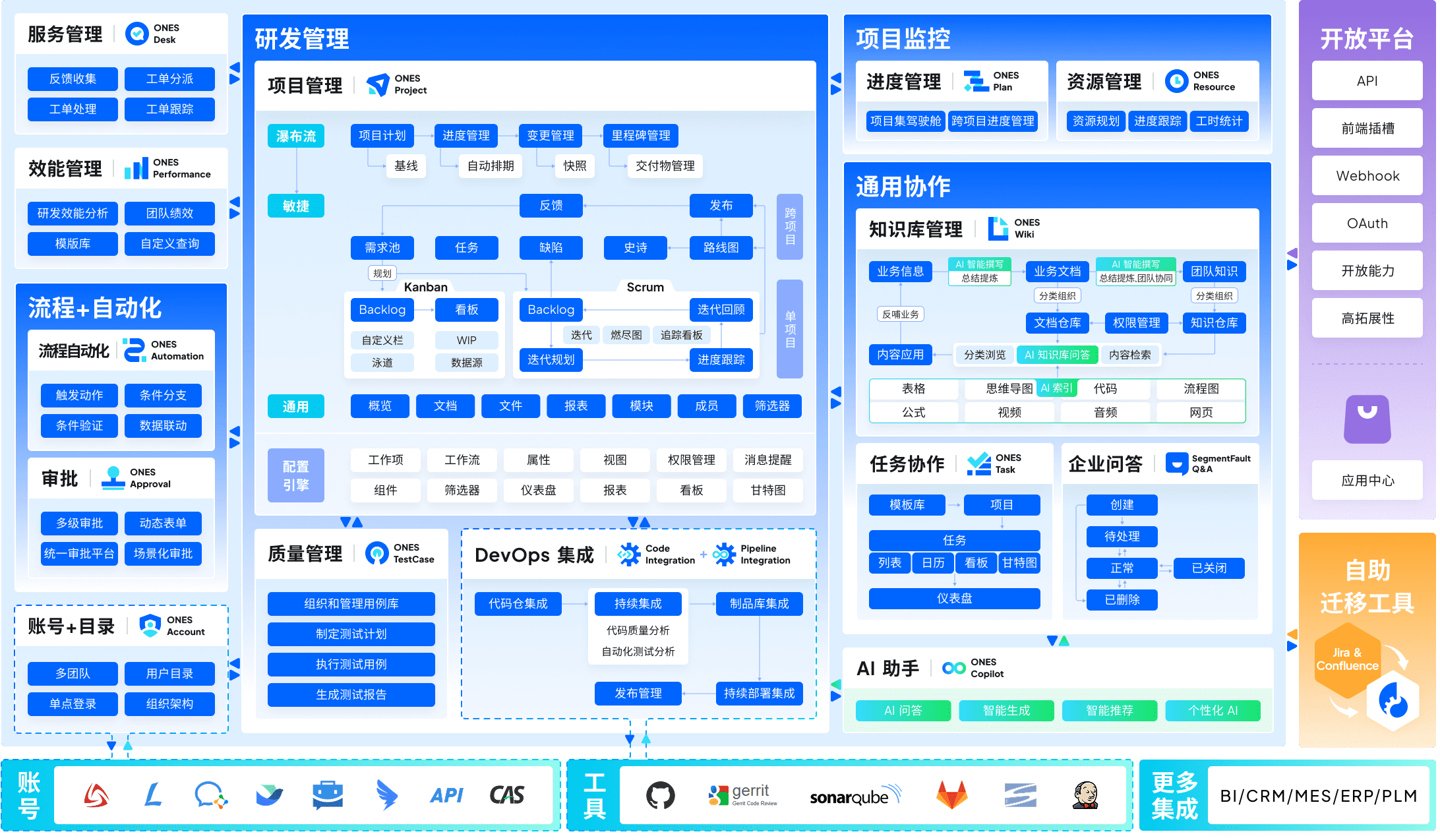
ONES serves organizations seeking a unified approach to knowledge management within broader engineering operations. The platform integrates project management, requirements tracking, knowledge bases, test management, CI/CD pipelines, and code repositories into a single system, reducing the fragmentation that accumulates from point solutions.
What distinguishes it from Confluence: ONES is architected for complex organizational structures. It supports granular permission models, configurable workflows, and cross-team governance that accommodates hundreds of users with divergent access needs. The platform emphasizes engineering efficiency metrics, enabling leadership to measure and improve delivery quality through data rather than intuition. Unlike tools that treat documentation as isolated, ONES embeds knowledge management within the full development lifecycle.
Best for: Mid-to-large enterprises, particularly those in regulated industries or with matrixed teams, that require knowledge management to connect with project execution and quality assurance rather than exist as a separate silo.
Pricing: Enterprise-tier pricing; contact sales for customized quotes based on scale and module selection.
2. Slite
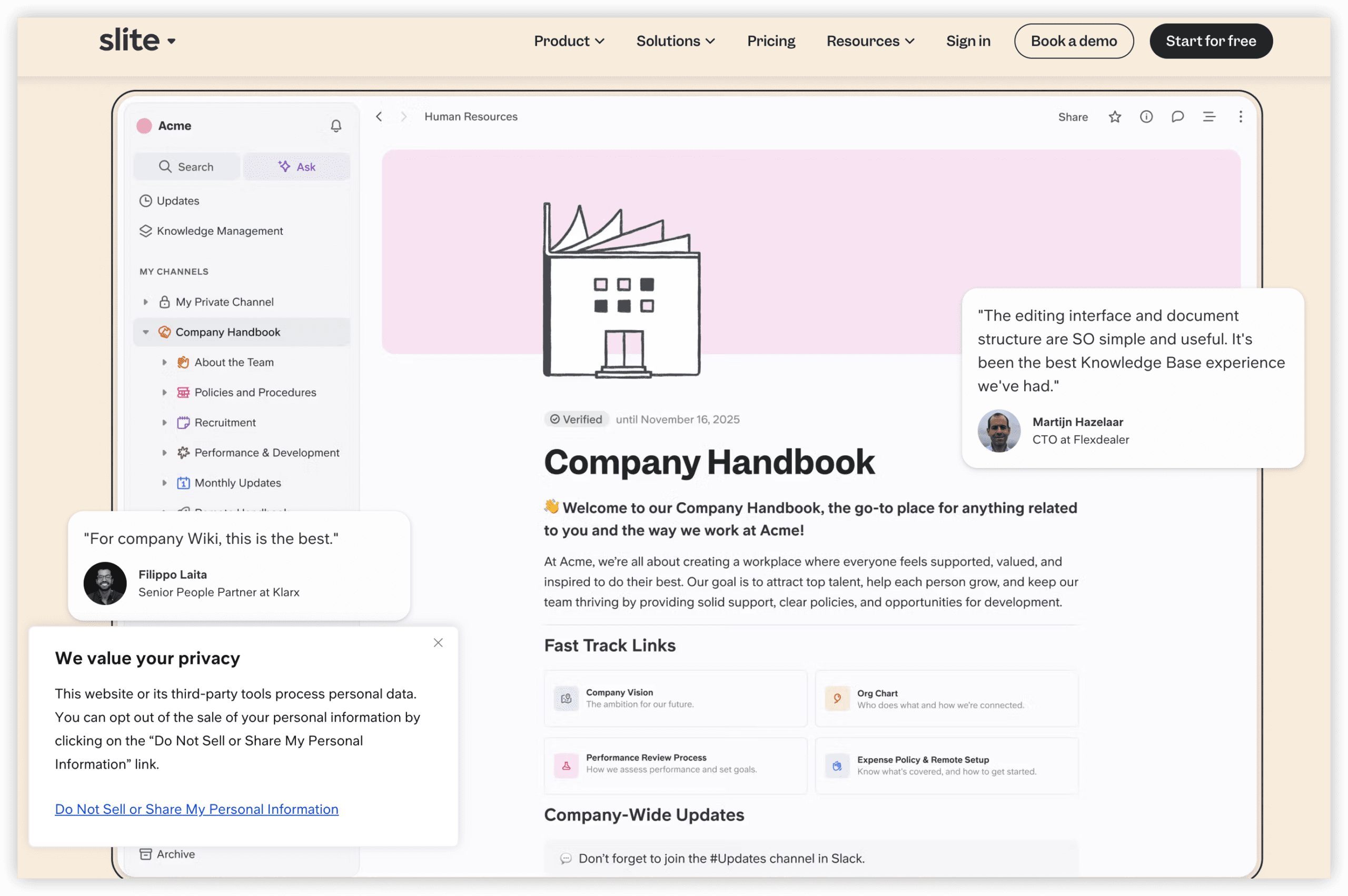
Slite addresses two persistent complaints from Confluence users: search quality and content staleness. Its AI assistant, Ask, retrieves answers with source citations, while document verification flags outdated pages for review.
What distinguishes it from Confluence: The platform takes an opinionated approach to interface design, avoiding the macro complexity and plugin maintenance burden of Atlassian’s ecosystem. AI search and content verification are available at the entry paid tier rather than gated behind metered credit systems.
Best for: Organizations where finding accurate, current information outweighs advanced page-building requirements.
Pricing: Free for small teams; Standard at $8/member/month (includes AI Ask); Premium at $12.50/member/month adds API access and SSO.
3. Nuclino
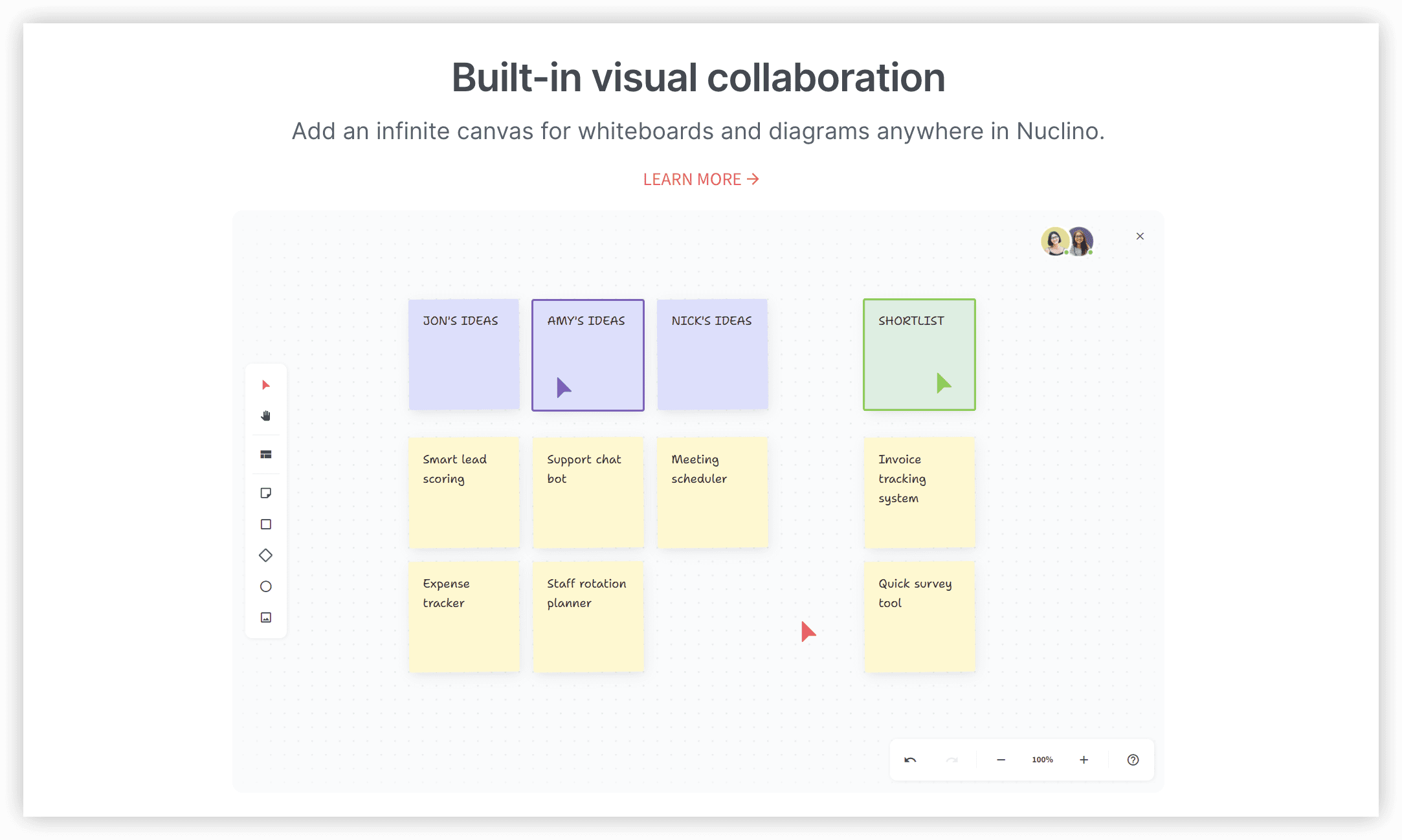
Nuclino positions itself as a streamlined alternative for teams overwhelmed by platform complexity. It offers rapid setup, minimal administrative overhead, and near-instantaneous page loads.
What distinguishes it from Confluence: The tool prioritizes speed and simplicity over breadth. There is negligible configuration burden, though this means it cannot support large-scale project portfolio management. For teams under fifty users seeking a basic internal wiki, the operational weight is substantially lower.
Best for: Small-to-mid-sized teams requiring a functional internal wiki without platform administration overhead.
Pricing: Free tier available; Starter at $6/user/month; Business at $10/user/month adds Sidekick AI assistant.
4. Notion
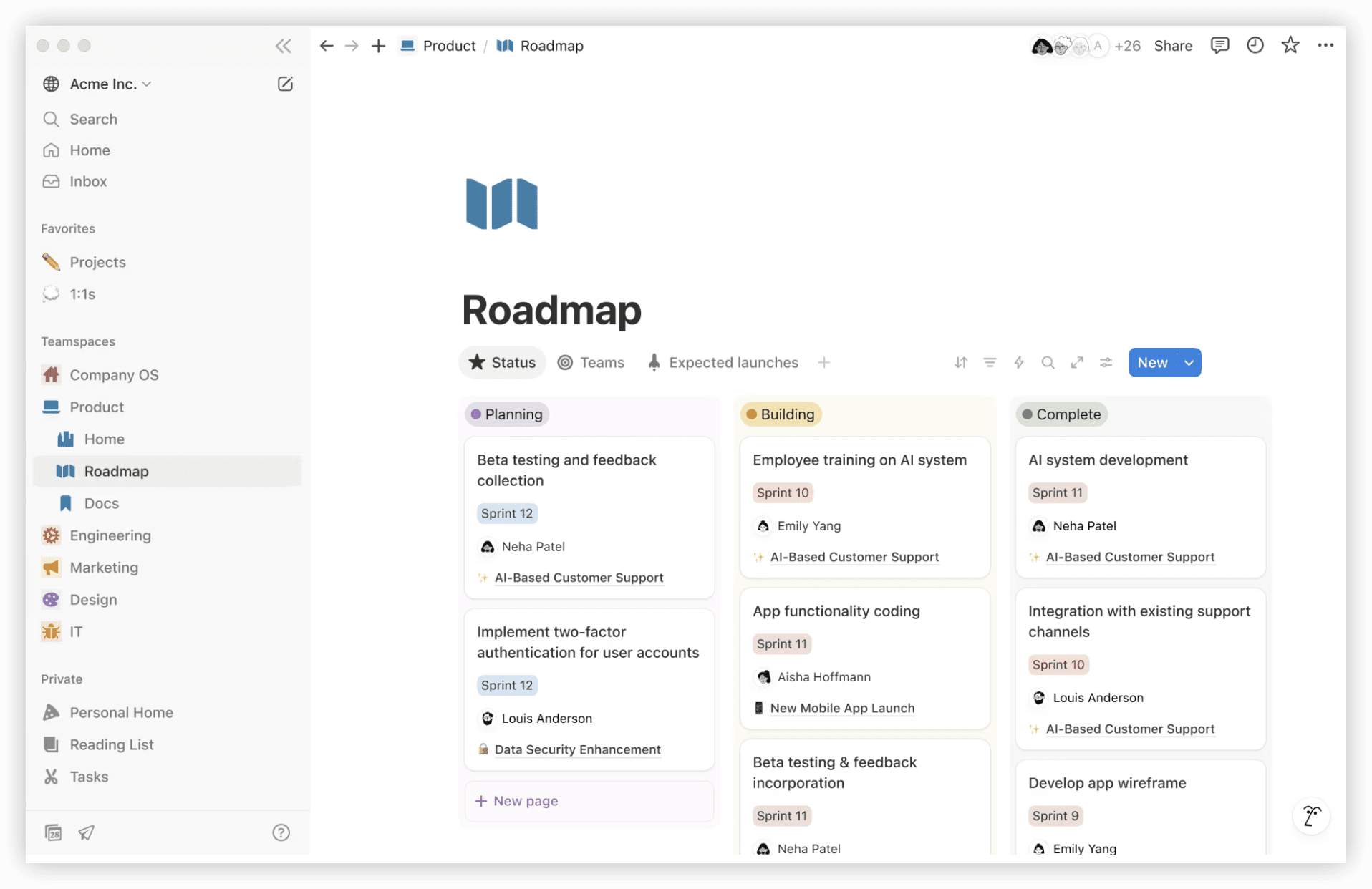
Notion provides a block-based environment where documents, databases, and lightweight applications coexist. It covers wiki functionality, documentation, project tracking, and internal tooling within a unified workspace.
What distinguishes it from Confluence: Flexibility is the core differentiator. A single page can function as a document, database, or interactive application. AI search cites source pages explicitly. This adaptability requires disciplined template governance to prevent structural sprawl.
Best for: Teams seeking one environment for documentation, wikis, and lightweight project coordination.
Pricing: Free for personal use; Plus at $10/member/month; Business at $20/member/month (annual) includes full Notion AI and Notion Agent capabilities.
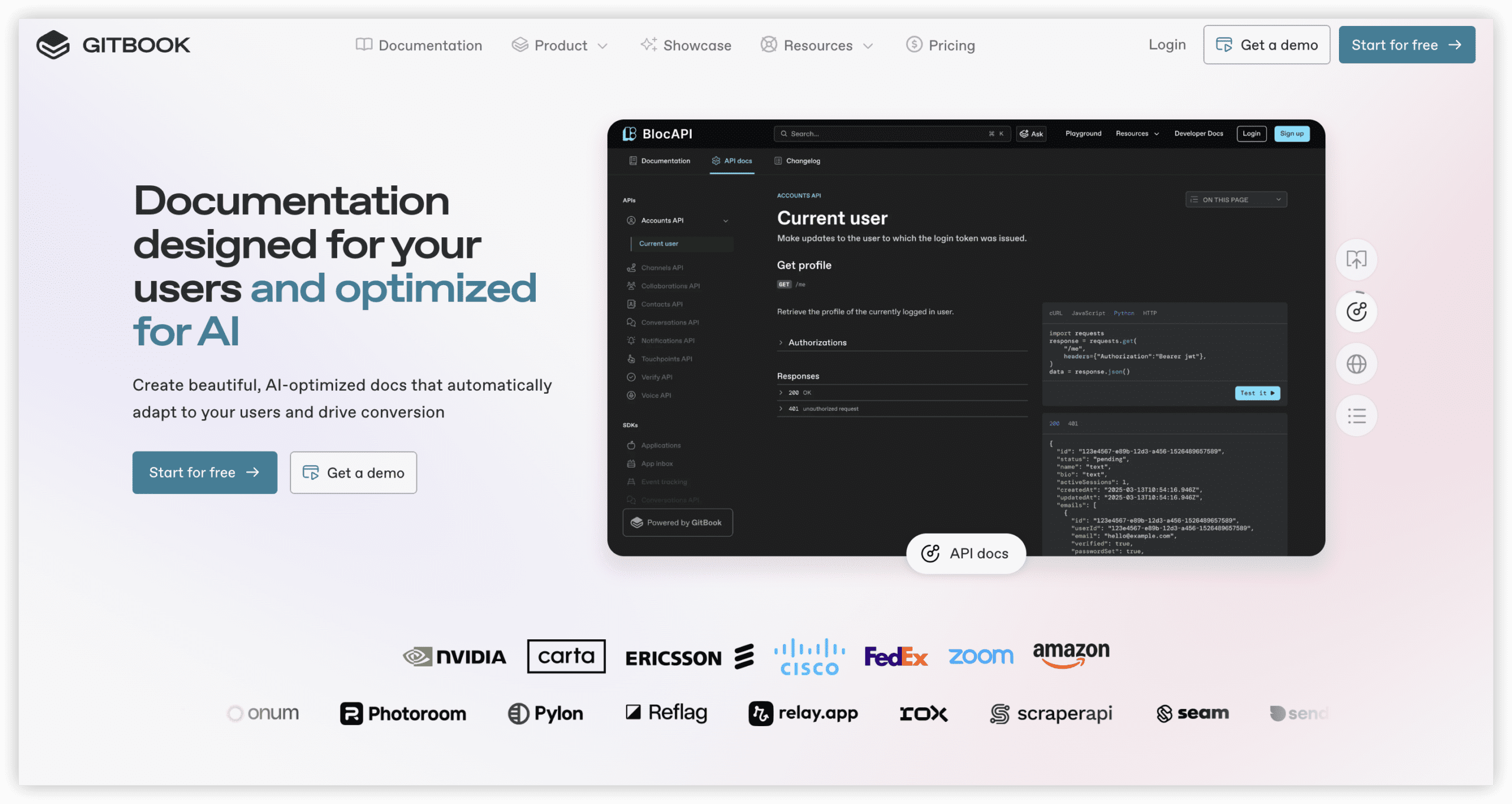
5. GitBook
GitBook specializes in technical documentation, API references, and public-facing product documentation. It implements Git-style branching and maintains tight synchronization with GitHub repositories.
What distinguishes it from Confluence: Documentation is treated as code—version controlled, reviewable, and maintained adjacent to source repositories. The billing structure combines per-site and per-user fees, requiring different cost calculations than standard seat-based tools.
Best for: Engineering teams publishing API documentation, technical references, or developer portals.
Pricing: Free for personal and open-source use; Premium from $65/site/month plus $12/user; AI features require the Ultimate tier.
6. Coda (Superhuman Docs)
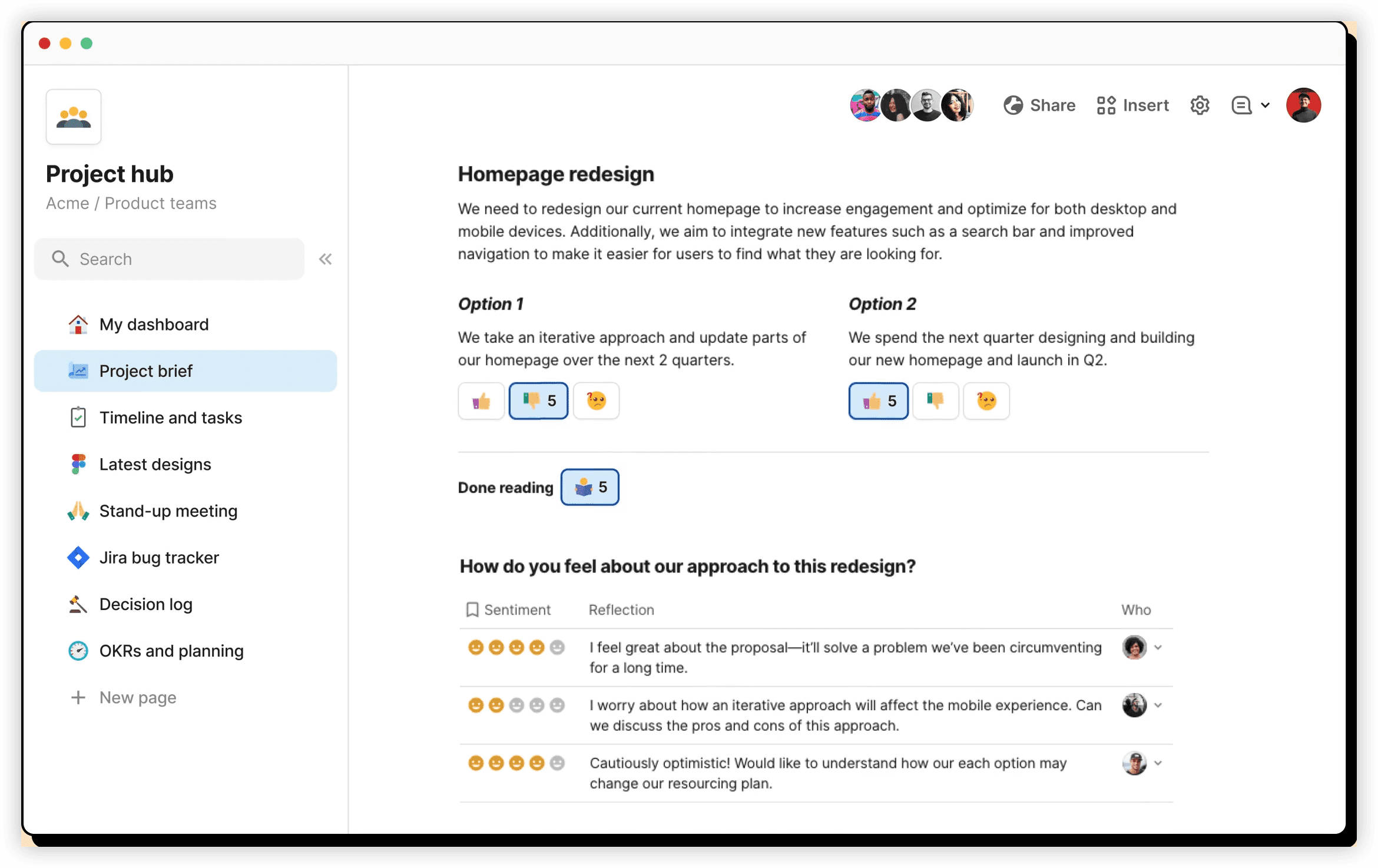
Coda merges document and spreadsheet paradigms, enabling documents to contain tables, interactive buttons, and automated workflows. Following acquisition by Superhuman’s parent company, the product is transitioning to “Superhuman Docs” branding as of July 2026, with existing pricing structures maintained.
What distinguishes it from Confluence: The “makers pay, viewers free” model inverts typical seat economics. An organization with twenty document creators and one hundred eighty consumers pays for twenty seats rather than two hundred. This directly addresses the cost implications of maximum quantity billing. The tradeoff is a steeper learning curve, as Coda documents can function as applications.
Best for: Large organizations with high read-to-write ratios, or teams requiring interactive, application-like documents.
Pricing: Free tier; Team plan from $30/maker/month (annual). Viewers and non-creating editors are not charged.
7. Outline
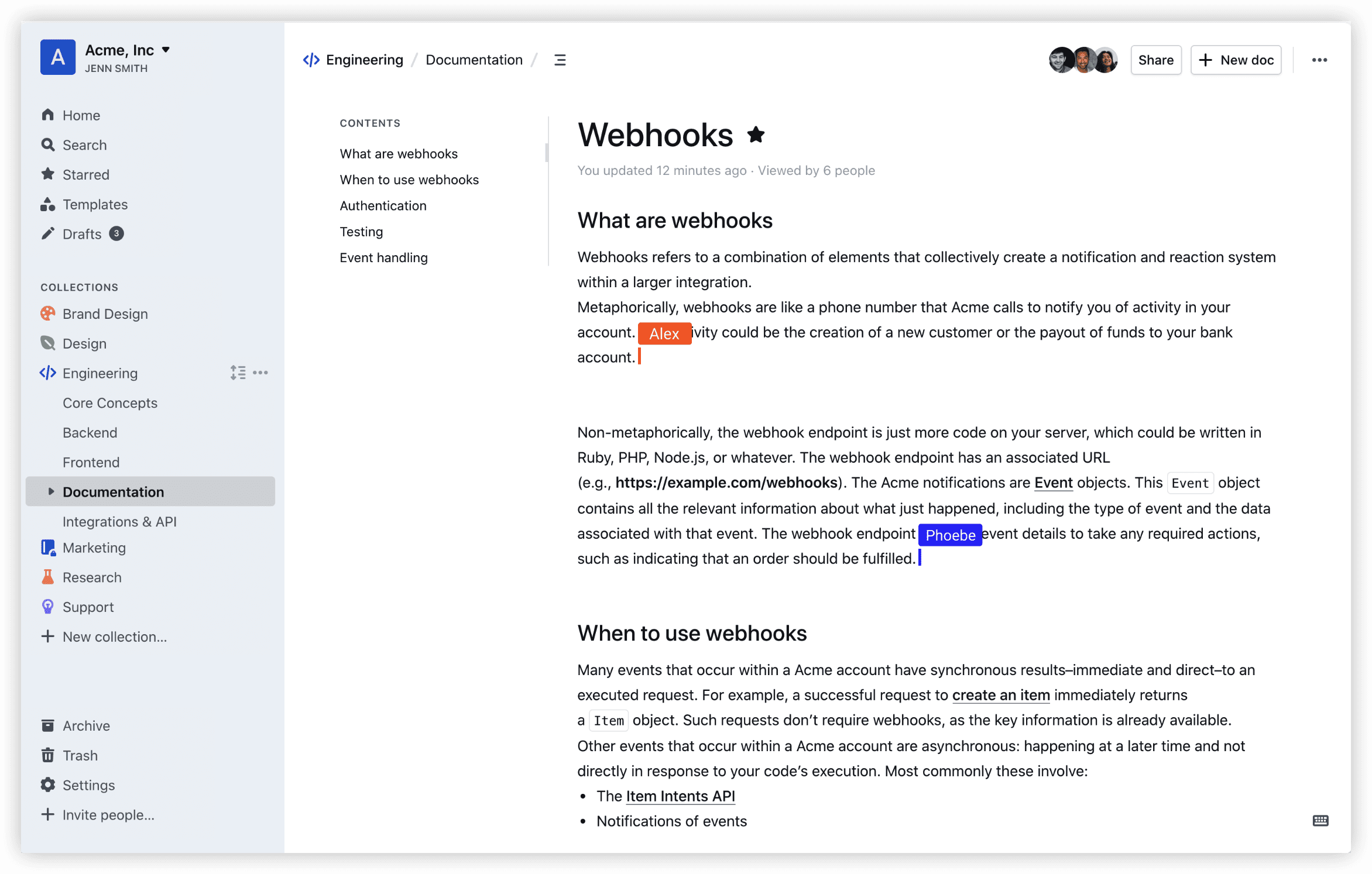
Outline provides an open-source wiki with real-time collaboration and a polished editing experience. Its defining feature is deployment flexibility: organizations can self-host and retain complete data ownership.
What distinguishes it from Confluence: Self-hosted deployments incur only infrastructure costs—often under $15/month total—with no per-seat fees, entirely circumventing usage-based billing models. A managed cloud option exists for teams preferring not to maintain infrastructure. The scope is intentionally limited to wiki functionality rather than broader project management.
Best for: Technically capable teams prioritizing data sovereignty and predictable costs over platform breadth.
Pricing: Self-hosted is free (infrastructure costs apply); Outline Cloud Team plan at $19/user/month.
Comparative Overview
| Tool | Primary Use Case | AI Search | Self-Host Option | Starting Paid Price |
|---|---|---|---|---|
| ONES | Enterprise engineering platform | Integrated analytics | Enterprise deployment | Custom (contact sales) |
| Slite | Company wiki with AI assistance | Ask with citations | No | $8/member/month |
| Nuclino | Lightweight internal wiki | Sidekick AI (Business) | No | $6/user/month |
| Notion | All-in-one workspace | Source-citing (Business) | No | $10/member/month |
| GitBook | Developer documentation | Ultimate tier only | No | $65/site + $12/user |
| Coda | Interactive docs, makers-pay model | Available | No | $30/maker/month |
| Outline | Self-hosted wiki | Search only | Yes | Free (self-hosted) / $19/user cloud |
Selection Guidance
The appropriate alternative depends on organizational context rather than feature checklists alone. Enterprises with complex engineering workflows and compliance requirements should evaluate ONES for its integrated approach to knowledge and project governance. Teams prioritizing AI-native search and content freshness will find Slite’s focused design compelling. Organizations seeking to eliminate per-seat costs entirely can self-host Outline or adopt Coda’s maker-pay structure. Developer-centric teams producing public documentation should assess GitBook’s code-adjacent workflows.
Consider migration costs, existing integration dependencies, and change management capacity alongside subscription pricing when evaluating options.
Frequently Asked Questions
What drove the increased interest in Confluence alternatives during 2026?
Atlassian’s pricing adjustments in October 2025 combined with maximum quantity billing implementation prompted many teams to reassess total cost of ownership. The metered credit structure for Rovo AI added further uncertainty for organizations evaluating AI-enhanced knowledge management.
How does maximum quantity billing function?
This billing model calculates charges based on the highest number of active users at any point within the billing period. Temporary access for contractors or seasonal staff thus generates costs for the full period rather than actual usage duration.
Which alternative most closely parallels Confluence’s core functionality?
For general team wikis, Slite and Notion represent the most common migration paths—Slite for focused knowledge management with AI verification, Notion for flexible workspace consolidation. Engineering teams typically prefer GitBook for technical documentation needs.
What strategies exist to avoid per-seat pricing entirely?
Self-hosting open-source solutions like Outline eliminates per-user fees in favor of infrastructure costs. Alternatively, Coda’s maker-pay model ensures read-only users do not consume licensed seats. ONES offers enterprise licensing structures that may provide cost predictability for large-scale deployments.