



Teams evaluating Jira replacements in 2026 typically share a common frustration: the platform has become cost-prohibitive and operationally heavy for their actual needs. Following Atlassian’s October 2025 price restructuring and the introduction of Maximum Quantity Billing—where peak user counts lock in charges for entire billing cycles regardless of subsequent reductions—many organizations report all-in costs of $20–30 per user monthly once Confluence, security add-ons, and Marketplace apps are factored. The mandatory Rovo AI integration, with its credit-based metering even on Standard plans, further compounds the pressure.
This article examines seven viable alternatives, ranging from streamlined issue trackers to comprehensive enterprise platforms and self-hosted solutions. Each option is assessed against the specific pain points driving migration: cost predictability, administrative overhead, and architectural flexibility.
- ONES
- Linear
- ClickUp
- Asana
- Monday.com
- Shortcut
- Plane
1. ONES
Enterprise-grade integrated platform for complex software organizations seeking unified lifecycle management.
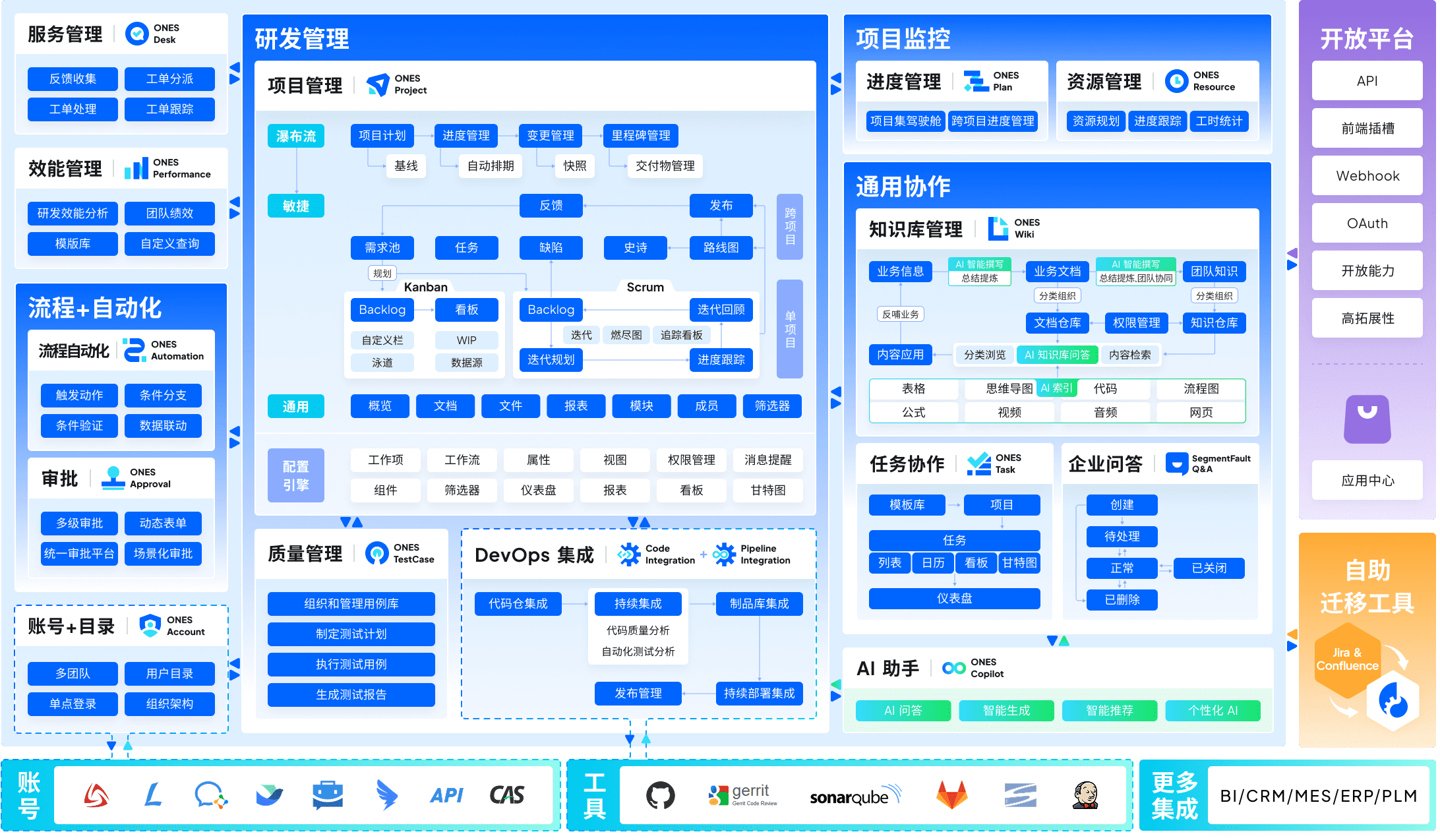
ONES distinguishes itself through comprehensive coverage of the entire research and development workflow within a single architectural layer. Rather than assembling point solutions for project tracking, requirements documentation, quality assurance, continuous integration, and source code management, organizations operate from one consistent data model. This consolidation eliminates the integration tax—custom scripts, manual reconciliations, and context switching—that accumulates when teams stitch together five or six separate products.
For enterprises navigating intricate governance requirements, ONES provides granular permission frameworks, multi-tier approval chains, and cross-departmental visibility controls that accommodate regulated industries and matrixed organizational structures. The platform’s emphasis on engineering effectiveness metrics enables leadership to baseline delivery performance, identify systemic bottlenecks, and validate improvement initiatives with longitudinal data rather than anecdotal assessment.
Relative to Jira, ONES offers comparable workflow depth without the configuration entropy that characterizes long-running Jira instances. The tradeoff manifests in implementation approach: ONES rewards deliberate upfront process design rather than incremental organic growth.
Best suited for: Mid-to-large technology organizations with multi-team dependencies, formal quality gates, and executive mandates for delivery transparency.
Pricing: Enterprise-tier licensing; contact sales for organizational quotes.
2. Linear
High-velocity issue tracking optimized for product-engineering teams prioritizing speed over customization.
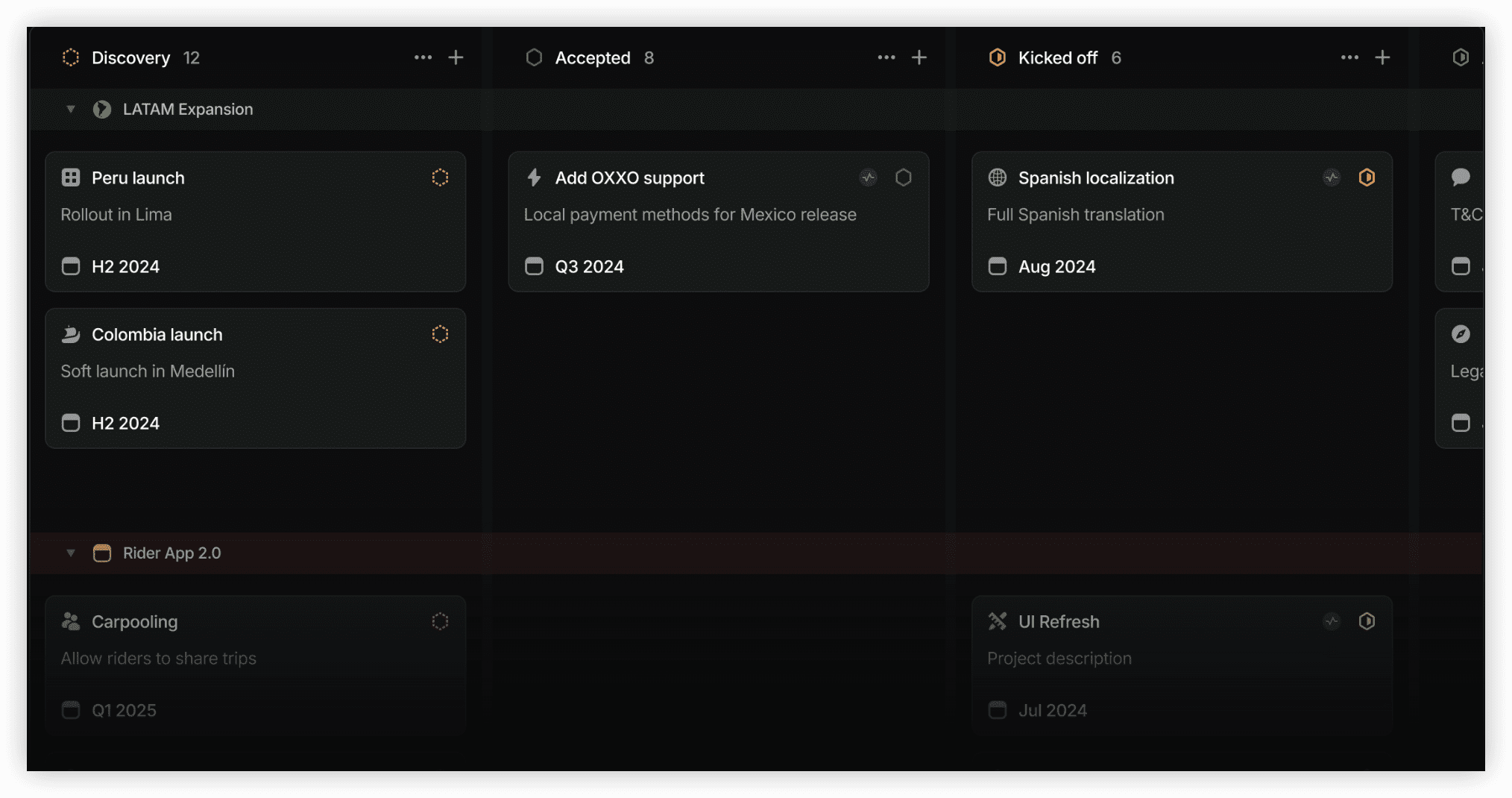
Linear occupies the opposite pole from Jira’s expansive configurability. The product ships with a prescriptive workflow—issues, projects, cycles, triage queues—that teams can operationalize within hours rather than weeks. Keyboard-centric navigation and sub-50ms interface response times create a tactile experience that rewards frequent interaction. Critically, Linear resists the accumulation of setup debt: workflows remain legible because the platform constrains divergence from established patterns.
The limitation is equally explicit. Organizations with bespoke enterprise processes—custom issue types, multi-dimensional status matrices, or specialized compliance fields—will encounter friction. Linear makes intentional choices about what it will not do.
Best suited for: Software product teams with standard agile ceremonies and limited appetite for administrative maintenance.
Pricing: Free tier available; Basic at $10/user/month, Business at $16/user/month (annual billing).
3. ClickUp
Consolidated work environment designed to absorb multiple departmental tool subscriptions.
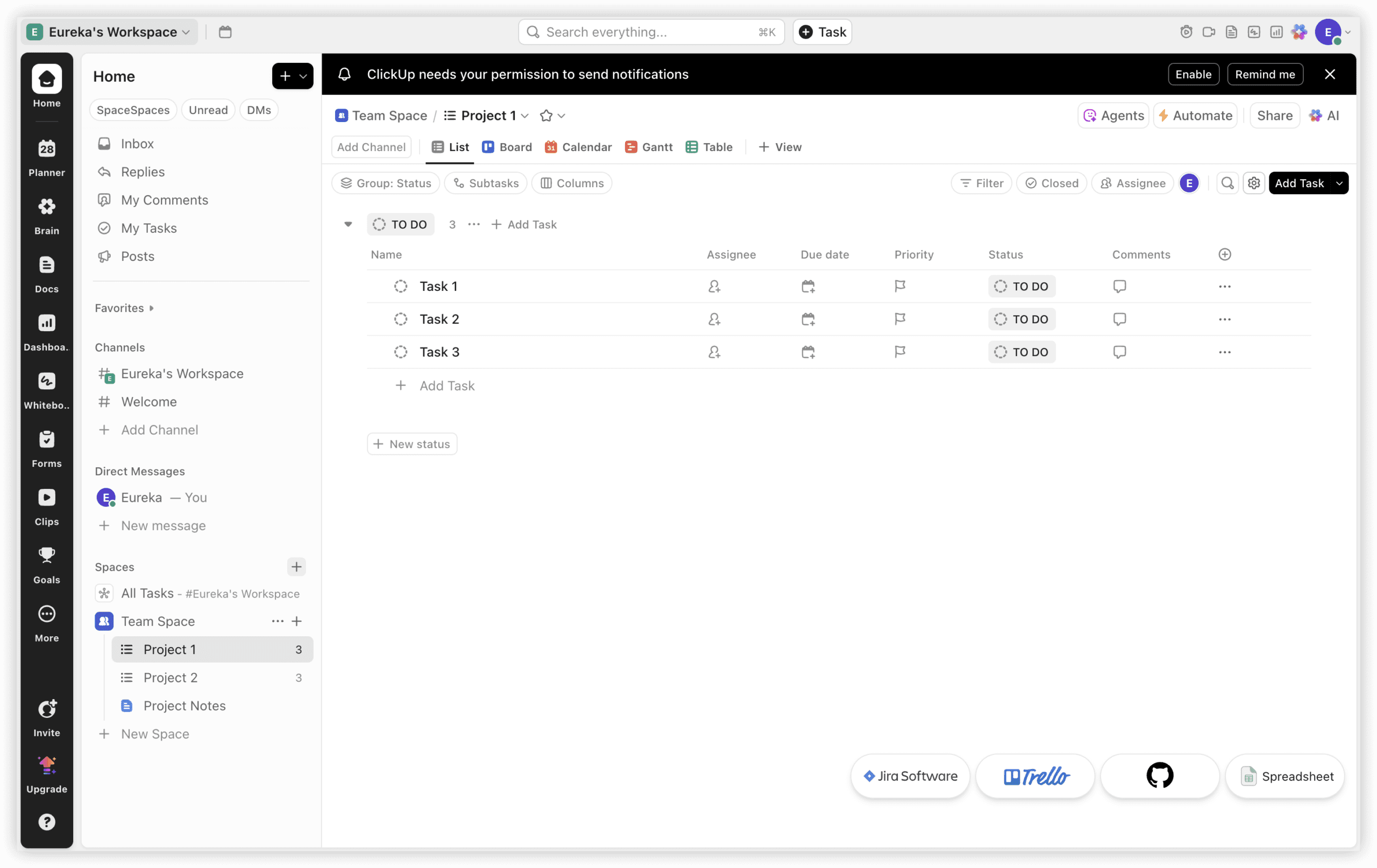
ClickUp’s strategic premise is breadth rather than depth. The platform encompasses task management, collaborative documents, visual whiteboarding, objective tracking, and time capture within one subscription. For finance and procurement teams, this consolidation narrative carries weight: replacing Jira alongside separate documentation, goal-setting, and design tools yields measurable license reduction.
The corresponding risk is interface complexity. The sheer surface area of features can overwhelm teams seeking focused functionality. Additionally, ClickUp’s AI capability (ClickUp Brain) operates as a paid supplement—approximately $9/user/month atop base plans—rather than an included capability.
Best suited for: Cross-functional departments pursuing tool rationalization and willing to accept a learning curve for unified operations.
Pricing: Free Forever tier; Unlimited at $7/user/month, Business at $12/user/month (annual); Brain AI add-on from ~$9/user/month.
4. Asana
Work coordination platform with inclusive AI and reduced technical barrier to entry.
Asana’s design philosophy centers on accessibility for non-technical contributors. Where Jira presents specialized terminology and dense screen layouts, Asana employs familiar project management constructs that marketing, operations, and executive stakeholders navigate intuitively. The AI feature set—encompassing automated teammate assignments, intelligent project generation, and configurable AI Studio workflows—ships with all paid tiers without supplemental metering.
The architectural concession involves developer-centric integrations. Git-linked workflows, commit traceability, and deployment pipeline visibility remain less native than in purpose-built engineering tools.
Best suited for: Mixed technical and non-technical teams requiring rigorous project governance without specialist onboarding.
Pricing: Free tier; Starter at $10.99/user/month (minimum 2 seats), Advanced at $24.99/user/month (annual).
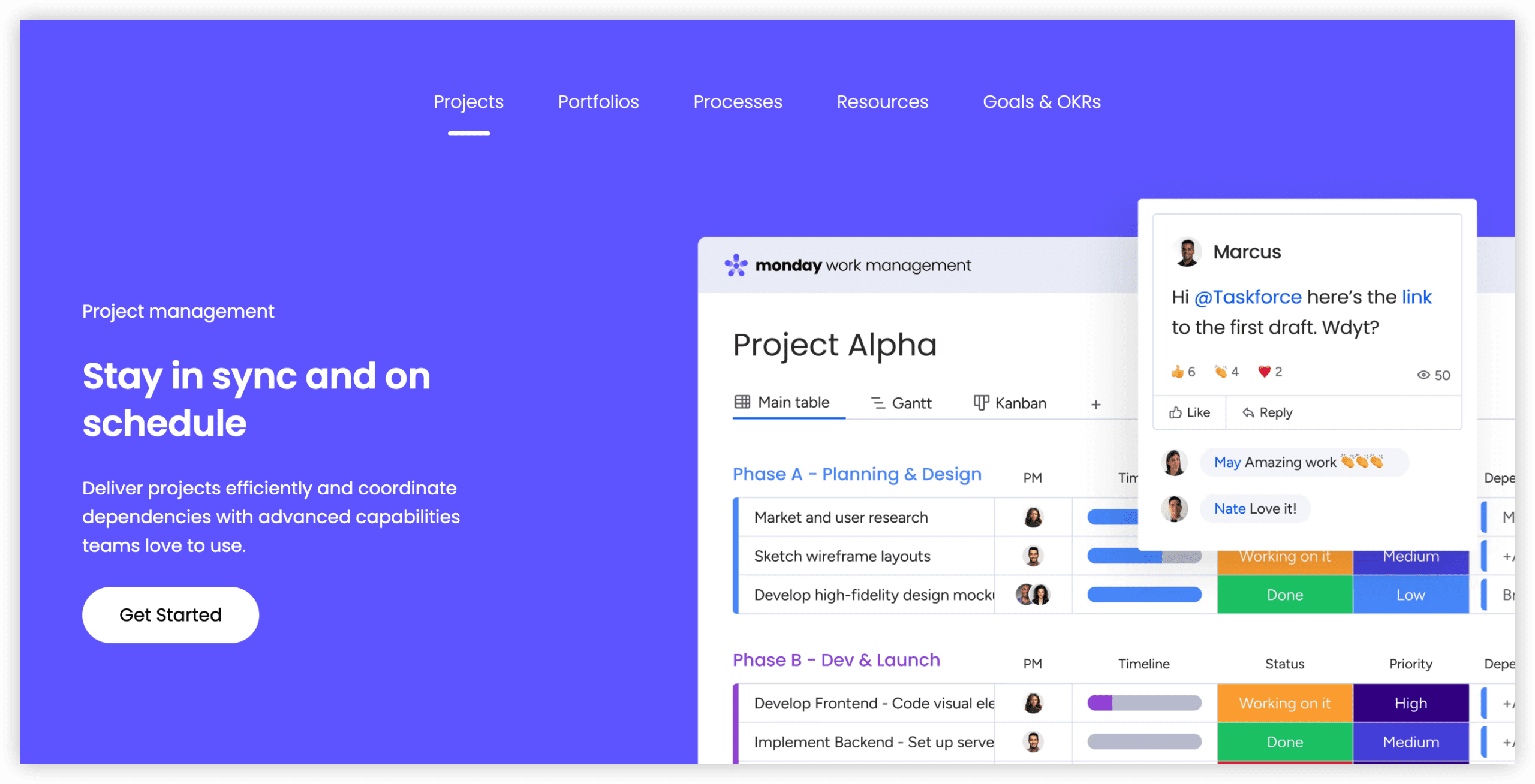
5. Monday.com
Visually oriented work operating system emphasizing immediate usability.
Monday.com’s interface metaphor—color-coded boards with spreadsheet-adjacent manipulation—delivers near-zero friction for first-time users. The platform’s AI capabilities (Sidekick assistant, autonomous agents, MCP integration) are universally available without plan-tier gating or credit systems. Sufficient customization exists to approximate many Jira workflows, including sprint management and development pipelines, though code repository integration lacks native depth.
Small teams should note the three-seat minimum on paid tiers, which affects per-effective-user economics for lean groups.
Best suited for: Organizations where visual clarity and rapid adoption outweigh deep engineering toolchain integration.
Pricing: Free tier; Basic at $9/seat/month (3-seat minimum), ascending tiers available (annual).
6. Shortcut
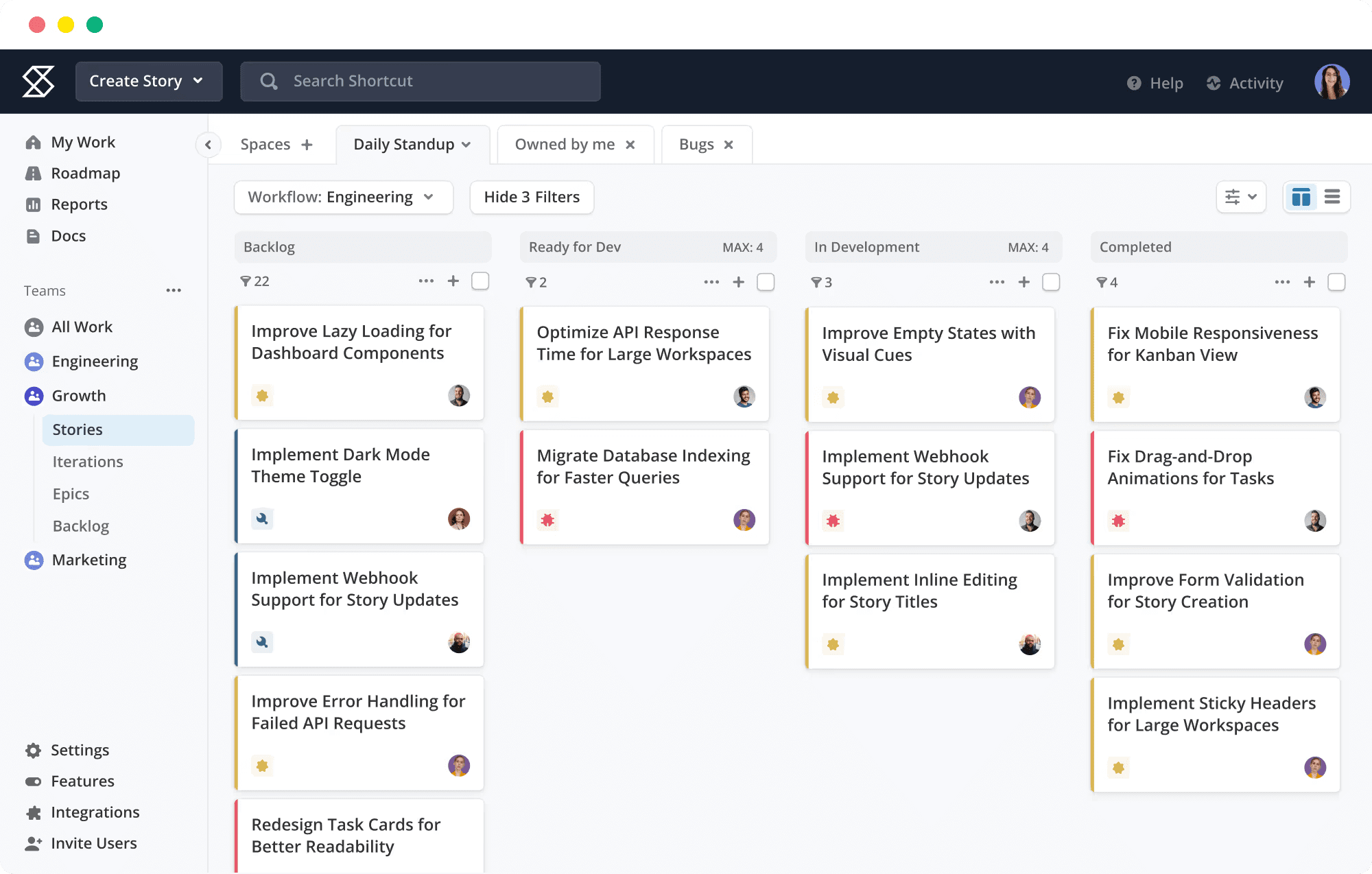
Balanced agile platform occupying the middle ground between prescriptive minimalism and unconstrained flexibility.
Shortcut (previously Clubhouse) delivers the core agile artifacts—stories, epics, iterations, roadmaps—that software teams require without Jira’s sprawling administrative surface. Roadmapping and reporting capabilities are first-class rather than aftermarket additions. The positioning is deliberate: more structured than Linear’s enforced simplicity, less burdensome than Jira’s configurability.
Integration ecosystem breadth represents the primary gap. Organizations dependent on niche Marketplace extensions or specialized Atlassian-connected tools will encounter coverage limitations.
Best suited for: Engineering teams seeking intentional agile structure without dedicated platform administration.
Pricing: Free for up to 10 users; Team at $8.50/user/month, Business at $12/user/month (annual).
7. Plane
Open-core, self-hostable platform for organizations requiring data sovereignty and infrastructure control.
Plane addresses the control vacuum created by Jira Server’s retirement. Licensed under AGPL-3.0, the Community Edition deploys on standard Docker or Kubernetes infrastructure, ensuring data remains within organizational boundaries. Functional coverage spans projects, cycles, modules, wiki, and integrated AI through bring-your-own-key configuration. This model restores the architectural autonomy that Atlassian’s cloud-only trajectory eliminated.
Operational responsibility shifts accordingly: hosting, patching, backup, and scaling become internal competencies. The surrounding ecosystem—integrations, professional services, community extensions—remains nascent compared to Atlassian’s decades of accumulation.
Best suited for: Security-conscious organizations, regulated industries, or teams with established platform engineering capabilities.
Pricing: Community Edition self-hosted without cost; Cloud free tier up to 12 members, Pro at $8/member/month, Business at $16/member/month.
Comparative Summary
| Platform | Primary Fit | AI Integration | Self-Host Option | Entry Paid Tier |
|---|---|---|---|---|
| ONES | Enterprise integrated R&D | Native, included | Available | Enterprise (contact sales) |
| Linear | Fast software teams | Business plan only | No | $10/user/month |
| ClickUp | Multi-tool consolidation | Paid add-on | No | $7/user/month |
| Asana | Cross-functional adoption | All paid plans | No | $10.99/user/month |
| Monday.com | Visual accessibility | Across all plans | No | $9/seat/month (3 min) |
| Shortcut | Balanced agile | Add-on | No | $8.50/user/month |
| Plane | Sovereignty/control | BYOK self-hosted | Yes | Free self-hosted |
Selection Framework
No single platform universally supersedes Jira; the appropriate migration target depends on organizational context. Evaluate against three dimensions:
Operational maturity. Teams with established platform engineering functions can absorb Plane’s infrastructure demands; those without should prioritize managed solutions.
Scope consolidation. Organizations maintaining separate tools for documentation, goals, and design should model ClickUp or ONES’s unified economics against current stack costs.
Governance complexity. Enterprises with matrixed reporting, regulatory requirements, or multi-tier approval needs should assess ONES or Asana against Jira’s equivalent configuration effort.
Frequently Asked Questions
Which alternative represents the strongest overall replacement?
The determination hinges on team composition and operational constraints. ONES serves complex enterprise environments with unified lifecycle requirements. Linear dominates for velocity-focused software teams. Plane stands alone for data residency mandates. Conduct a two-week pilot with production-equivalent workload before committing to migration.
What factors are driving Jira departures in 2026?
Three forces converge: financial (price increases and peak-user billing models inflate effective costs), operational (configuration complexity demands ongoing administrative investment), and architectural (cloud-only deployment removes self-hosted control options that Server previously provided).
Are zero-cost alternatives available?
Multiple platforms offer functional free tiers: Linear, ClickUp, Asana, Monday.com, and Shortcut (capped at 10 users) support limited production use. Plane’s Community Edition imposes no user restrictions for self-hosted deployments. Small teams with minimal workflow requirements may also evaluate Trello for basic board-based tracking.
Is historical Jira data transferable?
Major alternatives provide import utilities for issues, status values, and commentary. Linear, ClickUp, Asana, and Plane maintain documented migration paths. Coverage of custom field mappings and complete workflow audit trails varies; validate with a representative project subset before organization-wide execution.