



After evaluating over 25 project management platforms, I’ve identified 7 viable Jira alternatives worth considering in 2026. This list includes:
- ONES — Best for enterprise R&D management
- Backlog by Nulab — Best all-round alternative for software teams
- Businessmap — Best for portfolio and Kanban-driven enterprises
- Monday.com — Best for visual workflow customization
- Teamwork.com — Best for client-facing agencies
- ProofHub — Best for flat-fee simplicity
- ClickUp — Best for feature-rich team collaboration
Each tool was assessed across feature depth, pricing transparency, ease of adoption, and suitability for specific organizational contexts. The following analysis covers what distinguishes these platforms from Jira and where each fits best.
How These Alternatives Were Evaluated
The selection criteria emphasized practical factors that drive tool migration decisions:
- Capability breadth: Whether the platform matches or exceeds Jira’s core functionality for issue tracking, roadmapping, and agile workflows
- Organizational fit: Alignment with specific team structures—enterprise R&D, agencies, growing startups, or cross-functional departments
- Operational friction: Learning curve, navigation clarity, and daily usability for technical and non-technical users alike
- Direct testing: Hands-on evaluation of each platform’s workflow configuration, reporting, and integration ecosystem
Detailed Evaluation of 7 Jira Alternatives
ONES — Best for Enterprise R&D Management
ONES serves organizations requiring unified control across the entire software delivery lifecycle. Unlike point solutions that necessitate multiple subscriptions, ONES consolidates project management, requirements traceability, knowledge management, test execution, CI/CD pipelines, and source code governance within a single architecture.
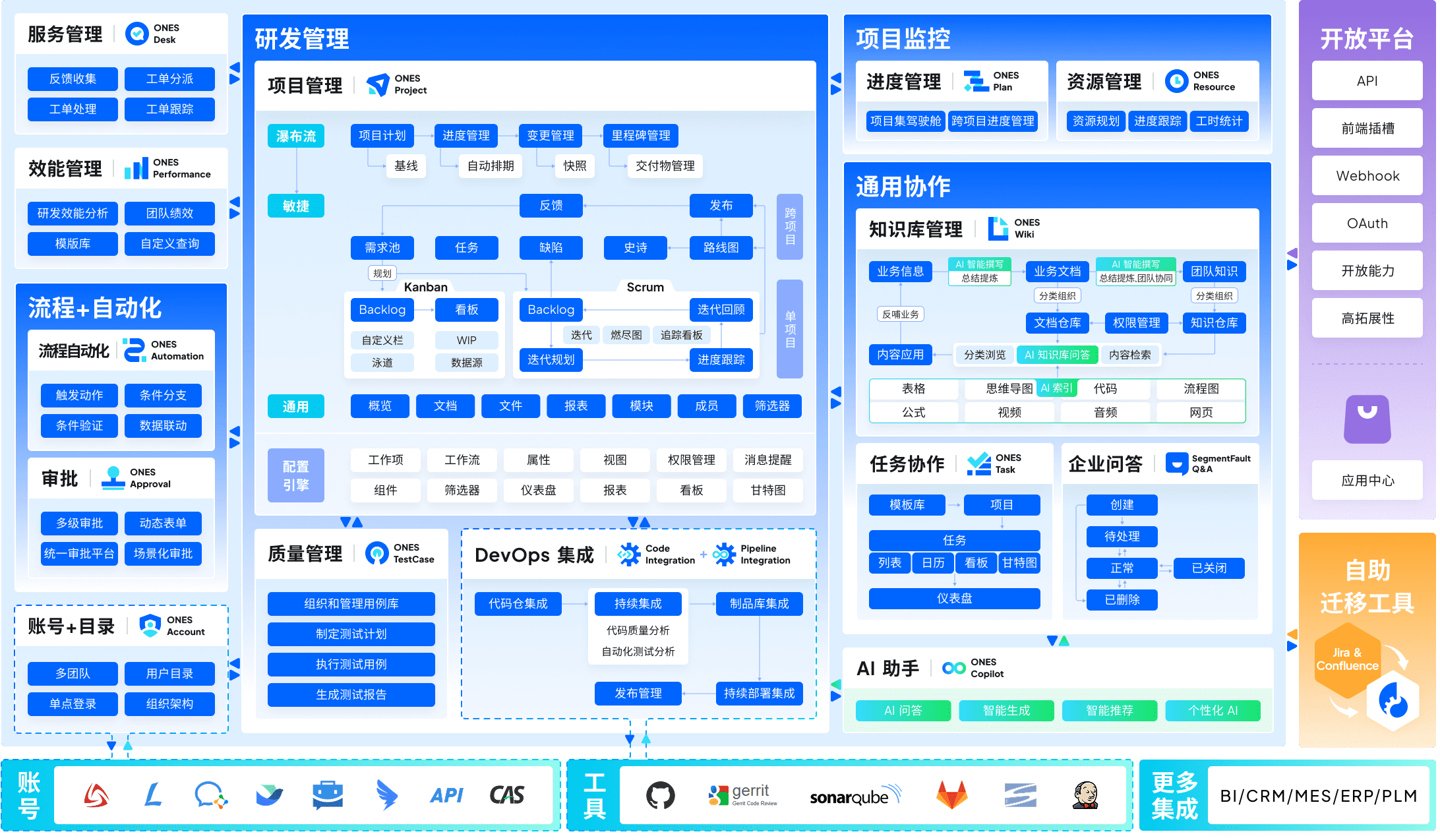
For engineering organizations at scale, the platform’s configurable workflow engine and granular permission models accommodate complex release trains, regulatory compliance requirements, and matrixed team structures. Its built-in 研发效能度量 (R&D effectiveness metrics) capability enables leadership to baseline delivery performance, identify systemic bottlenecks, and validate improvement initiatives with operational data rather than anecdote.
Core capabilities:
- End-to-end traceability from product requirements through test verification and deployment
- Enterprise-grade access controls and cross-department collaboration governance
- Integrated wiki and documentation with structured knowledge retention
- Automated pipeline orchestration linked to work items and release milestones
- Comprehensive dashboards for cycle time, defect density, throughput, and quality trends
Considerations: Implementation investment aligns with mid-to-large engineering organizations; smaller teams may find the capability set exceeds immediate requirements.
Backlog by Nulab — Best All-Round Alternative for Software Teams
Backlog distinguishes itself through native convergence of project planning, issue tracking, and version control. Teams operate from a unified environment where Gantt timelines, Kanban boards, Git/SVN repositories, and wiki documentation coexist without third-party connectors.
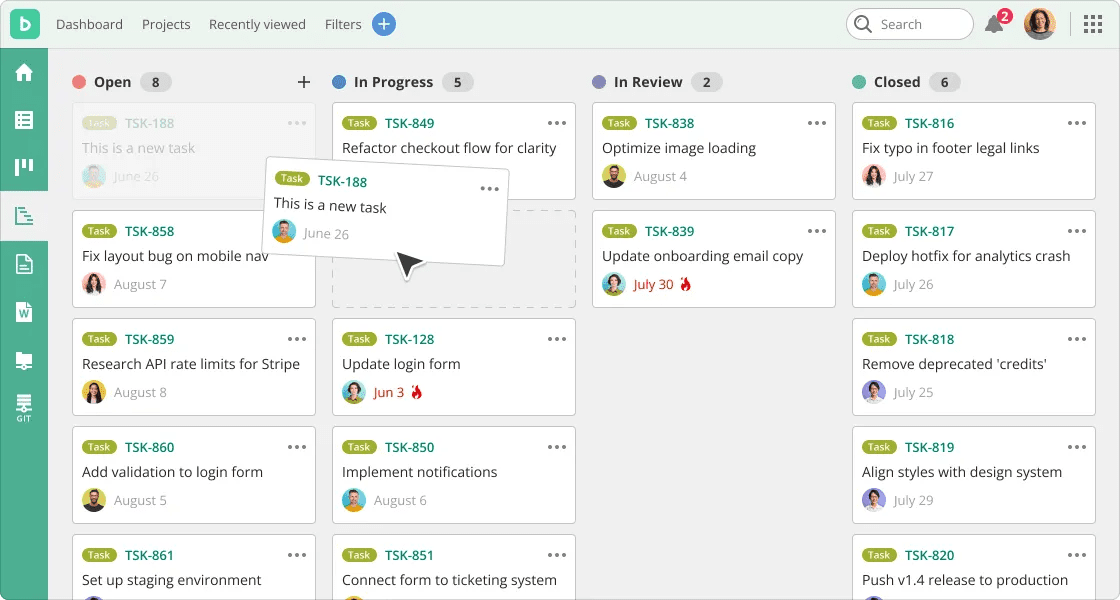
The platform’s flat-rate pricing structure eliminates the per-user licensing escalation common to Jira, making cost forecasting straightforward as teams expand. During evaluation, the fluid transition between macro-level roadmaps and individual issue detail proved particularly effective for maintaining alignment between product managers and engineering contributors.
Notable attributes:
- Direct repository integration with commit, pull request, and changeset visibility alongside tasks
- Issue type flexibility supporting tasks, bug reports, and feature requests with customizable fields
- Built-in documentation editor with block-based composition for specs and process records
- Migration tooling specifically designed for Jira transition scenarios
Limitation: Enterprise reporting depth does not match Jira’s advanced analytics; suited to mid-sized organizations prioritizing operational coherence over exhaustive metric customization.
Businessmap — Best for Portfolio and Kanban-Driven Enterprises
Businessmap (formerly Kanbanize) operationalizes the Kanban methodology at organizational scale. Its architecture connects team-level execution to strategic objectives through portfolio workspaces, OKR linkage, and flow analytics that extend beyond conventional task management.
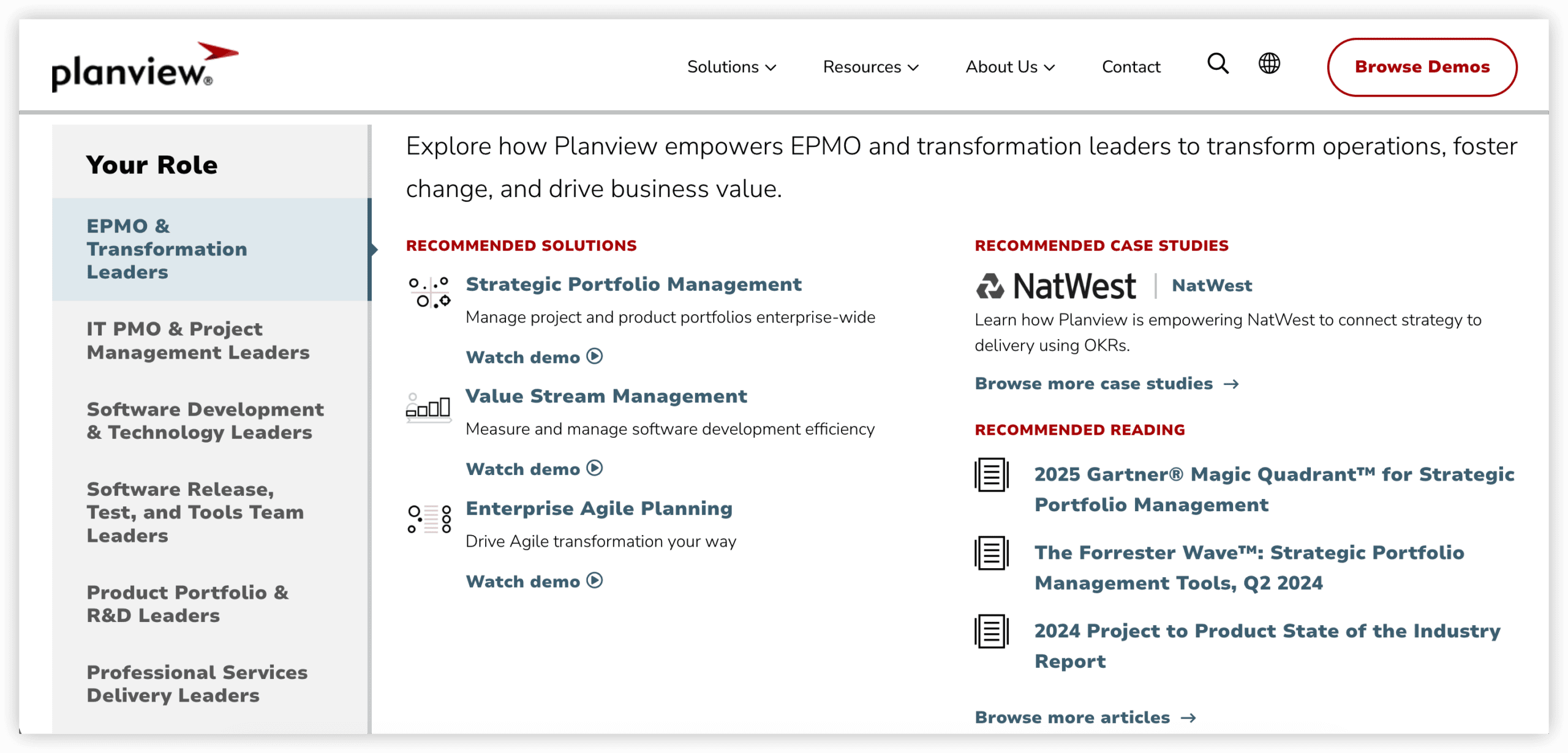
The platform’s emphasis on work-in-progress governance enables systemic bottleneck identification. Configurable WIP limits trigger visual alerts when capacity thresholds are reached, prompting intervention before delivery commitments are compromised. AI-assisted planning tools further support initiative decomposition and timeline forecasting based on historical throughput patterns.
Differentiating elements:
- Hierarchical board structures linking departmental workflows to portfolio-level visibility
- Dependency mapping across teams and projects with card relationship visualization
- Digital whiteboarding with direct conversion of collaborative output to actionable work items
- Automation policies for status propagation, assignment routing, and stakeholder notification
Ideal context: Organizations with mature process discipline seeking to replace Jira’s workflow engine with more flexible Kanban-centric governance.
Monday.com — Best for Visual Workflow Customization
Monday.com prioritizes interface adaptability, enabling teams to construct workflows through modular building blocks rather than predefined templates. The platform accommodates diverse operational models—from sprint-based development to campaign management and resource planning—within consistent visual conventions.
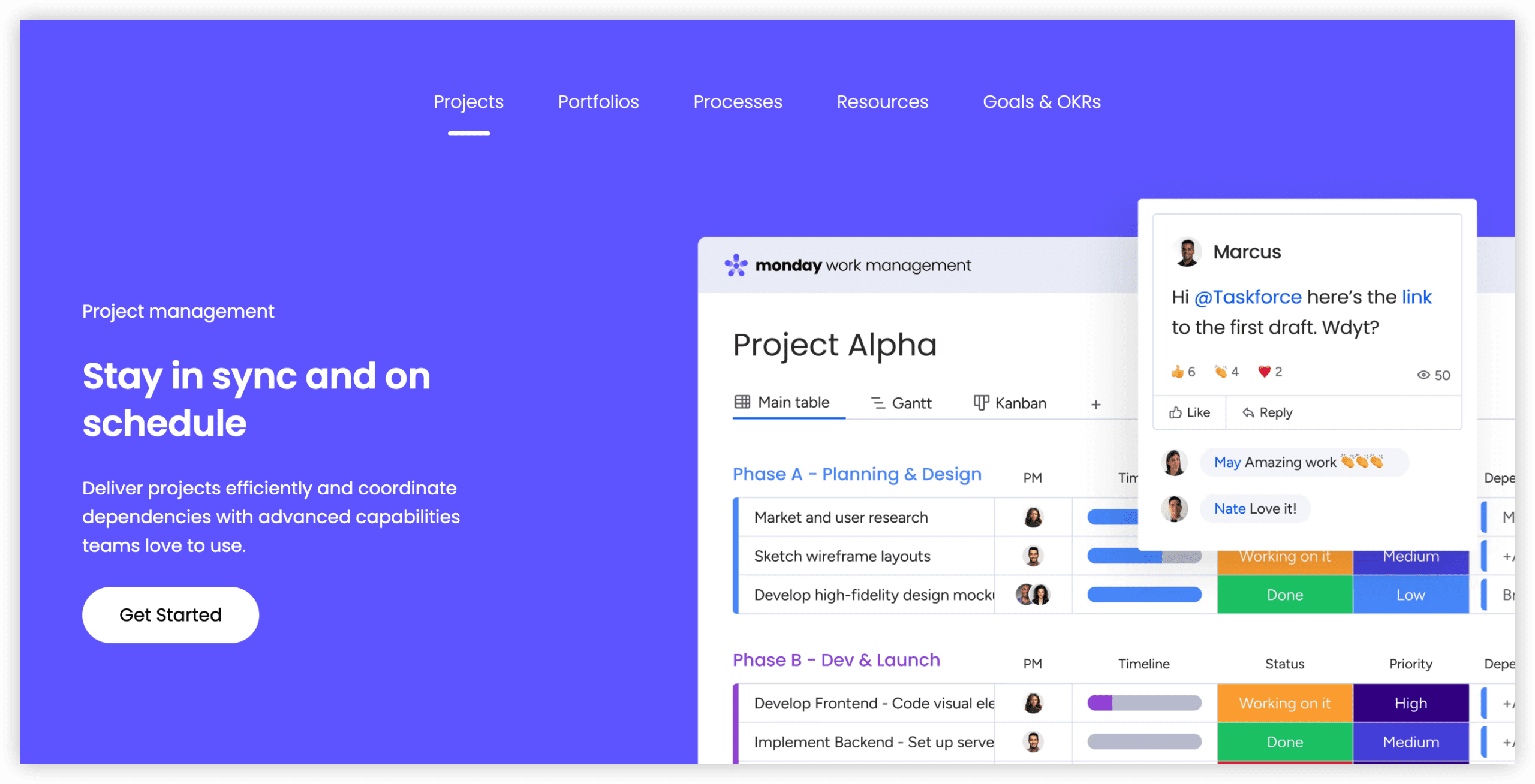
Color-coded status columns, timeline views, and dashboard widgets reduce cognitive load for stakeholders who require progress visibility without platform immersion. Integration breadth spans common productivity and communication tools, though native development-specific capabilities (repository linking, code review) remain less integrated than Backlog or ONES.
Strengths: Rapid board configuration, strong automation builder, accessible to non-technical contributors.
Constraint: Advanced portfolio and cross-program reporting may require supplemental tooling for complex engineering organizations.
Teamwork.com — Best for Client-Facing Agencies
Teamwork.com structures its capability set around project profitability and client accountability. Time tracking, resource allocation, and billing integration are native rather than bolted-on, addressing operational requirements common to professional services organizations.
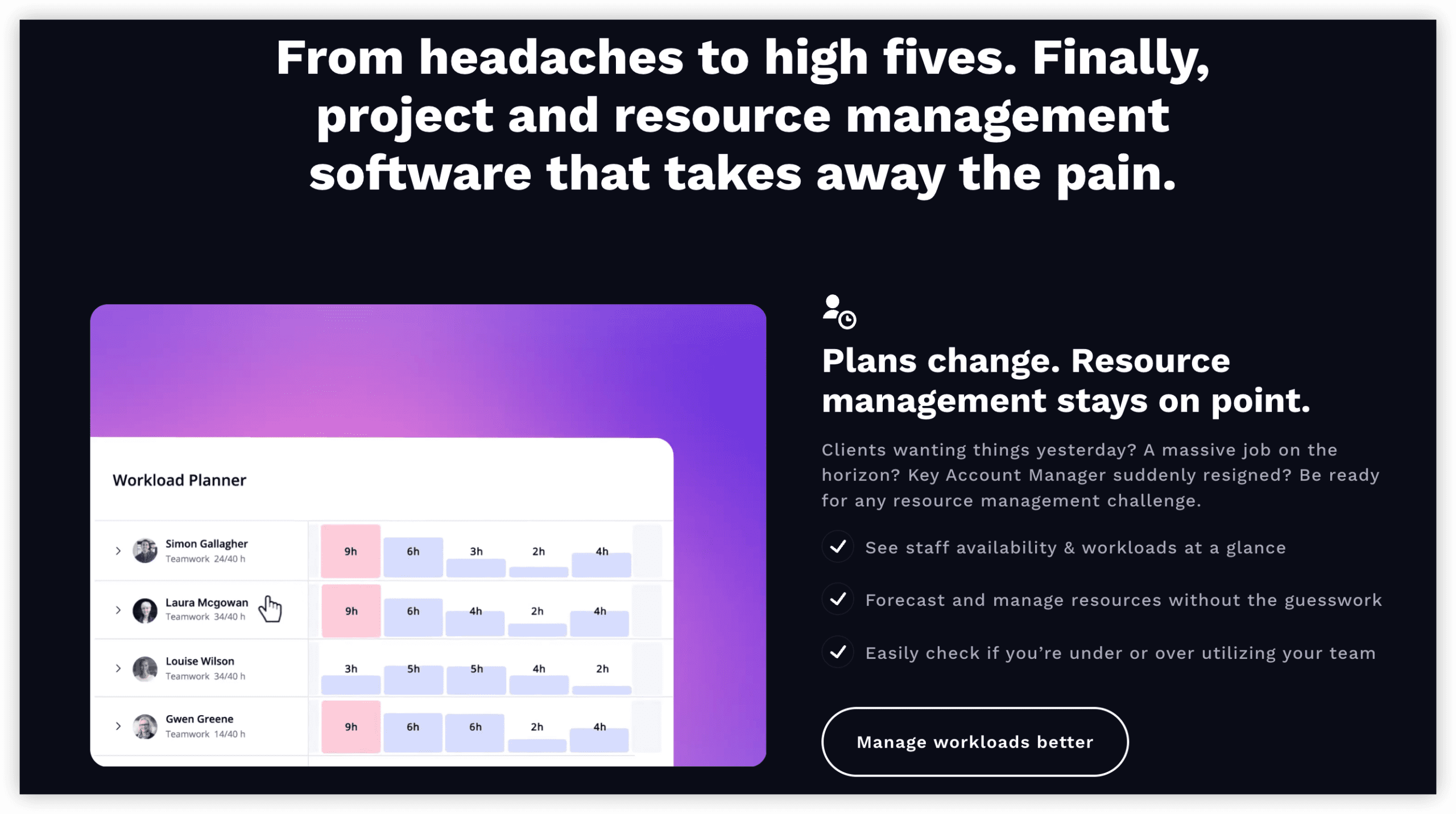
The platform’s project templates and retainer management features support recurring engagement models, while granular permission structures enable controlled client access to progress dashboards and deliverable repositories.
Primary fit: Agencies, consultancies, and service providers migrating from Jira’s issue-centric model toward revenue-attached project governance.
ProofHub — Best for Flat-Fee Simplicity
ProofHub eliminates per-user pricing entirely, offering unlimited team members within fixed subscription tiers. This model appeals to budget-constrained organizations or those with fluctuating contractor involvement where headcount-based licensing creates unpredictability.
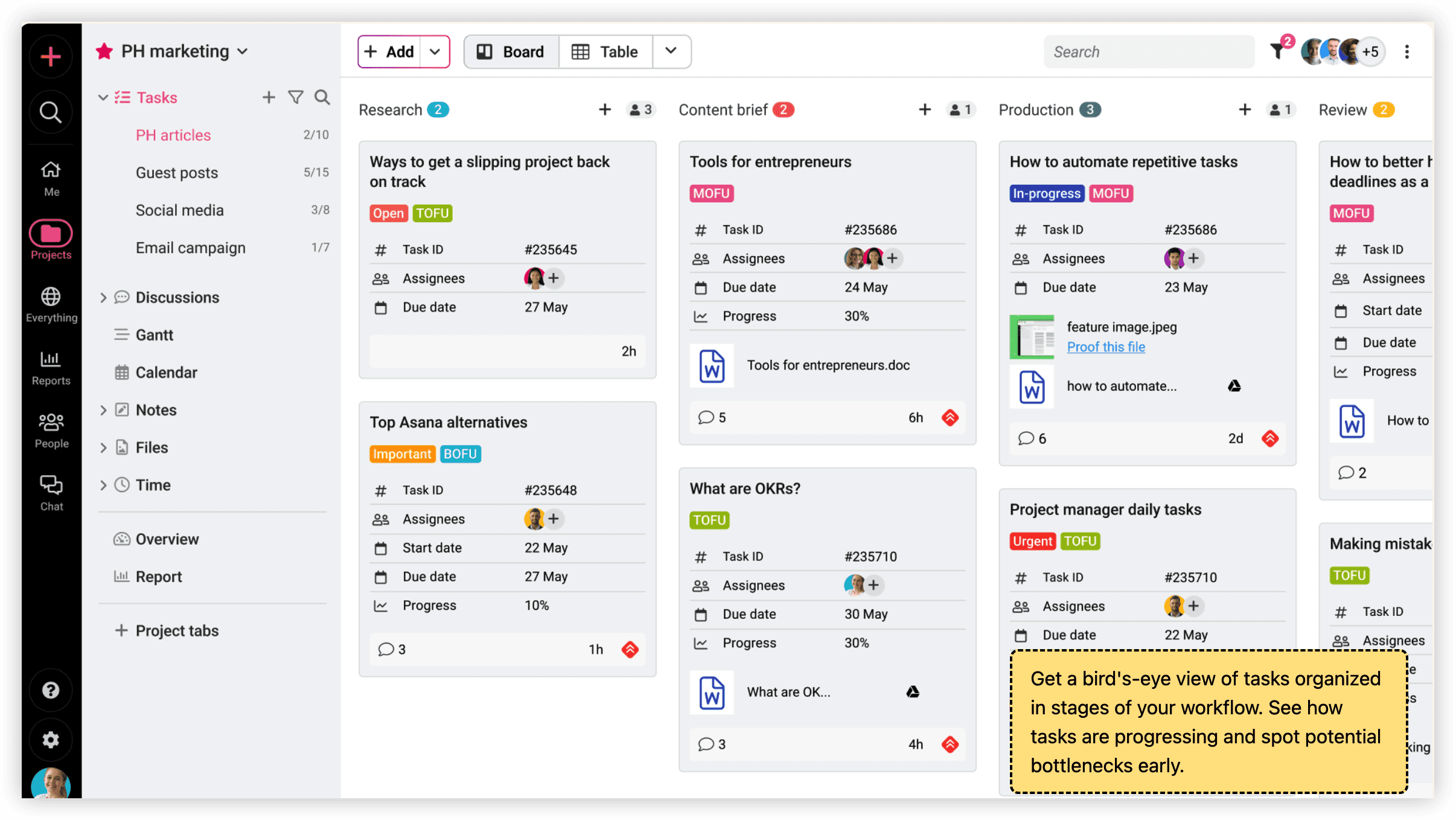
Core functionality encompasses task management, Gantt and Kanban views, proofing workflows for creative review, and built-in chat. The deliberate limitation of advanced customization options reduces configuration overhead but may constrain teams with sophisticated process requirements.
Value proposition: Predictable cost structure with sufficient capability for straightforward project coordination.
ClickUp — Best for Feature-Rich Team Collaboration
ClickUp pursues comprehensive feature density, positioning itself as a consolidated replacement for multiple discrete applications. Document editing, goal tracking, time management, whiteboarding, and task management coexist within extensive customization options.
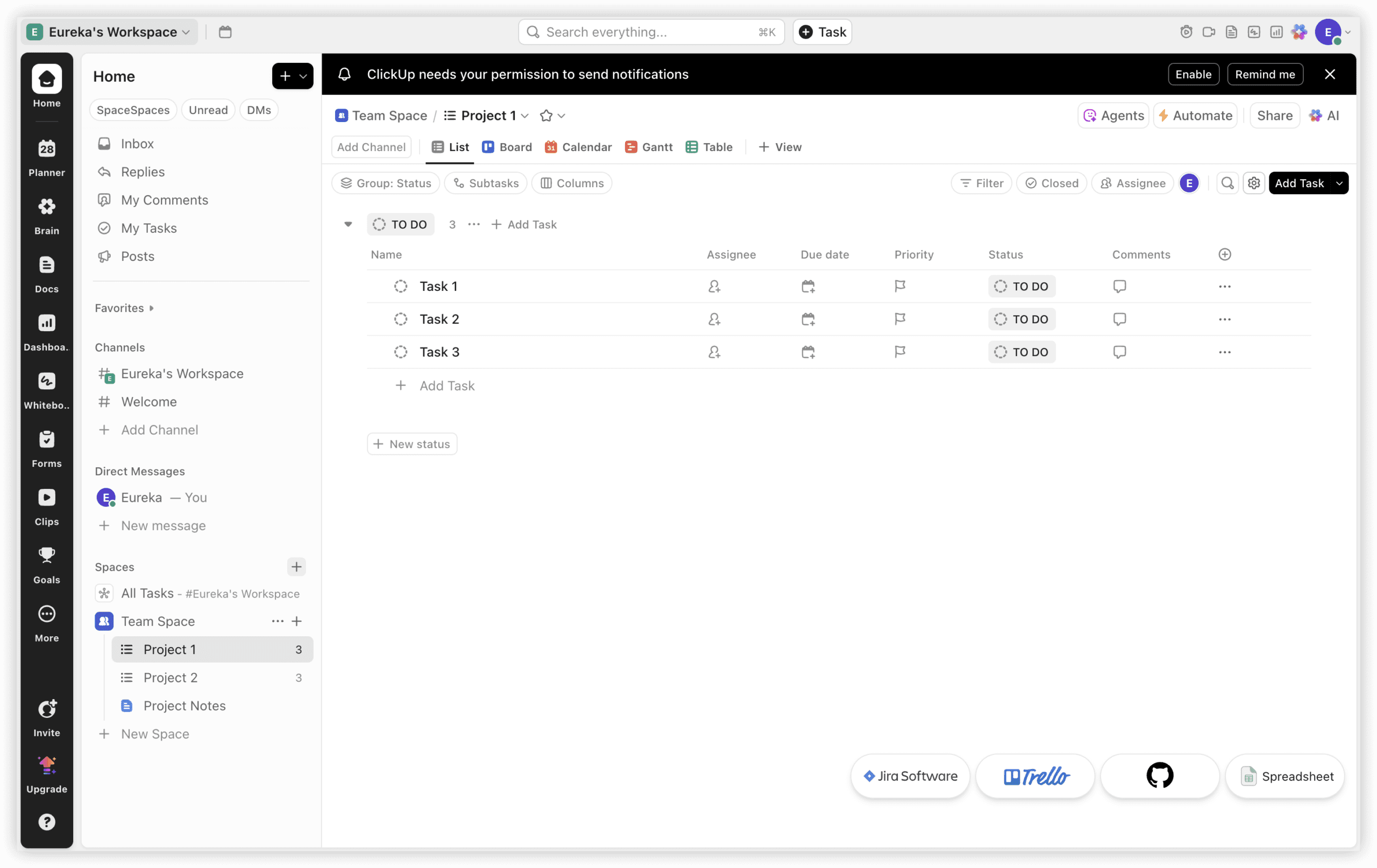
The platform’s flexibility enables teams to model virtually any operational pattern, though this breadth introduces configuration complexity that can delay productive adoption. For organizations willing to invest in workspace design, ClickUp can subsume tools that would otherwise require separate subscriptions and integration maintenance.
Trade-off: Capability abundance versus interface simplicity; most effective with dedicated administrative investment.
Comparative Pricing Overview
| Platform | Free Tier | Entry Paid | Notable Pricing Characteristic |
|---|---|---|---|
| ONES | Limited trial | Custom (enterprise-focused) | Modular licensing by capability area |
| Backlog | 10 users, 1 project | $35/month (Starter) | Flat-rate tiers, no per-user escalation |
| Businessmap | Not available | Custom (team-based) | Portfolio and enterprise tiers scaled by workflow complexity |
| Monday.com | Up to 2 seats | ~$9/seat/month | Per-seat scaling with feature-gated tiers |
| Teamwork.com | Up to 5 users | ~$13.99/user/month | Client access and delivery management bundled |
| ProofHub | Not available | $45/month (flat) | Unlimited users within fixed tiers |
| ClickUp | Free forever (limited) | $7/user/month | Feature expansion through tier progression |
Selection Guidance for 2026
The appropriate Jira alternative depends on organizational context more than absolute feature comparison:
For enterprise R&D organizations managing complex product portfolios with stringent quality and compliance requirements, ONES provides the integrated depth and measurement infrastructure that fragmented toolchains cannot replicate.
For software teams prioritizing development workflow cohesion, Backlog’s native repository integration and predictable pricing present a compelling migration path from Jira’s connector-dependent architecture.
For Kanban-mature organizations with portfolio complexity, Businessmap’s flow analytics and strategic alignment capabilities offer governance sophistication beyond Jira’s native Kanban implementation.
For cost-predictability priorities, ProofHub’s flat-fee model or Backlog’s tiered structure eliminate the licensing uncertainty that drives many teams away from Atlassian’s pricing evolution.
Frequently Asked Questions
Which platform presents the most direct enterprise competitor to Jira?
Among evaluated alternatives, ONES most directly addresses enterprise requirements through unified R&D lifecycle coverage, governance controls, and delivery metrics. Businessmap competes at portfolio scale but with Kanban-specific methodology commitment.
What motivates teams to migrate from Jira?
Common drivers include pricing unpredictability under per-user models, interface complexity for non-technical participants, fragmented tool ecosystems requiring extensive integration maintenance, and limited native support for emerging workflow methodologies.
Does Google offer a comparable project management solution?
Google Workspace includes Google Tasks and limited project tracking within Google Sheets, but lacks the issue management, agile workflow support, and development integration characteristic of Jira or its alternatives. Organizations requiring structured project governance typically supplement or replace native Google tools.
Which alternative best supports agile methodology specifically?
Backlog and Businessmap both provide strong agile foundations—Backlog through integrated sprint management and repository linkage, Businessmap through Kanban flow optimization and WIP governance. ONES accommodates agile within broader enterprise R&D process frameworks including scaled agile and regulated delivery models.