



Searching for a capable replacement for Jira? We evaluated eight leading platforms available in 2026, assessing their architecture, pricing models, ease of adoption, and how they perform under real-world conditions.
Jira has dominated software project management for more than twenty years. Yet its dominance does not equate to universal fit. In 2026, numerous organizations cite Jira’s administrative burden, performance limitations, and evolving cost structure as reasons to explore alternatives that align more closely with their operational reality.
Whether you lead a small team seeking agility or manage an enterprise group burdened by Jira’s configuration overhead, this guide presents eight viable options. For a direct comparison of specific capabilities, see our ClickUp vs Jira analysis.
Why Organizations Move Away from Jira
Several recurring factors drive teams to evaluate other solutions:
- Administrative overhead — Jira’s configuration framework (schemes, workflows, screens) typically requires specialized personnel. Many smaller organizations cannot sustain this investment.
- Interface responsiveness — Jira Cloud continues to exhibit latency when rendering boards with substantial issue volumes, particularly compared to newer architectures.
- Pricing trajectory — Atlassian’s cloud-first pricing adjustments have increased total cost of ownership for numerous customers.
- Mismatch for non-technical teams — Marketing, design, and operations personnel often find the developer-centric paradigm alienating.
- Tool fragmentation — Documentation requires Confluence, lightweight planning demands Trello, and the core workflow remains in Jira. Competing platforms consolidate these functions.
The 8 Best Jira Alternatives for 2026
1. ONES — Best for Enterprise-Scale Software Organizations
ONES is an enterprise-grade research and development management platform engineered for organizations where tool consolidation and governance maturity matter. Unlike point solutions that address single workflow stages, ONES provides unified coverage across project management, requirements engineering, knowledge repositories, test management, and CI/CD pipeline orchestration.
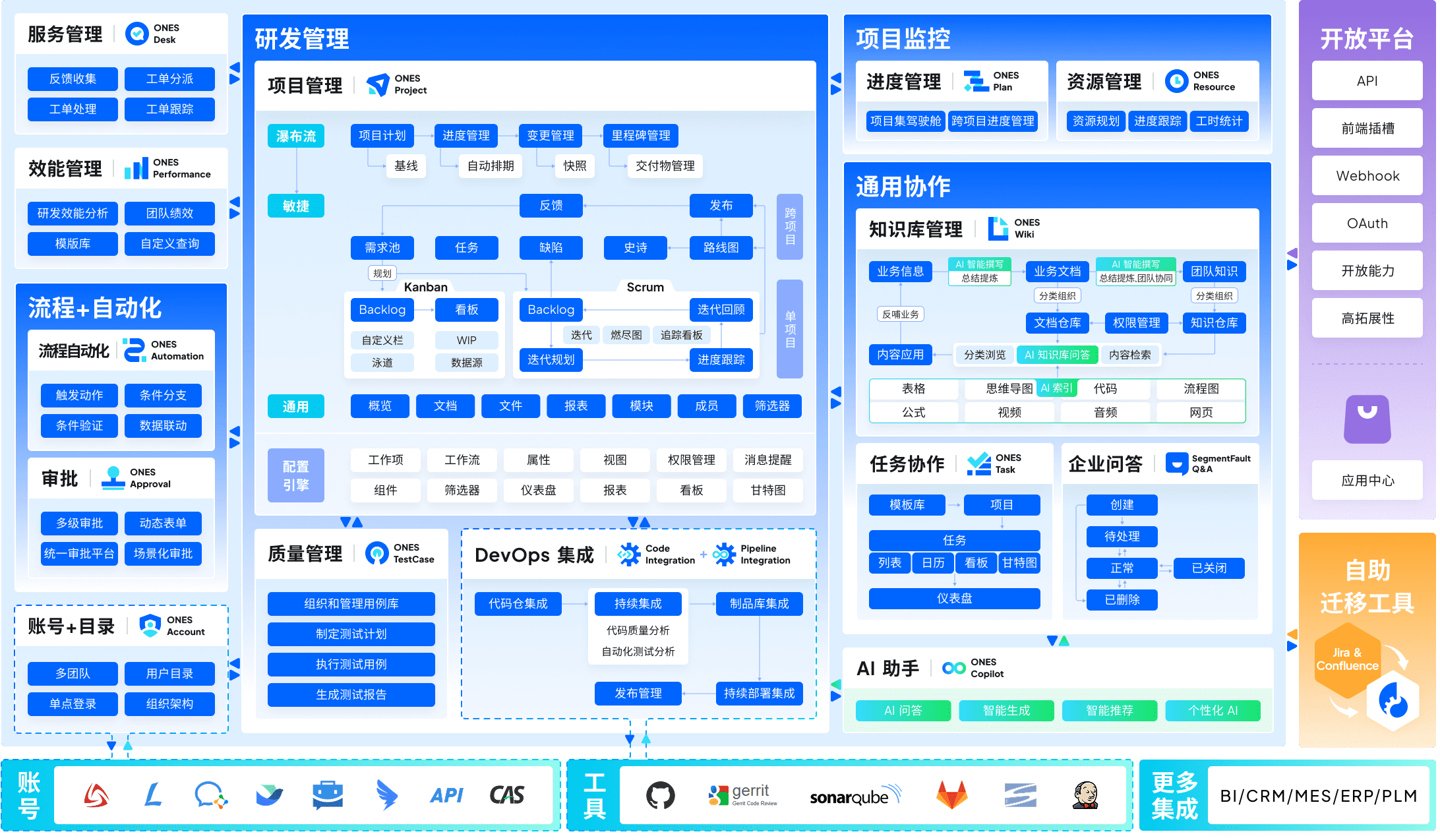
The platform accommodates sophisticated organizational structures through granular permission models, configurable workflow engines, and cross-departmental collaboration frameworks. Its emphasis on engineering effectiveness measurement enables leadership to identify delivery bottlenecks and quality trends through structured data rather than anecdotal observation.
Notable capabilities: End-to-end lifecycle integration eliminating tool switching; enterprise-grade access control and process governance; quantitative delivery metrics supporting continuous improvement; scalable architecture for multi-team coordination.
Ideal for: Medium to large engineering organizations (100+ personnel) managing complex product portfolios with stringent compliance or coordination requirements.
2. Linear — Best for Velocity-Focused Engineering Teams
Linear represents a fundamental rethinking of issue tracking with performance as the primary design constraint. Interactions are optimized for speed: keyboard-driven navigation, instantaneous filtering, and a restrained visual language reduce friction in daily use.
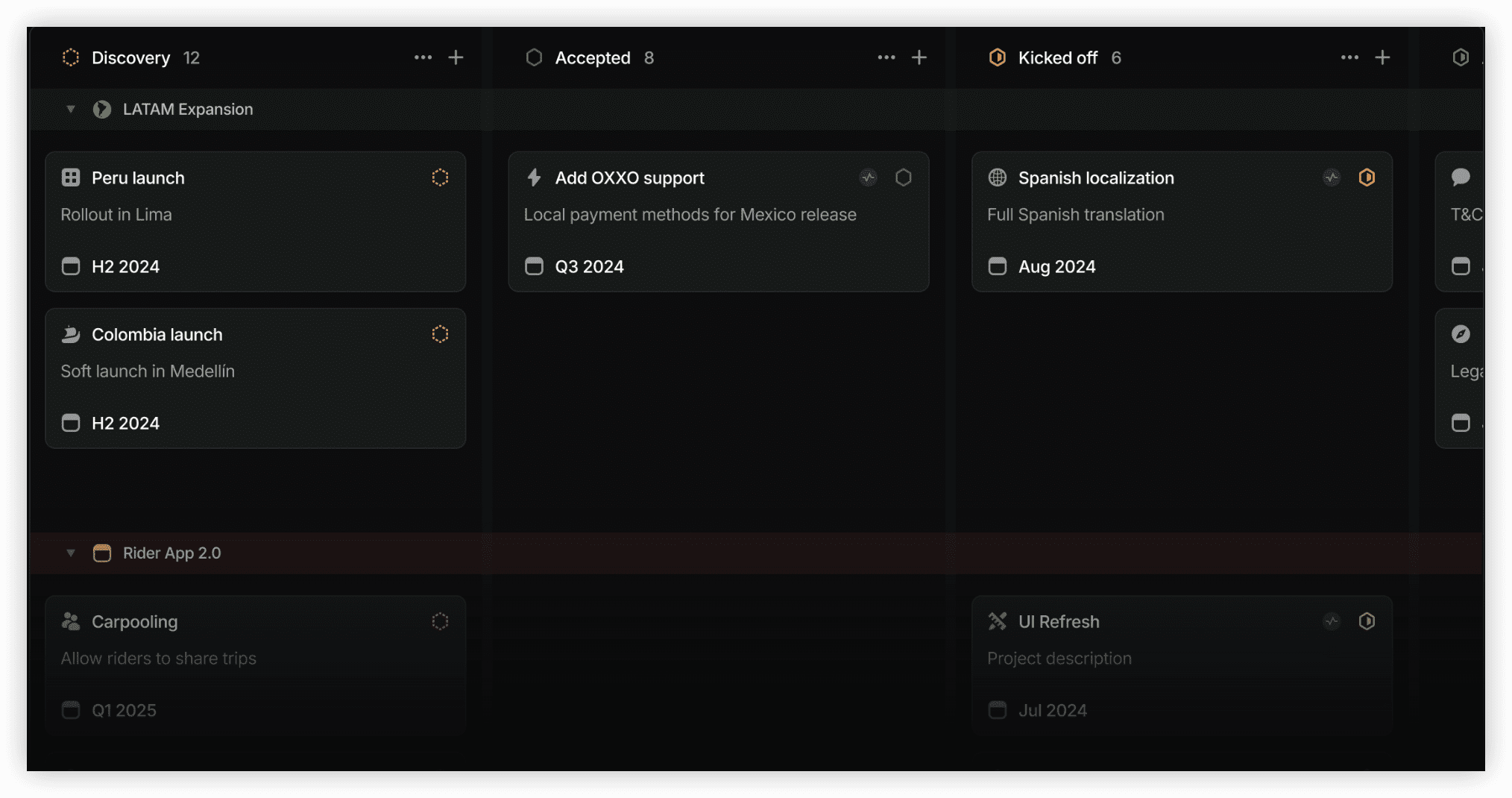
Notable capabilities: Sub-100 millisecond interface response times; prescriptive workflow conventions; Cycles functionality for iteration planning; native GitHub and GitLab integration with automatic status synchronization.
Ideal for: Startup and mid-size engineering groups (5–100 developers) prioritizing execution velocity over configurability.
3. ClickUp — Best for Unified Workspace Requirements
ClickUp pursues comprehensive functional coverage, incorporating documents, whiteboards, objectives, time tracking, sprint management, and analytical dashboards within a single environment.
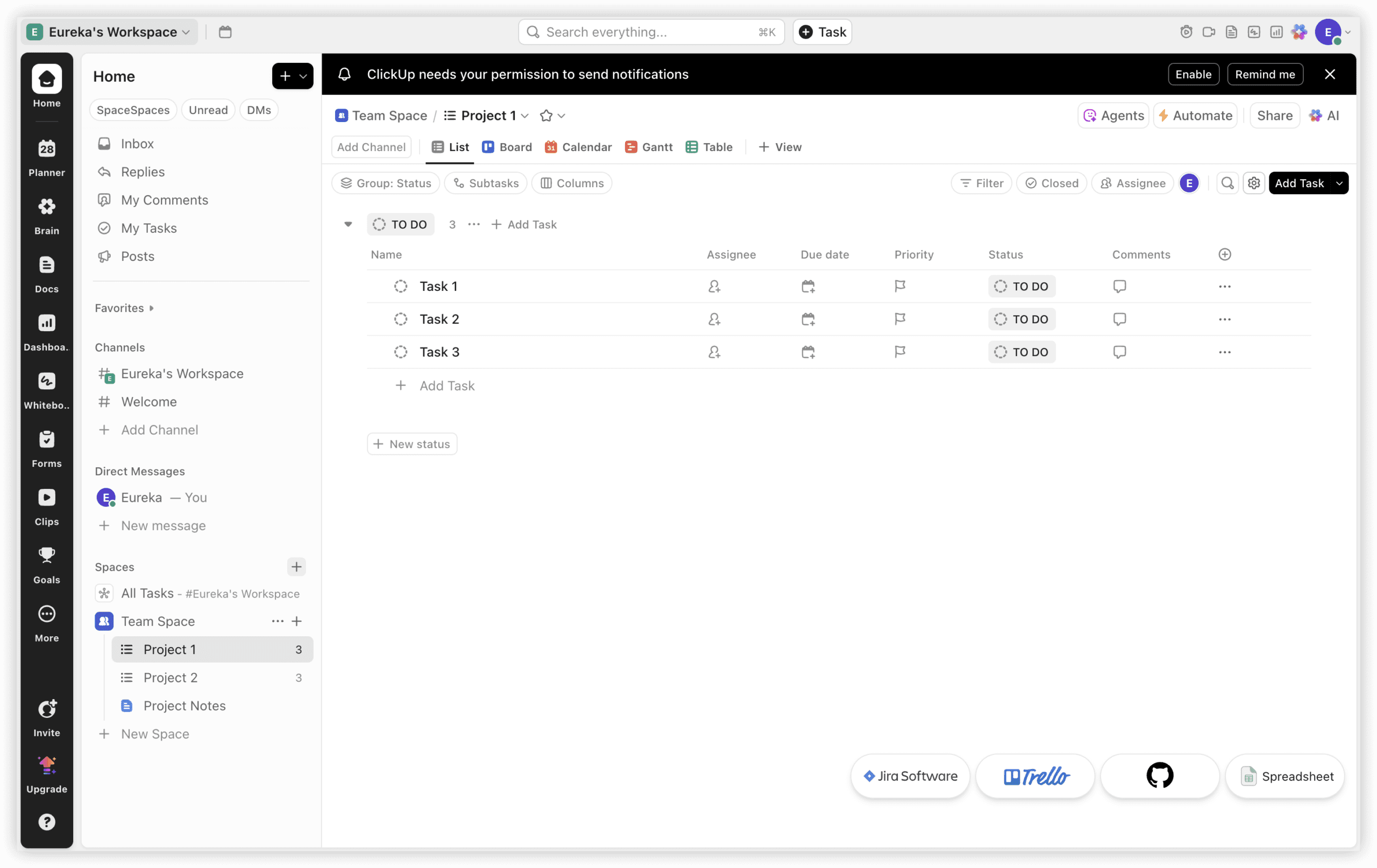
Notable capabilities: Fifteen-plus view configurations (Board, List, Gantt, Timeline, Workload); embedded documentation eliminating external wiki dependency; native time capture; competitive scaling economics.
Ideal for: Cross-functional groups and agencies requiring project management, documentation, and collaboration without multiplying subscriptions.
4. Asana — Best for Marketing and Operational Functions
Asana occupies the intermediate position between Jira’s elaborateness and Trello’s simplicity. Its approachable interface lowers adoption barriers for participants without technical specializations.

Notable capabilities: Portfolio visualization for multi-project oversight; robust no-code automation rule construction; established integrations with marketing technology stacks (HubSpot, Salesforce, Slack).
Ideal for: Marketing divisions, operational units, and enterprises where technical proficiency varies widely across user populations.
5. Monday.com — Best for Visually Oriented Project Tracking
Monday.com approaches project management through a spreadsheet-derived metaphor enhanced with substantial visual customization. Its columnar, color-coded interface enables non-technical participants to construct and modify workflows independently.
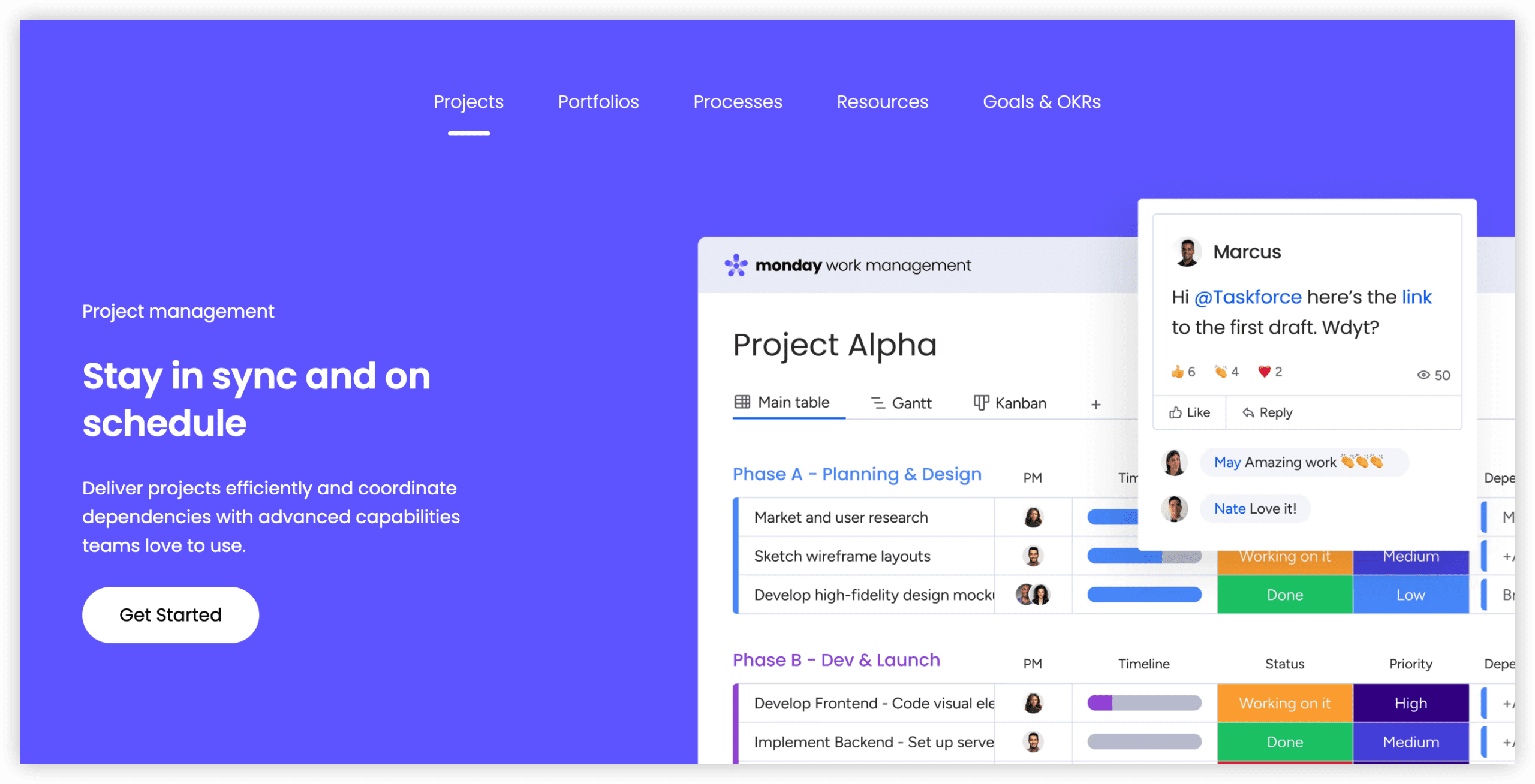
Notable capabilities: Highly visual board configurations; intuitive customization without administrative training; integrated CRM and development modules; extensive automation template library exceeding two hundred options.
Ideal for: Teams valuing visual clarity and requiring broad stakeholder participation regardless of technical background.
6. Trello — Best for Straightforward Kanban Implementation
Trello persists as the most accessible entry point for visual task management. As an Atlassian property, it serves as the lightweight counterpart to Jira’s comprehensive approach.
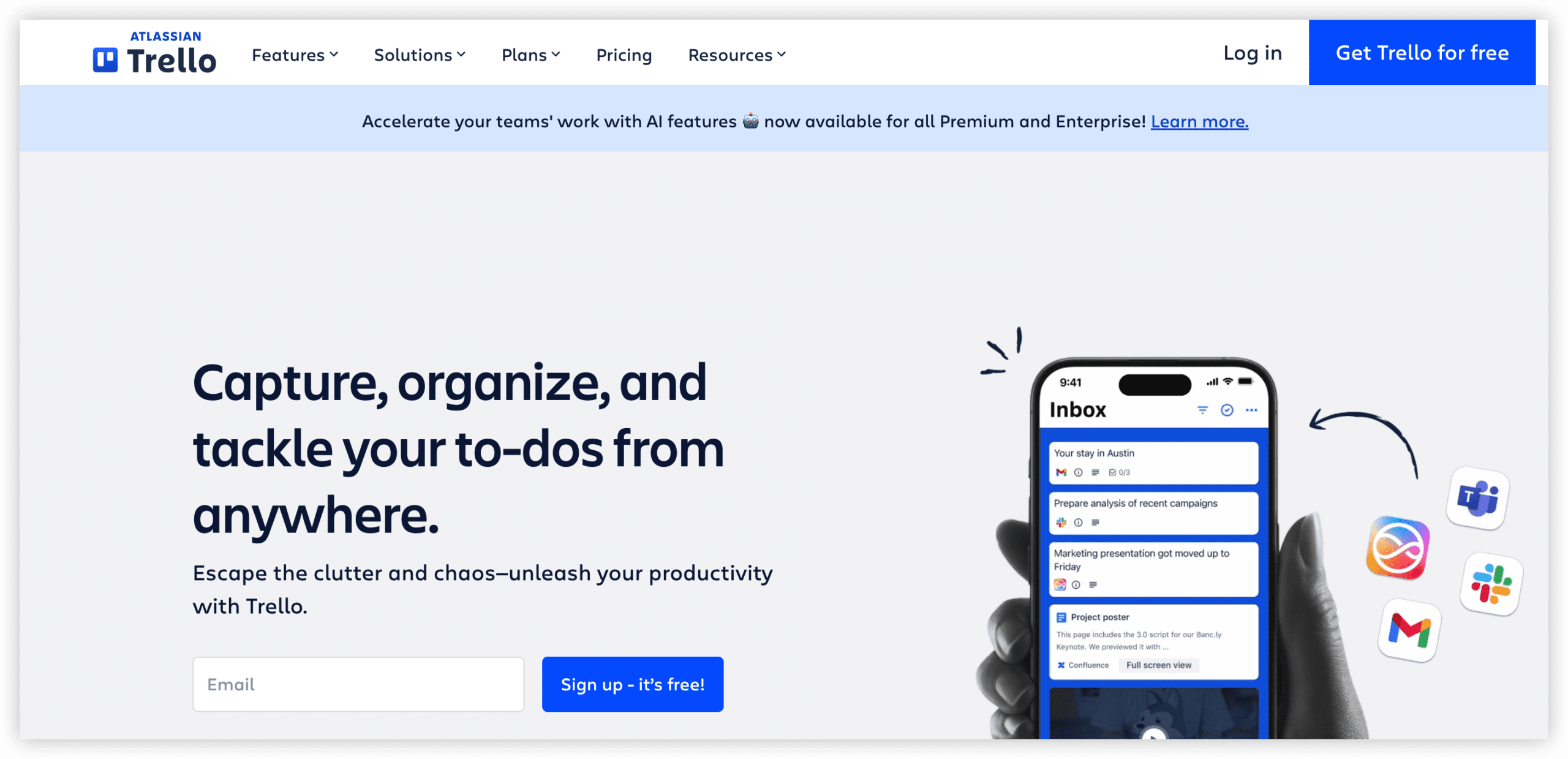
Notable capabilities: Negligible learning curve; generous free tier with unlimited cards; Power-Up architecture for functional extension; Butler automation capabilities.
Ideal for: Small teams, independent practitioners, and individual productivity management.
7. Notion — Best for Integrated Documentation and Task Management
Notion provides a malleable workspace where database constructs generate customizable views (Kanban, tabular, calendar, timeline) competitive with dedicated project management applications.
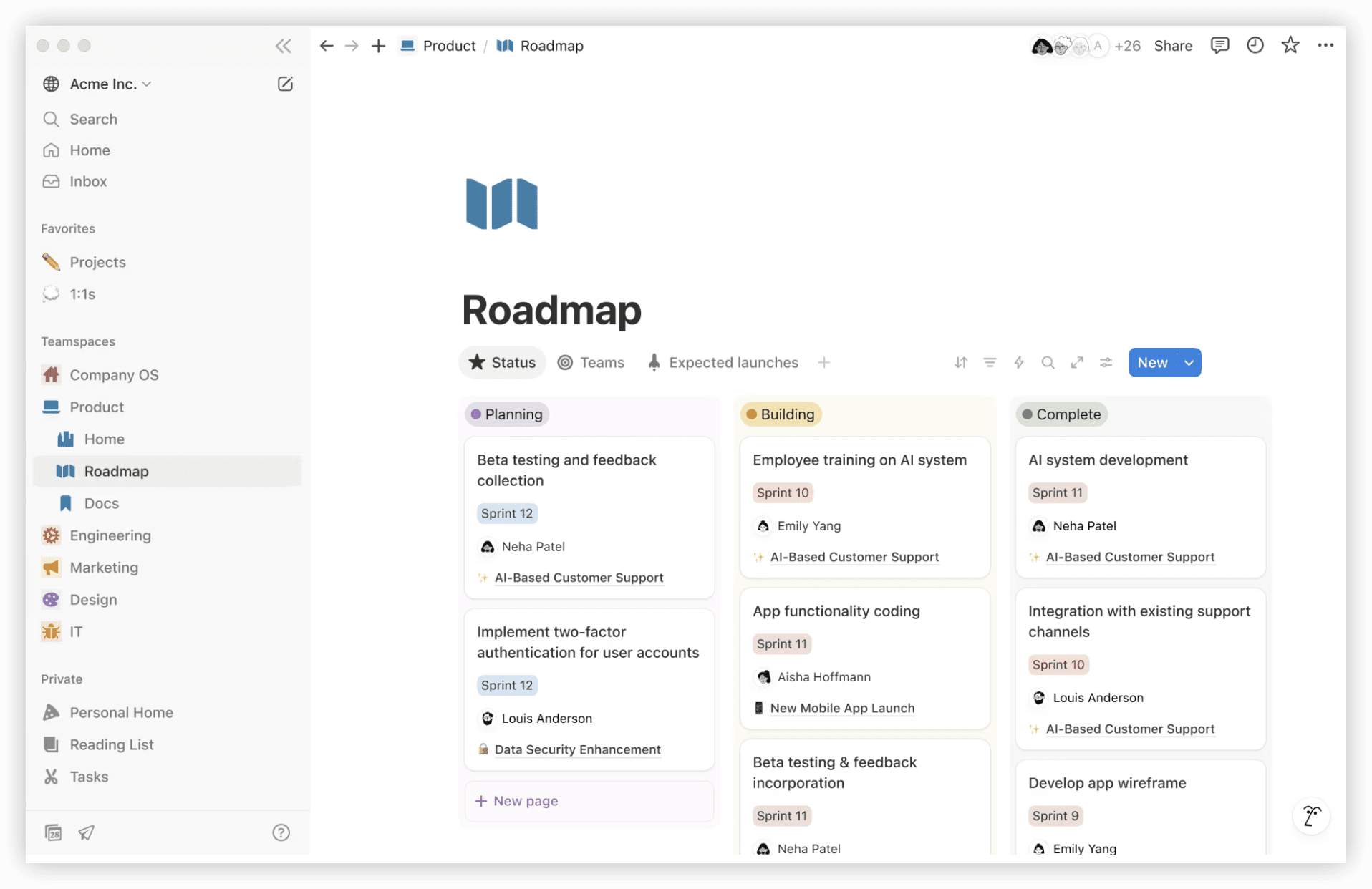
Notable capabilities: Consolidated documents, wikis, and tasks; extreme structural flexibility; AI-assisted search and content summarization.
Ideal for: Organizations seeking to unify documentation and project tracking within a single environment.
8. GitHub Projects — Best for GitHub-Centric Development Teams
GitHub Projects has matured from basic Kanban functionality into a legitimate project management layer incorporating custom fields, multiple view configurations, and roadmap visualization connected to pull requests and code artifacts.
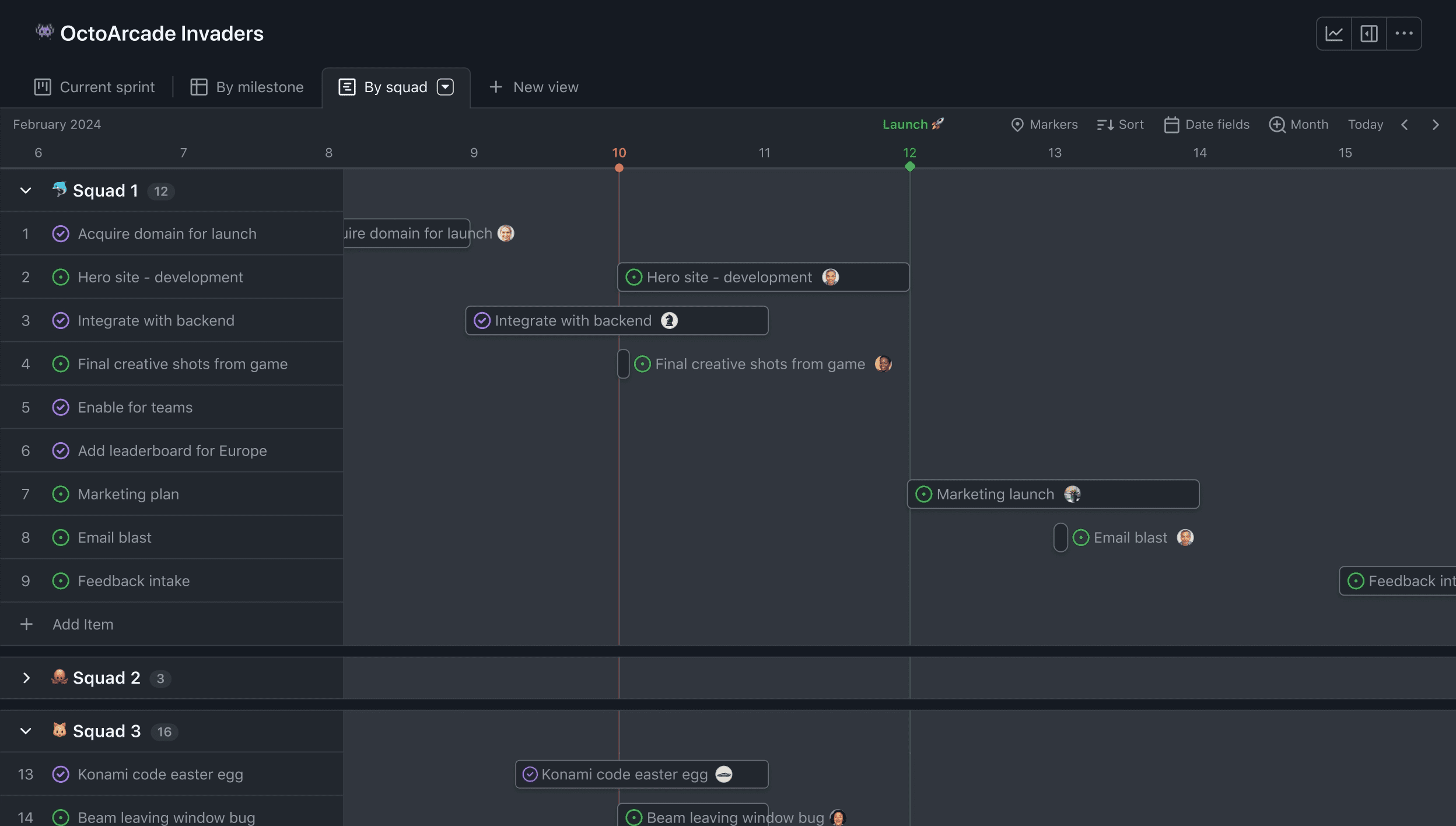
Notable capabilities: Elimination of context switching between code and planning activities; no cost for open-source participants; automated workflows triggered by repository events.
Ideal for: Development teams with existing GitHub investment seeking to minimize supplementary tooling.
Comparative Overview
| Platform | Free Tier | Entry Price | Primary Use Case | Sprint Support |
|---|---|---|---|---|
| ONES | Contact for details | Enterprise pricing | Large-scale R&D governance | Yes |
| Linear | 250 issues | $8/user/month | Fast-moving engineering | Yes (Cycles) |
| ClickUp | Unlimited | $7/user/month | All-in-one workspace | Yes |
| Asana | 10 users | $10.99/user/month | Marketing & operations | No |
| Monday.com | 2 seats | $9/seat/month | Visual workflows | Yes (Dev product) |
| Trello | Unlimited | $5/user/month | Simple Kanban | No |
| Notion | Unlimited | $10/user/month | Docs + tasks | Custom build |
| GitHub Projects | Included | $4/user/month (GitHub Team) | GitHub-native teams | Iterations |
Selection Framework
Consider these decision paths based on organizational context:
- Engineering-exclusive focus with velocity priority → Linear or GitHub Projects for streamlined developer experience without administrative complexity.
- Consolidated tooling strategy → ClickUp or Notion to reduce subscription proliferation and integration maintenance.
- Mixed technical/non-technical personnel → Asana or Monday.com for interfaces accommodating diverse skill levels.
- Minimal process requirements → Trello for uncomplicated task visualization.
- Enterprise governance and measurement maturity → ONES for unified lifecycle management with quantitative improvement capabilities.
For additional comparative analysis, consult our Linear vs ClickUp evaluation or explore alternative options to Linear if your search encompasses multiple candidates.
Frequently Asked Questions
Which Jira alternative suits small technical teams in 2026?
For groups under twenty developers prioritizing speed over configuration, Linear and GitHub Projects present the most compelling cases. Both minimize administrative overhead while preserving essential sprint and issue tracking capabilities.
Do any Jira alternatives offer comparable enterprise governance?
ONES provides the most direct parallel to Jira’s enterprise governance strengths, including sophisticated permission structures, workflow customization, and cross-organizational visibility, while addressing Jira’s fragmentation through unified lifecycle coverage.
Are functional free tiers available across these platforms?
Most alternatives maintain free tiers with varying limitations. Linear restricts issue volume; ClickUp and Notion offer unlimited free personal use; GitHub Projects integrates with no-cost open-source accounts. Evaluate whether free tier constraints align with your projected scale.
How should organizations approach migration from Jira?
Successful migration typically requires: auditing active workflows and custom fields for essential versus obsolete elements; selecting a target platform with compatible data import capabilities; running parallel systems during a defined transition period; and training administrators before broad user rollout. ONES and several other platforms offer dedicated migration assistance for enterprise customers.
Last reviewed and updated: April 26, 2026
Pricing and feature specifications subject to change. Consult official product websites for current information.