



Looking for a Jira alternative in 2026? Here are 8 options worth evaluating, from enterprise-grade platforms to lightweight SaaS tools and self-hosted open-source solutions:
- ONES — Best for large engineering organizations needing integrated DevOps and governance
- Linear — Best for fast-moving product teams prioritizing speed over configurability
- ClickUp — Best for teams wanting tasks, docs, and goals in one workspace
- Asana — Best for cross-functional organizations with engineering and non-engineering teams
- Trello — Best for small teams needing minimal process overhead
- Shortcut — Best for startups wanting agile structure without Jira’s complexity
- Plane — Best for self-hosting with modern UI and zero per-seat costs
- OpenProject — Best for traditional project management with Gantt and dependencies
Why Teams Leave Jira in 2026
Jira Standard runs $8.60 per user monthly; Premium doubles that. For a 50-person engineering organization, annual spend falls between $5,160 and $10,200. Yet cost rarely drives departures. The deeper issue is operational weight.
Jira’s configurability—custom workflows, issue types, permission schemes, automation rules—becomes liability when accumulated over years. Teams arrive at three common breaking points:
- Speed friction: The interface lags behind contemporary tools, and simple actions require too many steps
- Configuration debt: Years of custom fields and schemes nobody dares modify, yet everyone works around
- Shadow workflows: Real work tracked in spreadsheets, Slack threads, or whiteboards; Jira updated afterward for reporting
The alternatives below address these pain points with varying trade-offs.
1. ONES
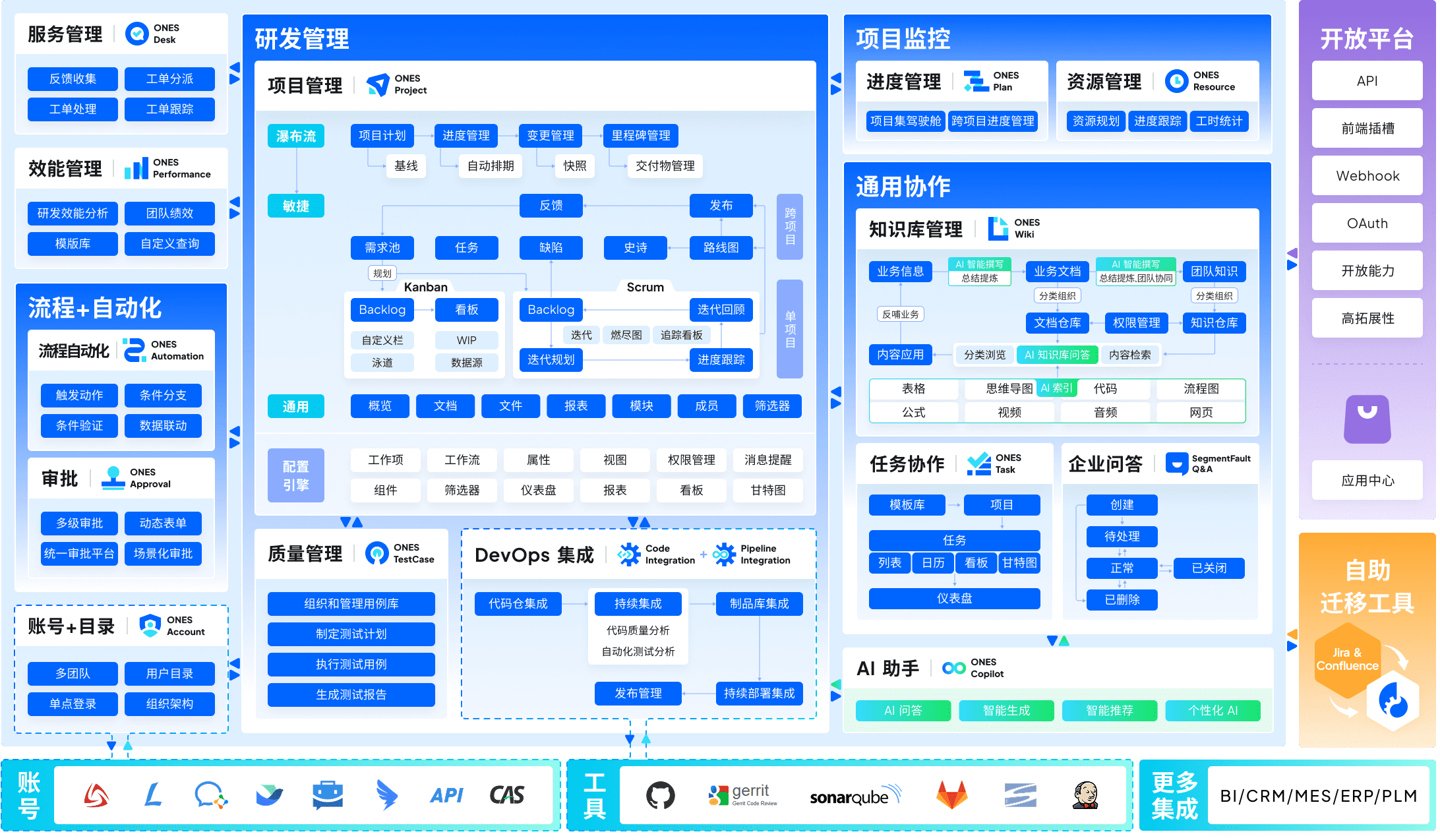
ONES serves as an enterprise-grade replacement for organizations outgiring fragmented toolchains. Unlike point solutions that solve one layer of the development lifecycle, ONES unifies project management, requirements tracking, knowledge management, test management, CI/CD pipelines, and code repositories under one platform.
Where ONES distinguishes itself is governance at scale. The platform supports intricate process configurations, granular permission models, and cross-team coordination structures that accommodate how large organizations actually operate—not how idealized agile frameworks prescribe. Its measurement capabilities deserve particular attention: ONES surfaces delivery metrics that let leadership identify bottlenecks and validate improvement efforts with data rather than intuition.
Strengths:
- End-to-end integration eliminates context switching between separate tools
- Complex workflow and permission modeling for regulated or matrixed organizations
- Built-in analytics for engineering productivity and delivery quality
- Designed explicitly for medium to large engineering teams
Limitations:
- Implementation investment exceeds lighter-weight alternatives
- Feature breadth creates learning curve for smaller teams
- Less suited to organizations without dedicated platform administration resources
Best for: Engineering organizations of 100+ people seeking to consolidate DevOps tooling and establish measurable delivery practices.
2. Linear
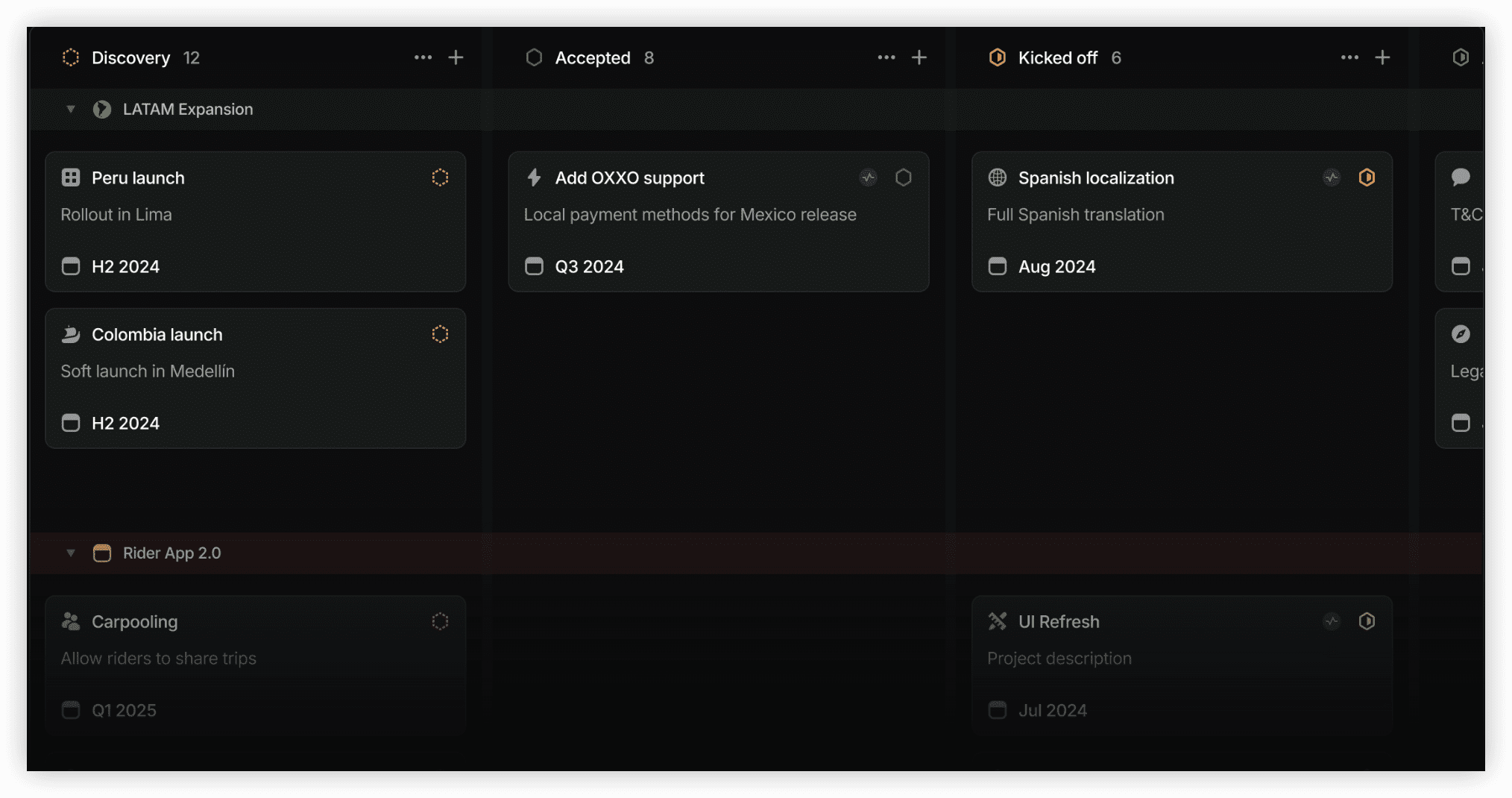
Linear has become the default destination for engineering teams exiting Jira. The interface responds instantly, keyboard navigation covers nearly every action, and the opinionated structure—cycles for sprints, triage queues, integrated roadmaps—requires minimal configuration.
Strengths:
- Fastest interaction speed in the category
- Git-native: automatic branch naming, pull request linking, issue closure
- Generous free tier for small teams
Limitations:
- Opinionated design resists customization; processes must conform to Linear’s model
- Minimal support for non-engineering functions
- Reporting capabilities thinner than enterprise alternatives
- No self-hosted deployment option
Best for: Product engineering teams under 50 members who prioritize velocity and accept prescriptive workflow design.
3. ClickUp
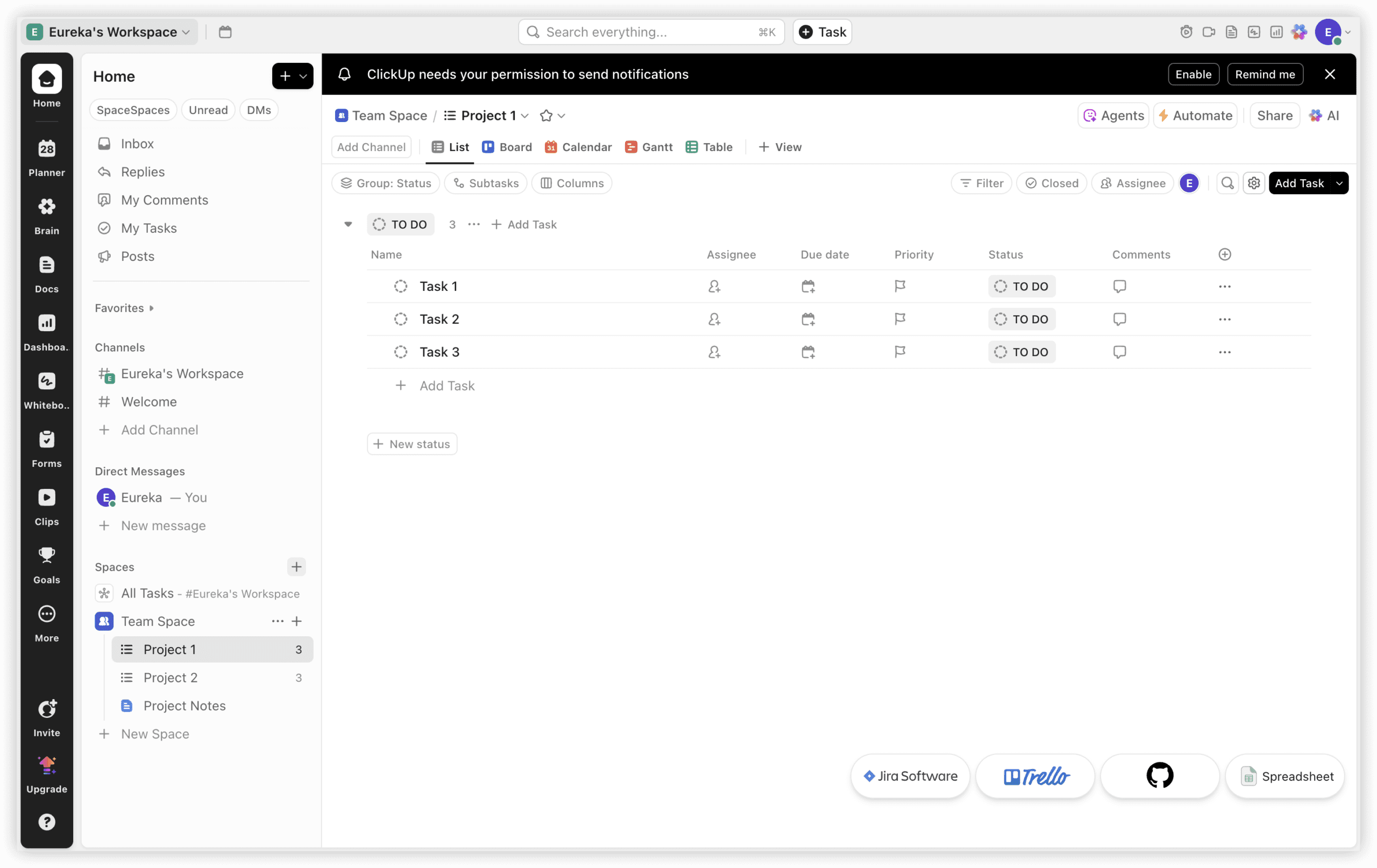
ClickUp positions itself as the consolidation layer for organizational tooling—tasks, documents, whiteboards, chat, goals, and time tracking within one environment.
Strengths:
- Replaces multiple standalone applications
- Highly configurable views: list, board, Gantt, calendar, workload distribution
- Free tier unusually complete for evaluation
- Pricing undercuts Jira Premium significantly
Limitations:
- Feature density creates its own adoption challenge
- Performance degrades with large workspace scale
- Individual features lack depth of specialized tools
- Default notification settings generate excessive noise
Best for: Teams willing to invest setup time in exchange for unified tooling across functions.
4. Asana
Asana excels when project management extends beyond engineering into marketing, operations, design, and executive functions.
Strengths:
- Superior cross-functional usability
- Timeline, portfolio, and goal views that management actually references
- Automation rules engine accessible without administrator certification
- Polished, low-friction interface
Limitations:
- Developer workflows lack native depth
- Advanced tier pricing escalates quickly
- Sprint and velocity tooling feels appended rather than integral
- Free tier restricts collaborative features
Best for: Companies where engineering shares tooling with multiple other departments.

5. Trello
Trello reduces project management to its essential form: a board with cards. Sometimes this simplicity is precisely what a team requires.
Strengths:
- Essentially zero learning curve
- Free tier adequate for most small-team scenarios
- Power-ups extend functionality modularly
- Atlassian ownership facilitates Jira migration
Limitations:
- No native sprint, estimation, or velocity capabilities
- Struggles beyond modest board complexity
- Reporting minimal
- Multi-project visibility requires workaround construction
Best for: Small teams and ancillary projects where process overhead should approach zero.
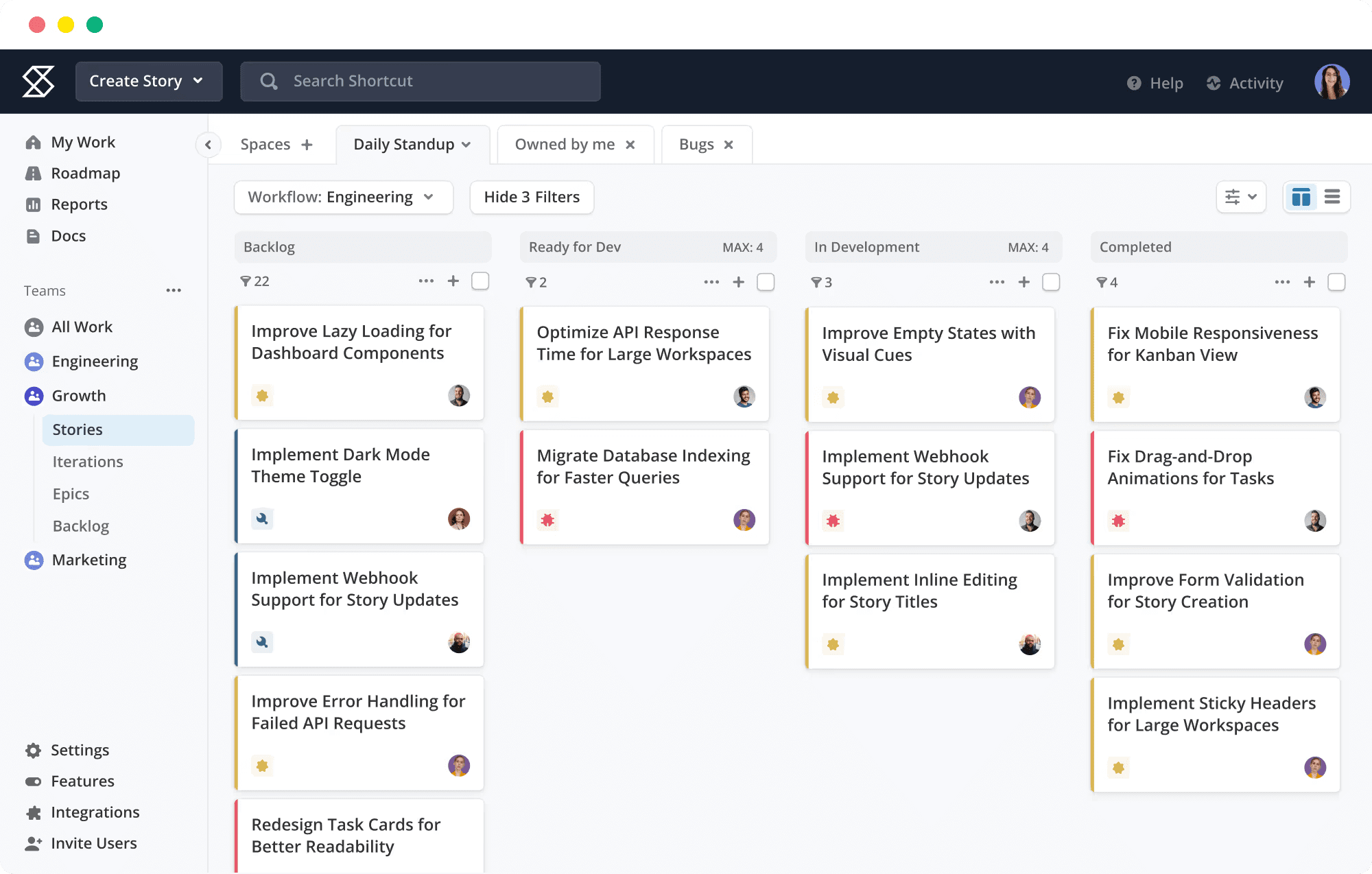
6. Shortcut
Shortcut occupies the middle position: more structure than Trello, less burden than Jira.
Strengths:
- Stories, epics, iterations, and milestones map to agile practice without configuration maze
- Solid git integrations and API
- Reporting (burndown, cycle time) included at accessible pricing
Limitations:
- Ecosystem smaller than established competitors
- Interface competent but not exceptional in responsiveness
- Lower market recognition affects contractor familiarity
Best for: Startups seeking agile conventions without Jira administration overhead.
7. Plane
Plane represents the open-source alternative for teams wanting modern interface design combined with complete data sovereignty.
Strengths:
- Free, open source, self-hostable via Docker
- Issues, cycles, modules, and roadmap cover core Jira workflows
- Contemporary interface design
- Cloud-hosted option available if self-management becomes undesirable
Limitations:
- Younger project with maturing feature set
- Integration ecosystem limited versus SaaS incumbents
- Self-hosting imposes operational responsibility for upgrades and data protection
- Community smaller than OpenProject’s established base
Best for: Teams with engineering comfort for self-hosting who prioritize data ownership and zero recurring per-seat fees.
8. OpenProject
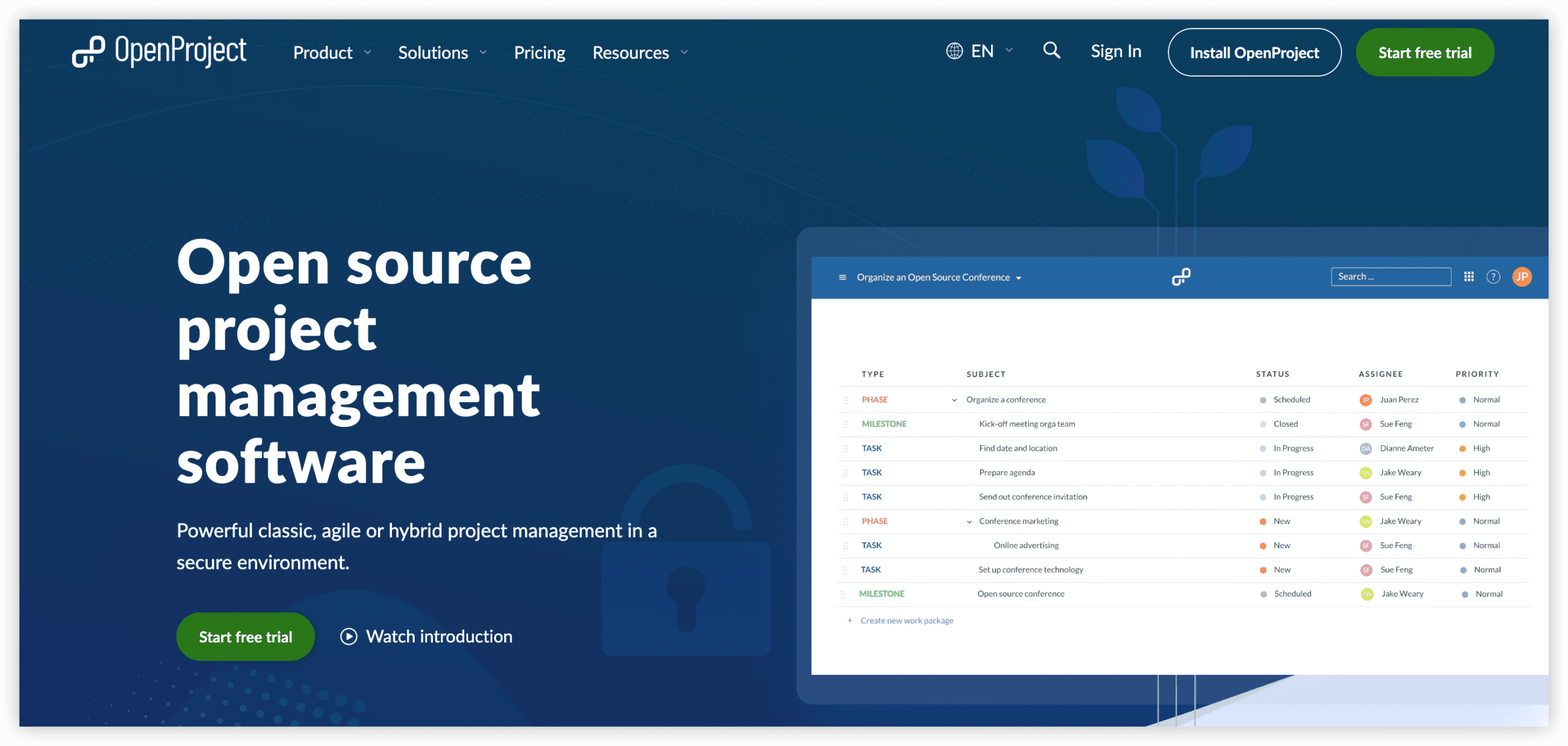
OpenProject offers maturity and comprehensiveness for traditional project management paradigms.
Strengths:
- 15+ years development yields completeness: Gantt, boards, time tracking, budgets, meetings
- Strong for classic PM with phases, dependencies, resource planning
- Self-hosted free; enterprise tiers add support and managed hosting
- EU-aligned data residency options
Limitations:
- Interface appears dated compared to contemporary alternatives
- Ruby on Rails stack requires specific operational expertise
- Agile boards functional but not emphasized
- Configuration complexity approaches Jira’s
Best for: Organizations requiring Gantt-centric project management, self-hosted, with agile as secondary concern.
Selection Framework by Organization Profile
| Your Situation | Recommended Tool |
|---|---|
| Large engineering org needing integrated DevOps and governance | ONES |
| Engineering team <50, prioritizing speed | Linear |
| Unified workspace for tasks, docs, goals | ClickUp |
| Cross-functional teams beyond engineering | Asana |
| Minimal process, minimal overhead | Trello |
| Agile structure without Jira complexity | Shortcut |
| Self-hosted, modern, no per-seat costs | Plane |
| Gantt-first classic PM, self-hosted | OpenProject |
Annual Cost Comparison (25-Person Team)
| Product | Typical Tier | Approximate Annual Cost |
|---|---|---|
| Jira (Standard) | $8.60/user/mo | $2,580 |
| Jira (Premium) | $17/user/mo | $5,100 |
| ONES | Enterprise | Custom pricing |
| Linear (Basic) | $8/user/mo | $2,400 |
| ClickUp (Unlimited) | $7/user/mo | $2,100 |
| Asana (Starter) | $10.99/user/mo | $3,297 |
| Trello (Standard) | $5/user/mo | $1,500 |
| Shortcut (Team) | $8.50/user/mo | $2,550 |
| Plane (self-hosted) | Free | Hosting only (~$300-600) |
| OpenProject (self-hosted) | Free | Hosting only (~$300-600) |
Pricing fluctuates; treat figures as directional. The structural pattern holds: SaaS costs compound with headcount, self-hosted costs compound with operational attention.
Frequently Asked Questions
What is the strongest free alternative to Jira?
For hosted solutions with teams of 10 or fewer, Linear and ClickUp offer capable free tiers. For unlimited users without subscription, self-host Plane or leverage GitHub Projects if your work already resides there.
Which open-source option best replaces Jira?
Plane suits teams wanting core agile workflows—issues, cycles, roadmaps—with contemporary interface design. OpenProject serves those needing traditional project management with Gantt charts, dependencies, and resource planning, accepting more established aesthetics.
Does Linear surpass Jira for engineering teams?
For product engineering organizations below approximately 50 people, typically yes: superior speed, minimal configuration, and frictionless adoption. For entities requiring extensive workflow customization, audit trails, or mixed engineering and non-engineering usage, Jira retains advantages.
Is self-hosting viable for Jira alternatives?
Plane and OpenProject both support free self-hosted deployment. Atlassian discontinued Jira Server, making self-hosted Jira now require Data Center licensing at enterprise scale—a significant factor driving alternative adoption.
How complex is Jira migration?
Issue export via CSV or REST API is straightforward; most alternatives provide Jira importers. The challenge lies in workflow reconstruction—custom fields, automation logic, and permission structures lack direct correspondence. Budget approximately one sprint for migration, with parallel operation for one complete cycle recommended.
Conclusion
Jira remains appropriate for large organizations with legitimately complex workflows and compliance obligations. The alternatives claim distinct advantages: ONES for enterprise integration and governance, Linear for velocity, ClickUp for consolidation, Asana for cross-functional reach, Trello for simplicity, Shortcut for balanced agility, and Plane or OpenProject for data sovereignty. The correct choice depends on organizational size, technical maturity, process complexity, and whether the priority is speed, control, or comprehensive visibility.