



Seven platforms stand out as viable Jira alternatives for 2026: ONES, Linear, ClickUp, Asana, Monday.com, Shortcut, and Plane. Each addresses different organizational needs—from enterprise-scale workflow governance to lightweight issue tracking and self-hosted deployment.
Most teams exploring alternatives are not abandoning Jira due to functional failure. The catalysts are economic and operational: Atlassian’s October 2025 price restructuring pushed Premium plans to approximately $15.63 per user monthly, while Maximum Quantity Billing now charges for peak user counts within a billing cycle without proration. A contractor added for two weeks can inflate costs for the full period. When Confluence, Atlassian Guard, and Marketplace applications are included, organizations commonly report all-in costs of $20–30 per user monthly. Additionally, Rovo AI integration carries implications for teams with minimal AI requirements.
For organizations whose Jira deployment consists primarily of boards and backlogs, these economics prompt legitimate reassessment.
1. ONES
Enterprise-grade development lifecycle management designed for organizations requiring unified tooling across complex delivery pipelines.
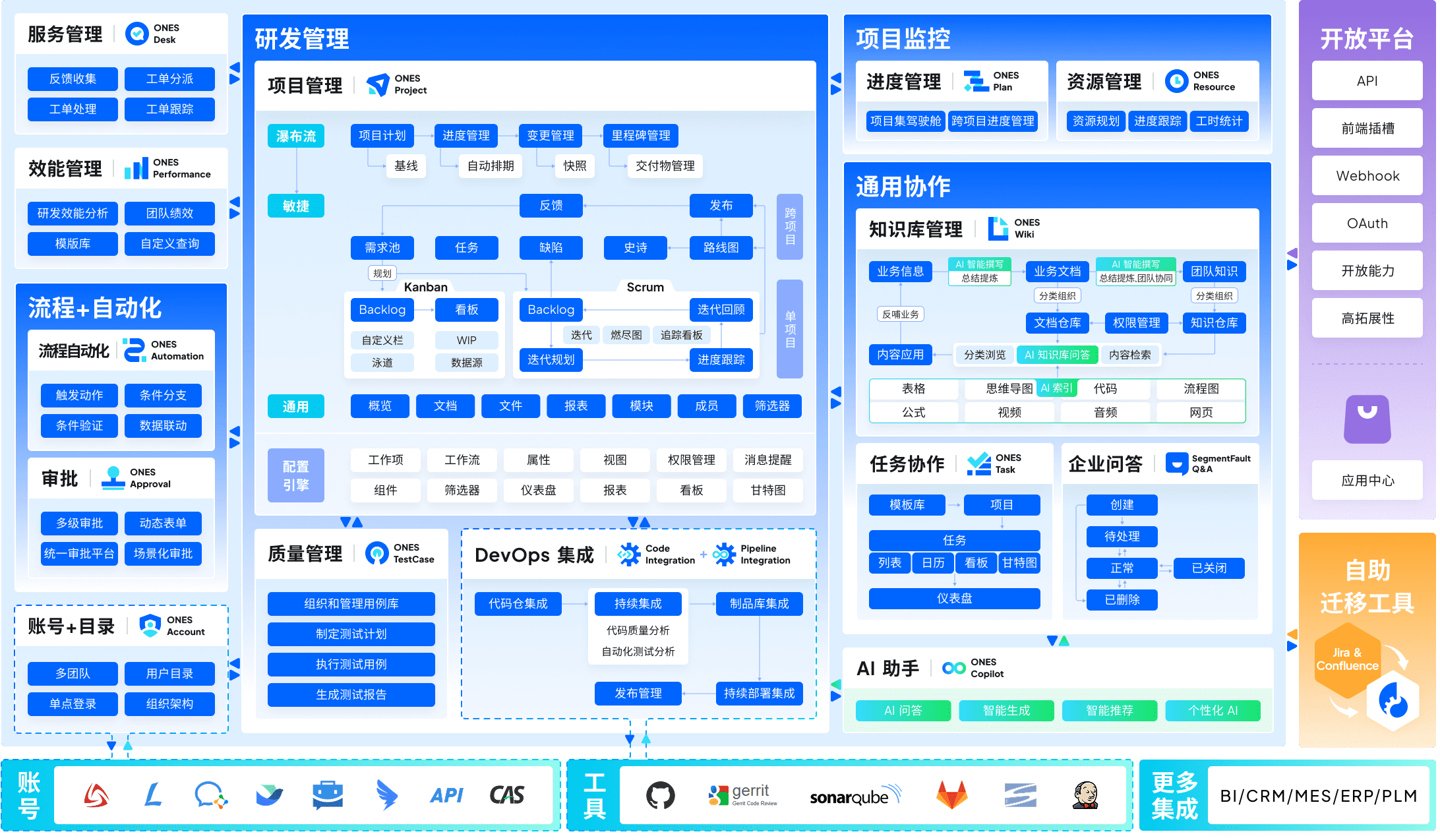
Distinction from Jira: ONES consolidates project management, requirements management, knowledge bases, test management, CI/CD pipelines, and code repositories within a single platform. This architecture eliminates the fragmentation that accumulates when teams stitch together separate tools for each function. For mid-to-large organizations, the platform supports sophisticated workflow configurations, granular permission models, and cross-team collaboration governance that matches Jira’s enterprise capabilities without equivalent administrative overhead. The platform emphasizes engineering effectiveness measurement, enabling leadership to base process improvements on delivery quality and velocity data rather than intuition.
Best suited for: Medium and large enterprises managing multi-team development initiatives with compliance, security, and reporting requirements that justify consolidated tooling investment.
Pricing: Contact sales for enterprise pricing; structured tiering based on scale and module selection.
2. Linear
The established reference for modern software teams prioritizing velocity over configurability.
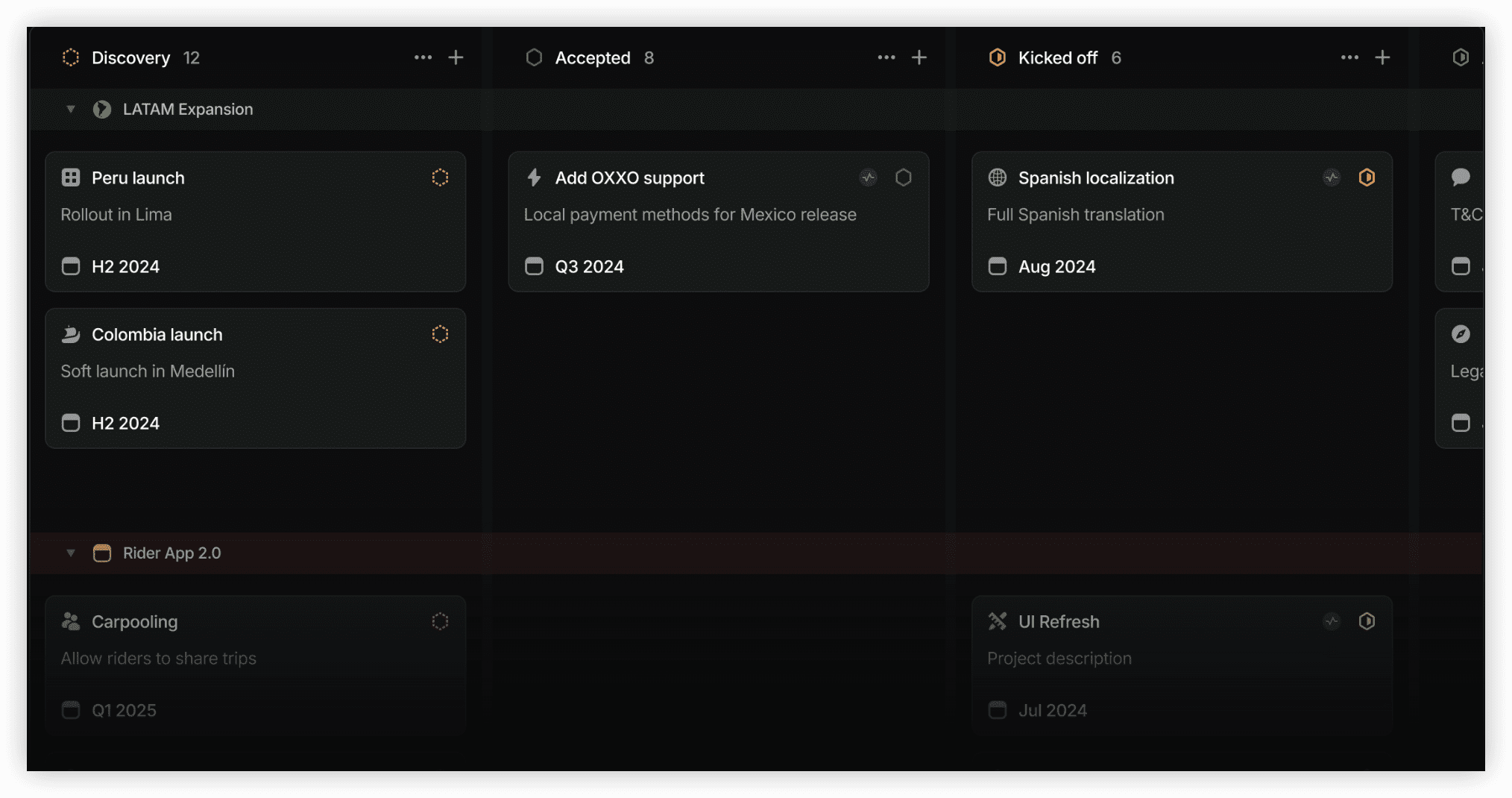
Distinction from Jira: Linear adopts a prescriptive approach contrary to Jira’s boundless customization. Its workflow—encompassing issues, projects, cycles, and triage—enables most product teams to operationalize within a single day without dedicated administration. Navigation speed remains consistently superior, and the configuration debt that degrades Jira performance over time does not accumulate. The compromise is reduced accommodation for highly specialized enterprise processes.
Best suited for: Product and engineering organizations valuing operational speed and minimal overhead above deep configurability.
Pricing: Free tier available; Basic at $10/user/month, Business at $16/user/month (annual billing).
3. ClickUp
A comprehensive work platform integrating tasks, documents, whiteboards, objectives, and time tracking.
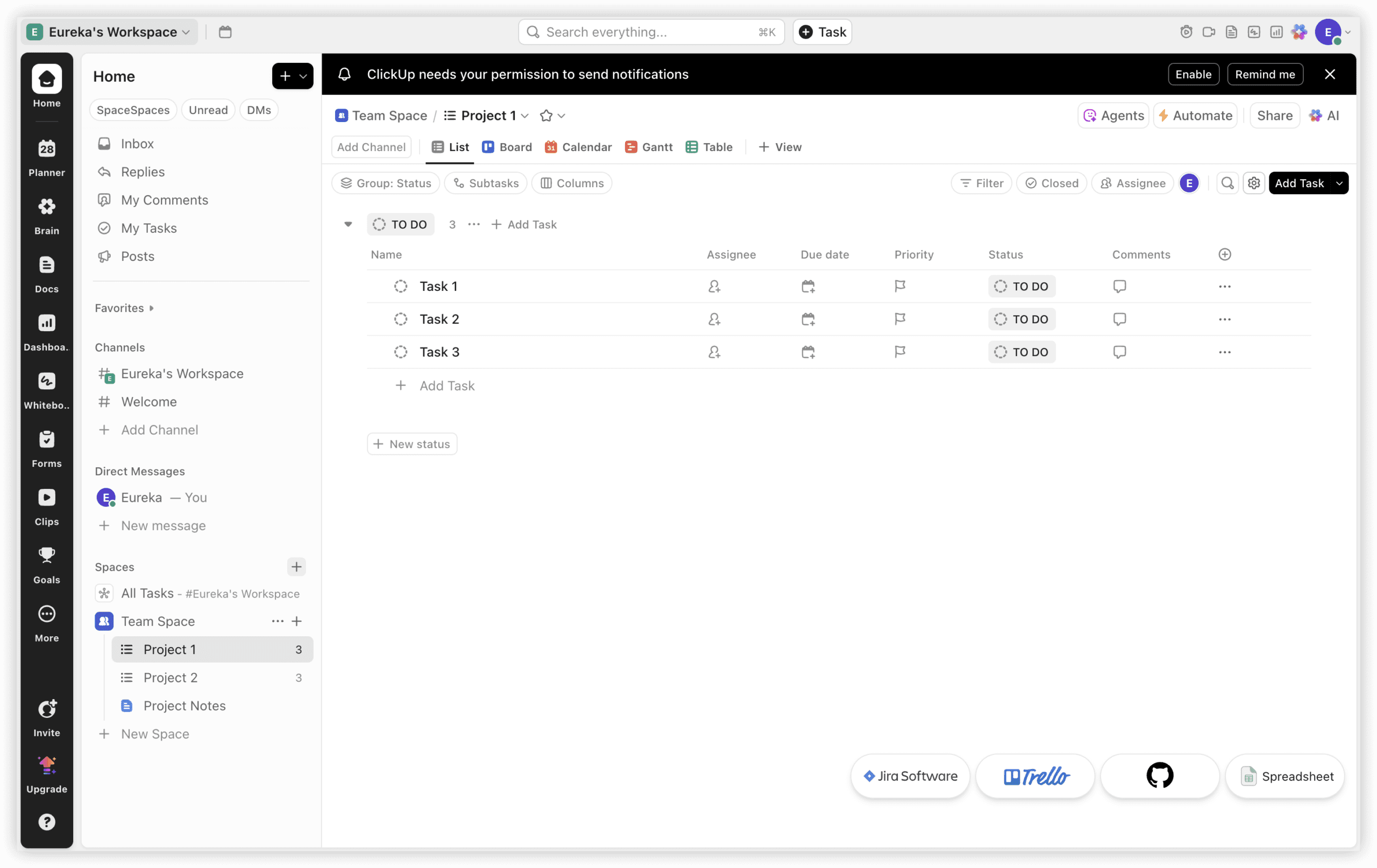
Distinction from Jira: ClickUp exceeds Jira in breadth rather than depth. Where Jira specializes in software issue tracking, ClickUp positions as unified workspace for entire organizations—appealing to teams seeking subscription consolidation. This breadth constitutes both strength and limitation: the interface can overwhelm, and ClickUp Brain AI requires additional investment of approximately $9/user/month beyond base plans.
Best suited for: Cross-functional teams replacing Jira alongside multiple complementary tools.
Pricing: Free Forever tier; Unlimited at $7/user/month, Business at $12/user/month (annual); Brain AI add-on from approximately $9/user/month.
4. Asana
Enterprise work management with gentler onboarding than Jira and AI capabilities embedded across paid tiers.
Distinction from Jira: Asana targets cross-functional project management rather than developer-centric issue tracking, yielding intuitive adoption for non-technical participants where Jira presents specialist friction. AI Teammates, Smart Projects, and AI Studio are included with paid subscriptions without supplementary metering—contrasting with Jira’s credit-based Rovo approach. Teams requiring tight Git integration may find capabilities insufficient.
Best suited for: Marketing, operations, and cross-functional teams seeking Jira’s structural rigor without equivalent complexity.
Pricing: Free tier; Starter at $10.99/user/month (minimum 2 seats), Advanced at $24.99/user/month (annual).
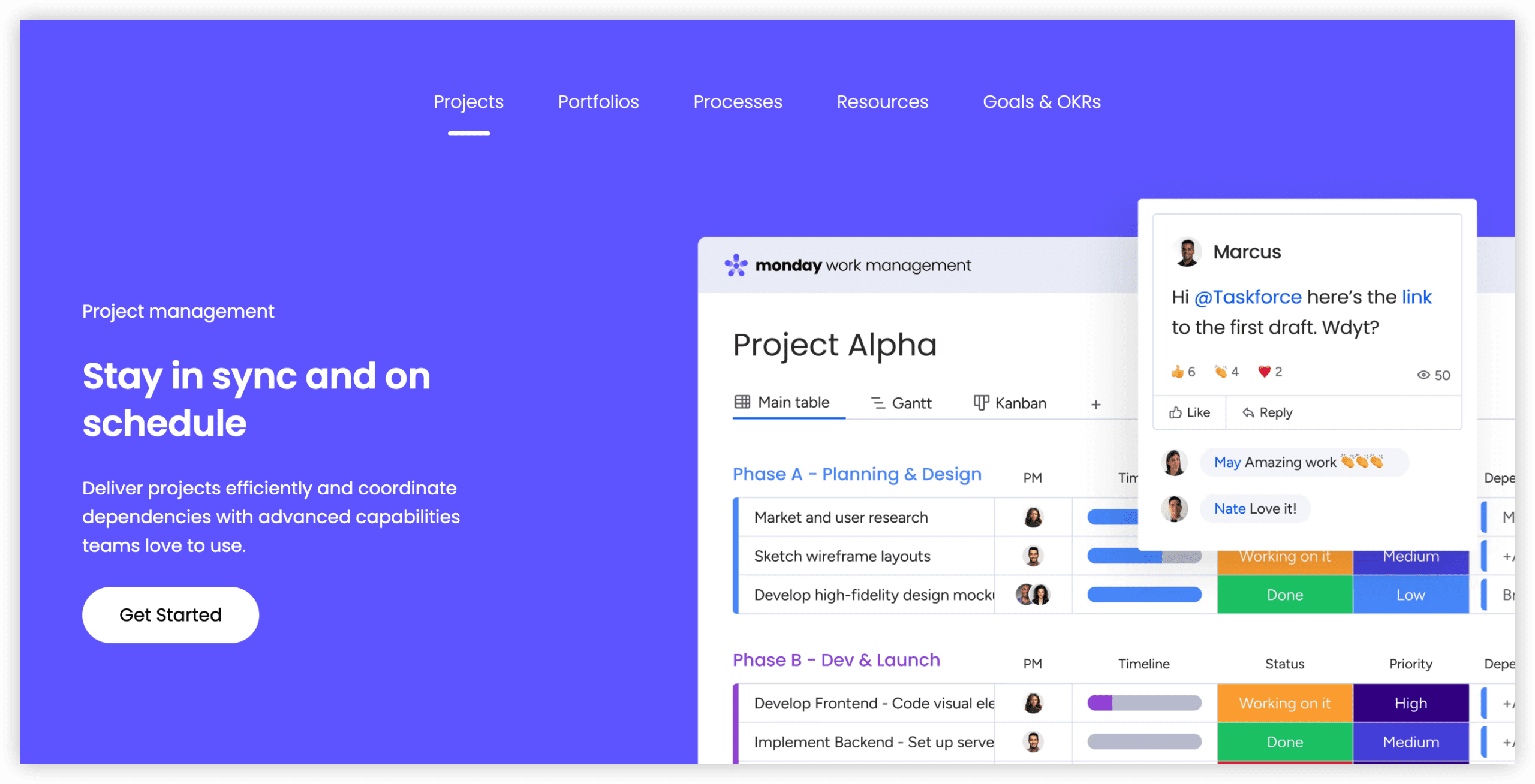
5. Monday.com
Visually oriented, color-coded work environment immediately accessible to non-technical users with sufficient customization to replicate most Jira patterns.
Distinction from Jira: Monday.com leads with a spreadsheet-board hybrid visual model substantially more approachable than Jira’s dense interface. AI capabilities (Sidekick, agents, MCP) are available across plans without separate add-on fees. Sprint and development workflow configuration is achievable, though native code integration depth falls below Jira’s. Organizations should note the 3-seat minimum on paid subscriptions.
Best suited for: Teams requiring intuitive visual workspaces managing engineering and non-engineering work simultaneously.
Pricing: Free tier; Basic at $9/seat/month (3-seat minimum), elevated tiers above (annual).
6. Shortcut
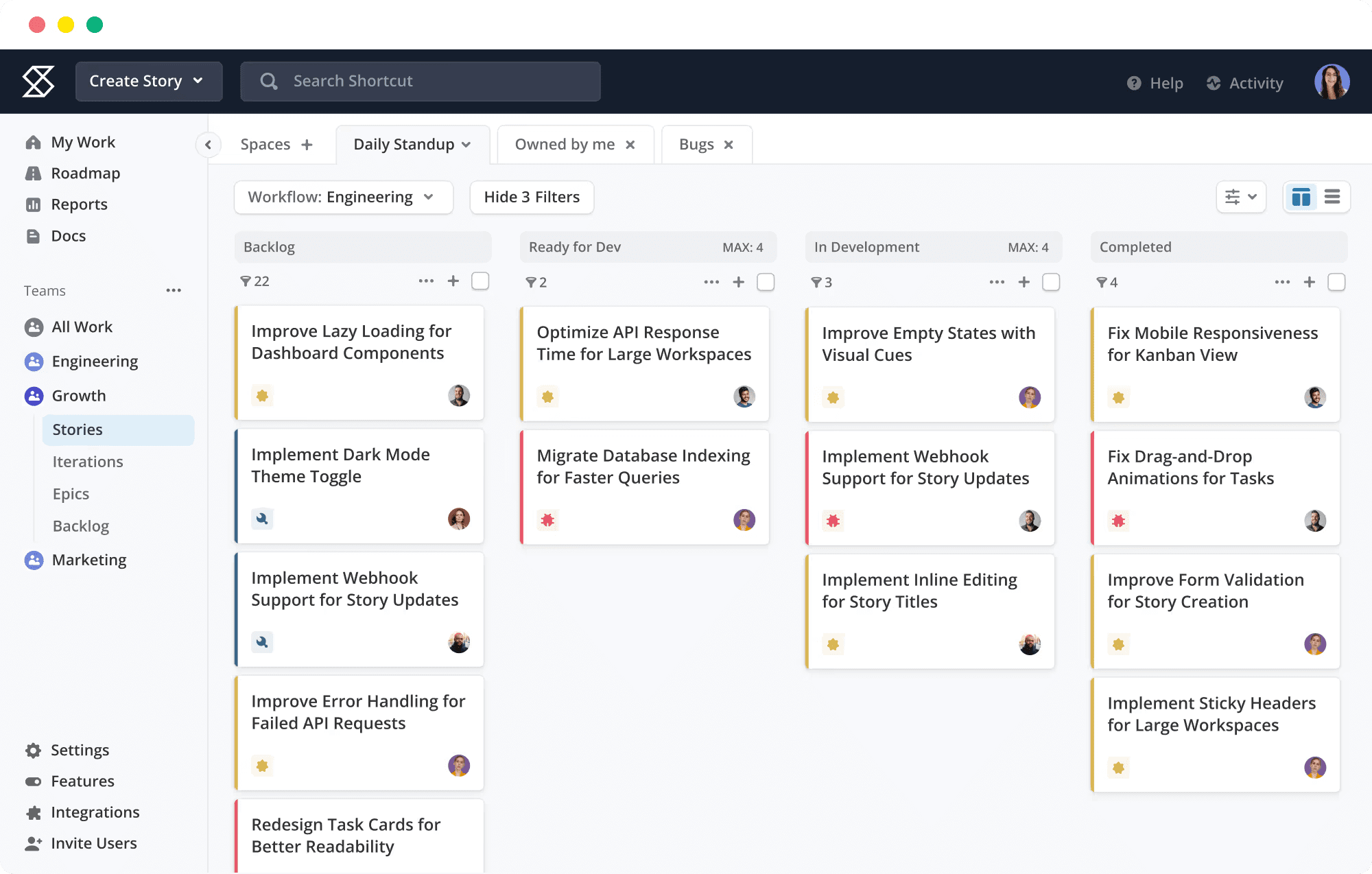
Software project management purpose-built for stories, epics, iterations, and roadmaps—targeting Linear’s audience with expanded capability.
Distinction from Jira: Shortcut delivers agile fundamentals equivalent to Jira’s core without equivalent configuration sprawl. Positioned between Linear’s minimalist rigidity and Jira’s flexibility, it incorporates robust roadmapping and reporting natively. Marketplace integration variety trails Atlassian’s ecosystem, relevant for teams dependent on specialized add-ons.
Best suited for: Software teams desiring structured agile planning without Jira’s administrative demands.
Pricing: Free for up to 10 users; Team at $8.50/user/month, Business at $12/user/month (annual).
7. Plane
Open-source, AI-native project platform with self-hosting capability—the closest contemporary equivalent to Jira Server.
Distinction from Jira: Plane’s open-core model (AGPL-3.0) offers a Community Edition deployable on Docker or Kubernetes infrastructure, ensuring data remains within organizational boundaries—the control eliminated when Jira Cloud superseded Server. Coverage includes projects, cycles, modules, wiki, and integrated AI with bring-your-own-key implementation for self-hosted instances. Operational responsibility for hosting and maintenance rests with the deploying organization, and ecosystem maturity lags behind Atlassian’s.
Best suited for: Teams prioritizing data residency, self-hosting requirements, or open-source alternatives to Jira Data Center.
Pricing: Free self-hosted Community Edition; cloud free up to 12 members, Pro at $8/member/month, Business at $16/member/month.
Comparative Overview
| Platform | Optimal Fit | AI Inclusion | Self-Hosting | Entry Paid Tier |
|---|---|---|---|---|
| ONES | Enterprise development lifecycle | Integrated | Enterprise deployment | Contact sales |
| Linear | Rapid software delivery | Business plan | No | $10/user/month |
| ClickUp | Tool consolidation | Paid add-on | No | $7/user/month |
| Asana | Cross-functional operations | All paid plans | No | $10.99/user/month |
| Monday.com | Visual, mixed-technical teams | Across plans | No | $9/seat/month (3 min) |
| Shortcut | Lightweight agile development | Add-on | No | $8.50/user/month |
| Plane | Self-host / open-source | BYOK self-host | Yes | Free self-hosted |
Selection Guidance
No universal replacement exists. ONES addresses enterprises requiring unified development infrastructure with governance and measurement capabilities. Linear dominates for velocity-focused software teams. ClickUp serves consolidation strategies. Asana and Monday.com excel with cross-functional, mixed-technical audiences. Shortcut balances agility with structure. Plane remains the definitive choice for data sovereignty and open-source commitment.
Platform selection should align with actual operational patterns rather than aspirational workflow designs. Teams should conduct pilot migrations on single projects before committing to full-scale transitions, verifying custom field and workflow history preservation against specific requirements.
Frequently Asked Questions
Which Jira alternative suits enterprise development teams in 2026?
Organizations with complex multi-team delivery requirements, compliance obligations, and need for consolidated tooling should evaluate ONES. Teams prioritizing speed and minimal configuration should consider Linear. The appropriate selection depends on organizational scale, technical requirements, and governance needs.
What factors are driving Jira migration in 2026?
Three factors predominate: cost escalation from October 2025 pricing adjustments and Maximum Quantity Billing; operational complexity from ongoing administrative demands; and loss of self-hosted deployment options following Jira Server retirement.
Are no-cost Jira alternatives available?
Multiple platforms offer free tiers: Linear, ClickUp, Asana, Monday.com, and Shortcut (up to 10 users). Plane’s self-hosted Community Edition imposes no user limitations. For minimal use cases, Trello remains viable for basic board functionality.
Is Jira data migration to alternative platforms feasible?
Major alternatives provide Jira import capabilities for issues, statuses, and comments. Custom field and workflow history coverage varies. Organizations should execute test migrations on representative projects before organizational commitment.