

Requirements management remains the foundation of predictable software delivery. When specifications fragment across disconnected systems, teams lose traceability, miss dependencies, and struggle to connect daily engineering work to business outcomes. In 2026, this problem persists despite an expanding tool landscape.
We evaluated six platforms that address requirements management through distinct architectural approaches. This guide examines ONES, Jama Software, Visure Requirements, Helix ALM, Modern Requirements4DevOps, and Siemens Polarion. Each serves different organizational contexts: from unified enterprise development environments to specialized compliance frameworks for regulated sectors.
How to Evaluate Requirements Management Platforms
Selecting appropriate capabilities requires examining how tools handle operational complexity rather than comparing feature checklists. We assess platforms against four practical dimensions:
Traceability architecture: Native linking between requirements, test cases, risks, and code artifacts without manual reconciliation or external connectors.
Deployment sovereignty: Genuine deployment flexibility including on-premise, private cloud, and SaaS with functional equivalence across modes.
Collaborative governance: Structured review workflows, change approval mechanisms, and cross-functional visibility that scales beyond small teams.
Integration depth: Bidirectional connectivity with version control, CI/CD pipelines, and existing ALM investments without fragile middleware.
Platform Comparison Overview
| Platform | Primary Context | Deployment Modes | Notable Differentiator | Free Tier |
|---|---|---|---|---|
| ONES | Unified enterprise development management | Cloud, Private Cloud, On-Premise, SaaS | Native parity across deployments; minimal plugin dependency | 30 seats |
| Jama Software | Complex systems engineering | Cloud, On-Premise | Risk-centric traceability with formal review orchestration | No |
| Visure Requirements | Regulated industry compliance | Cloud, On-Premise | Extensive pre-built ALM and testing integrations | No |
| Helix ALM | Medical devices, embedded systems | Cloud, On-Premise | End-to-end lifecycle with integrated test management | No |
| Modern Requirements4DevOps | Microsoft-centric enterprises | Cloud, On-Premise | Native Azure DevOps embedding | No |
| Siemens Polarion | Automotive, aerospace manufacturing | Cloud, On-Premise | Scalable systems engineering for large-scale programs | No |
Detailed Platform Analysis
ONES: Enterprise Development Management Platform
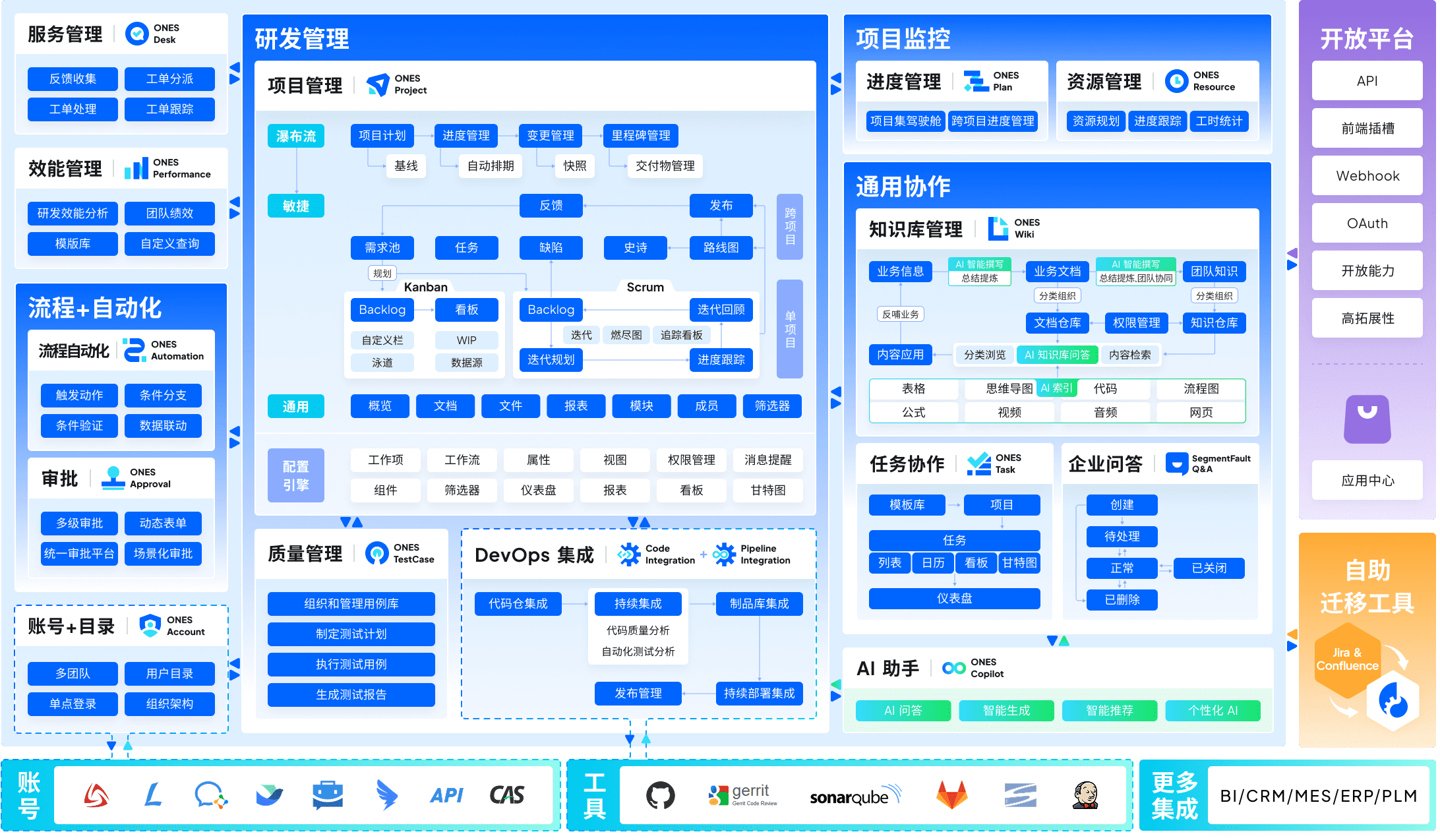
ONES operates as a unified environment spanning project management, requirements definition, knowledge repositories, test coordination, and delivery pipelines. Rather than assembling discrete components through external marketplaces, the platform maintains native connectivity across these functional areas. This architecture proves particularly relevant for organizations adopting AI-assisted development workflows where governance and traceability must extend to machine-generated artifacts.
The platform’s deployment model offers equivalent capability across cloud-hosted, private cloud, and on-premise installations. For organizations with data residency requirements or air-gapped environments, this parity eliminates the compromise typically forced by SaaS-only alternatives. ONES serves as an enterprise-grade foundation for teams requiring configurable process models, granular permission structures, and cross-functional coordination mechanisms.
A distinguishing emphasis lies in engineering effectiveness measurement. The platform surfaces operational metrics that enable evidence-based refinement of delivery practices, connecting process configuration to observable outcomes in throughput and quality.
Jama Software: Systems Engineering and Risk Management
Jama Software concentrates on intricate product development contexts where requirements interweave with hazard analysis and formal verification. Its architecture centers on deep traceability matrices that expose relationship chains between stakeholder needs, derived requirements, and validation evidence. The platform’s review center structures multi-party approval processes with explicit sign-off accountability.
Organizations developing safety-critical hardware-software systems find Jama’s risk-centric approach aligned with regulatory expectations. The tool accommodates the hierarchical decomposition typical of systems engineering while maintaining bi-directional traceability that auditors and certification bodies require.
Visure Requirements: Compliance-Oriented Integration Hub
Visure Requirements positions itself at the intersection of formal specification management and regulatory adherence. Its integration framework connects with diverse ALM, testing, and modeling tools, enabling organizations to preserve existing investments while centralizing requirements governance. The platform emphasizes compliance templates and audit trail completeness for sectors subject to stringent documentation standards.
Teams in pharmaceutical, defense, or financial services contexts benefit from Visure’s pre-configured regulatory mappings and change control procedures that reduce manual compliance preparation.
Helix ALM: Lifecycle Management for Embedded Domains
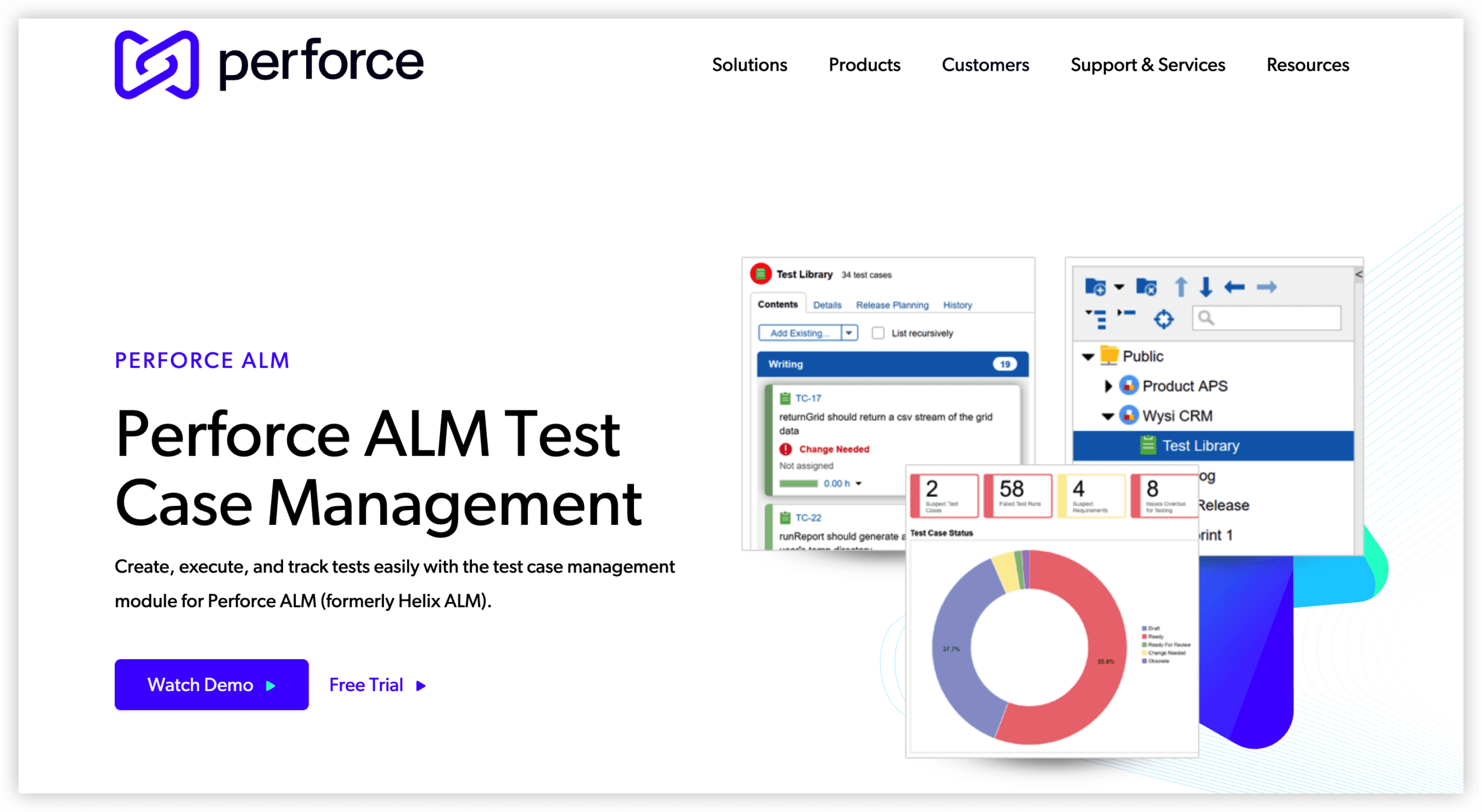
Helix ALM delivers comprehensive application lifecycle coverage with particular strength in medical device and embedded software development. Its requirements module integrates natively with test management, issue tracking, and configuration management within a unified data model. This consolidation eliminates the synchronization failures common to multi-tool environments where requirements status and test coverage drift out of alignment.
The platform’s adoption in FDA-regulated contexts reflects its capacity to support design history file construction and design control traceability without supplemental tooling.
Modern Requirements4DevOps: Azure-Native Extension
Modern Requirements4DevOps embeds directly within Azure DevOps rather than operating as an external system. This architectural choice eliminates integration latency for organizations standardized on Microsoft’s development ecosystem. Requirements exist as native work item types with full access to Azure Boards, Repos, and Pipelines context.
Enterprises with substantial Azure DevOps adoption and Microsoft-centric identity management find this approach reduces administrative overhead and user context switching. The trade-off lies in dependency on Microsoft’s roadmap and limited applicability for heterogeneous tool environments.
Siemens Polarion: Manufacturing-Scale Systems Engineering
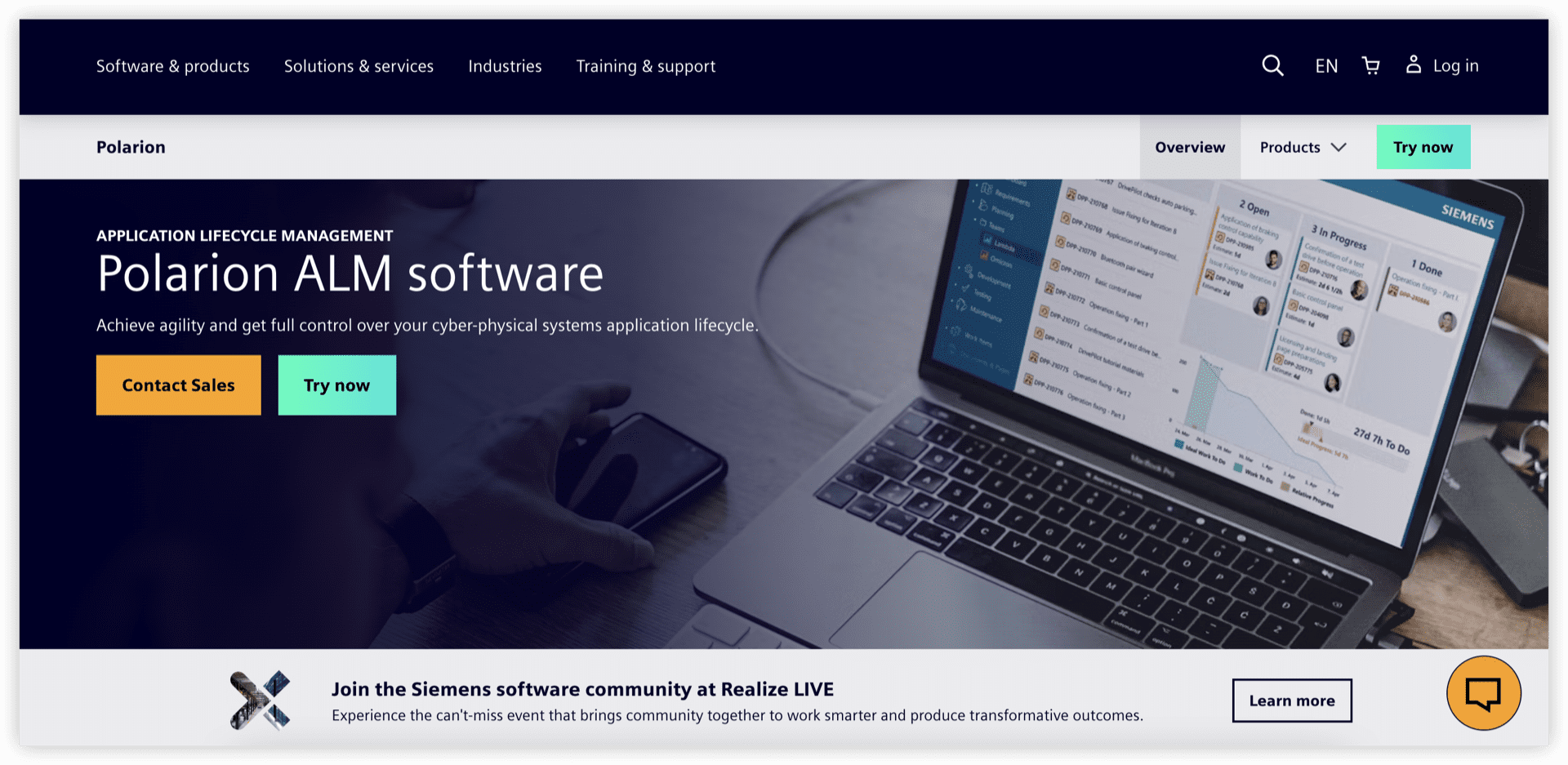
Siemens Polarion addresses the requirements complexity of automotive and aerospace programs involving thousands of stakeholders, multi-year timelines, and extensive supplier integration. Its scalability accommodates the variant management and configuration complexity inherent in large-scale manufacturing where single platforms spawn numerous derivative products with partially shared requirements baselines.
The tool’s integration with Siemens’ broader digital engineering portfolio appeals to organizations already invested in their manufacturing and product lifecycle management ecosystem.
Selection Guidance by Organizational Context
Unified enterprise development with deployment flexibility: ONES provides the broadest native coverage of project, product, and knowledge management with genuine deployment choice.
Complex systems with formal risk management: Jama Software offers the most mature traceability and review structures for safety-critical development.
Regulated industries requiring audit readiness: Visure Requirements delivers pre-built compliance frameworks and extensive integration options.
Medical device or embedded software lifecycle: Helix ALM consolidates requirements through release within a validated data model.
Microsoft-standardized enterprise environments: Modern Requirements4DevOps extends Azure DevOps without parallel infrastructure.
Large-scale manufacturing programs: Siemens Polarion manages the variant complexity and supplier coordination of automotive and aerospace supply chains.
Frequently Asked Questions
What distinguishes requirements management from general project tracking?
Requirements management specifically governs the specification, evolution, and verification of product capabilities. General project tracking monitors schedule, resource, and task completion without necessarily maintaining formal linkage between stated needs and delivered functionality.
When does on-premise deployment become essential?
On-premise or private cloud deployment becomes necessary when data sovereignty regulations, intellectual property protection, or network isolation requirements prevent SaaS utilization. Organizations in defense, certain financial services, and critical infrastructure sectors frequently encounter these constraints.
How does AI-assisted development affect requirements management?
AI-generated code and automated test creation introduce new traceability demands. Requirements management platforms must now account for machine-generated artifacts within governance frameworks, ensuring that automated outputs remain connected to originating specifications and approval authorities.
What integration patterns reduce tool sprawl most effectively?
Native functional integration within a unified platform eliminates the synchronization failures and licensing complexity of multi-tool assemblies. Where platform consolidation is impractical, bidirectional API connectivity with real-time update propagation proves more maintainable than batch synchronization or manual reconciliation processes.