



Agile teams seeking a change from Atlassian’s flagship tool have numerous paths forward. This evaluation presents 15 distinct platforms, beginning with enterprise-grade solutions and extending through specialized task trackers and open-source options:
- ONES – Best for enterprise R&D management and cross-team governance
- ClickUp – Best for customizable workspaces across departments
- Asana – Best for straightforward task and project orchestration
- Monday.com – Best for automated workflows with accessible design
- Smartsheet – Best for spreadsheet-native project orchestration
- Taskade – Best for unified task, note, and video collaboration
- Zendesk – Best for embedding service operations within projects
- Wrike – Best for navigating multifaceted initiative portfolios
- Notion – Best for knowledge-heavy operational flows
- ProofHub – Best for consolidated planning environments
- Assembla – Best for source code and delivery pipeline integration
- Pivotal Tracker – Best for iterative software delivery
- Bugzilla – Best for build quality assurance
- Hygger – Best for prioritization frameworks in Agile contexts
- Backlog by Nulab – Best for issue lifecycle management
What Drives Teams to Seek Jira Alternatives
Atlassian Jira holds substantial market presence as a project coordination and defect-tracking solution purpose-built for Agile practitioners. Yet its architecture carries inherent constraints that prompt organizations to evaluate substitutes.
The platform’s 2021 Work Management extension attempted to bridge functional gaps, yet persistent friction remains in facilitating seamless collaboration between engineering units and broader organizational stakeholders. Search and filter mechanisms demand considerable familiarity before becoming efficient. Subscription pricing has trended upward without proportional capability expansion.
Perhaps most critically, Jira’s foundational design assumes software development contexts first, leaving other disciplines to adapt their processes to its conventions rather than the reverse.
Essential Evaluation Criteria for Jira Substitutes
Selecting a replacement platform warrants structured assessment across several dimensions:
Agile Framework Compatibility: Confirm native support for Scrum ceremonies, Kanban visualization, backlog refinement, sprint boundary management, and progress telemetry such as burndown analytics.
Planning and Scheduling Architecture: Verify robust milestone definition, dependency mapping, deadline governance, and timeline projection capabilities.
Work Item Governance: Examine multi-assignee support, contextual commentary threading, diversified perspective options, configurable subtask hierarchies, and status taxonomy flexibility.
Collaborative Infrastructure: Prioritize synchronous messaging, contextual annotation, personnel tagging, asset sharing, and asynchronous video communication—particularly critical for distributed formations.
Analytical Depth: Demand operational intelligence encompassing initiative health indicators, collective performance metrics, cooperative pattern analysis, and resource deployment optimization.
Architectural Scalability: Ensure performance stability under expanding user populations and project proliferation without degradation in responsiveness or navigational clarity.
Interaction Design: Favor platforms minimizing onboarding burden through logical information architecture and guided familiarization sequences.
Adaptability: Assess personalization scope for operational dashboards, procedural pipelines, and executive reporting.
Integration Ecosystem: Validate connectivity breadth with existing technical infrastructure to maintain unified information contexts.
Comparative Overview: Leading Jira Alternatives
| Platform | Primary Strength | Typical Adopters | Entry Pricing |
|---|---|---|---|
| ONES | Enterprise R&D orchestration | Mid-to-large engineering organizations | Custom enterprise quotation |
| ClickUp | AI-augmented workspace customization | Cross-functional organizational units | $0-$19 monthly; custom enterprise tier |
| Asana | Uncomplicated project coordination | Marketing, IT, Operations, Leadership | $0-$30.49 monthly; custom enterprise tier |
| Monday.com | Accessible automation construction | Marketing, Product, Sales, IT, Operations, PMO, HR | $0-$24 monthly; custom enterprise tier |
| Smartsheet | Spreadsheet paradigm extension | Project Management, IT Operations, Strategic Planning, Marketing | $0-$32 monthly; custom enterprise tier |
| Taskade | Real-time multimedia collaboration | Project Management, Marketing | $0-$16 monthly |
| Zendesk | Service-delivery integration | Customer Support | $69-$149 monthly; custom enterprise tier |
| Wrike | Complex initiative navigation | Marketing, Professional Services, PMO, Creative | $0-$24.80 monthly; custom enterprise tier |
| Notion | Knowledge-centric operations | Design, Engineering, Product Management | $0-$18 monthly; custom enterprise tier |
| ProofHub | Consolidated planning environment | Product Development, Marketing, Creative, Sales | $50-$99 monthly |
| Assembla | Version control unification | Project Management, Software Teams | $21 monthly; custom enterprise tier |
| Pivotal Tracker | Iterative delivery tracking | Agile Software Teams, Project Management | Complimentary baseline; custom enterprise tier |
| Bugzilla | Build quality management | Software Teams | No charge |
| Hygger | Agile prioritization frameworks | Scrum Teams, Kanban Teams | $0-$18 monthly |
| Backlog by Nulab | Issue lifecycle governance | Quality Assurance, UX/Design, Development, Product Management, IT, Sales, Marketing | $0-$175 monthly |
Detailed Platform Profiles
1. ONES—Best for Enterprise R&D Management and Cross-Team Governance
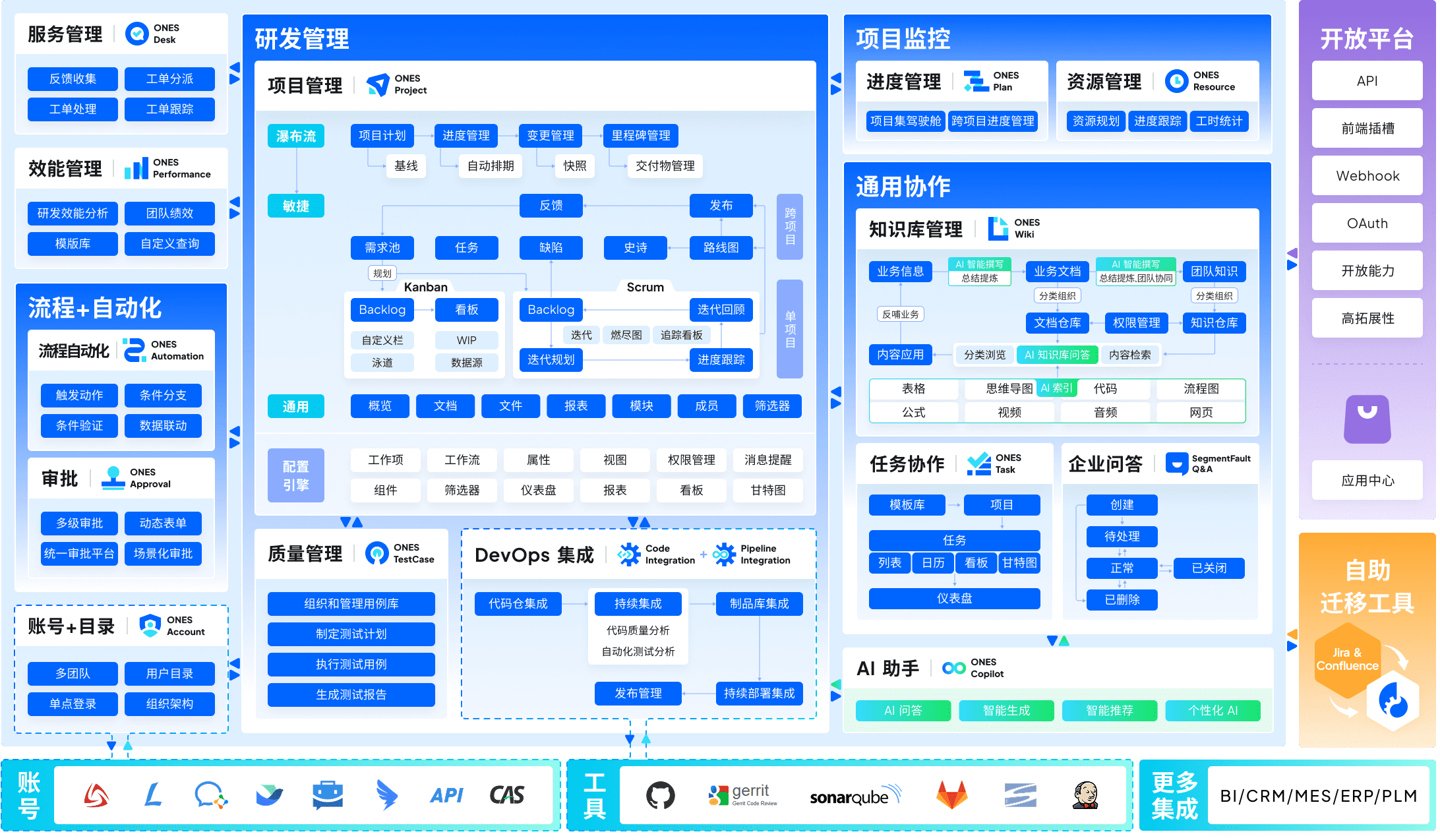
ONES addresses the fragmentation that plagues large-scale software organizations by unifying traditionally separated tooling domains. The platform encompasses initiative coordination, requirement definition, institutional knowledge preservation, quality validation, continuous delivery pipelines, and source code administration within a coherent operational fabric.
For expanding enterprises, ONES provides sophisticated procedural configuration capabilities, granular access control models, and mechanisms for governing collaboration across organizational boundaries. Its distinguishing emphasis lies in engineering effectiveness measurement—equipping leadership with empirical foundations for enhancing both delivery velocity and output quality.
Organizations confronting tool proliferation, coordination overhead between multiple departments, or demands for delivery transparency at executive levels will find ONES purpose-built for these challenges.
2. ClickUp—Best for Customizable Workspaces Across Departments
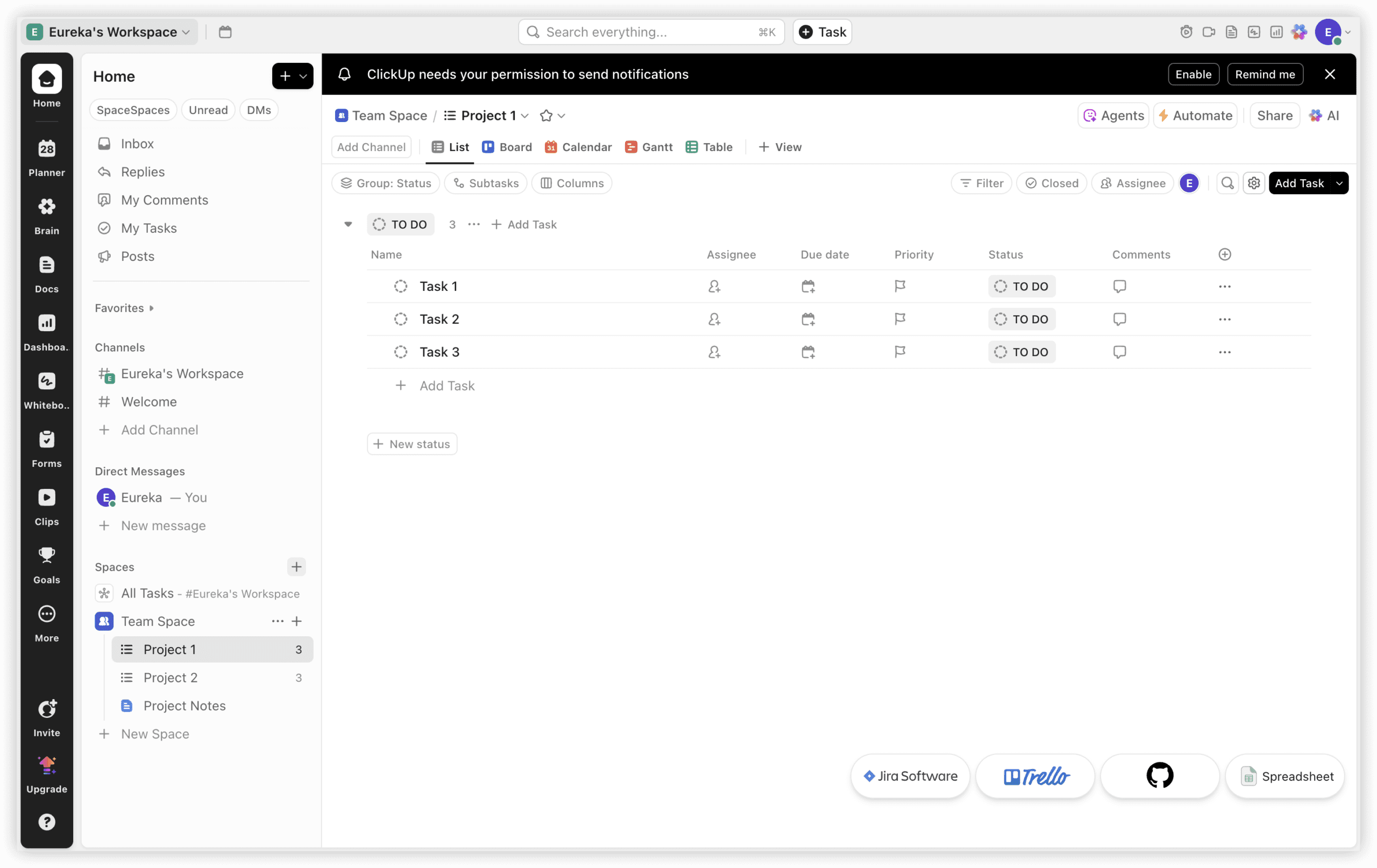
ClickUp distinguishes itself through exceptional malleability, accommodating diverse functional requirements from portfolio management offices to creative departments. The platform’s unified architecture eliminates the context-switching penalties associated with fragmented tooling.
Its conversational layer, ClickUp Chat, embeds dialogue within operational context, permitting instantaneous conversion of discussion points into trackable commitments. Visual planning surfaces transition smoothly into executable assignments, while timeline perspectives require no supplementary configuration.
3. Asana—Best for Straightforward Task and Project Orchestration
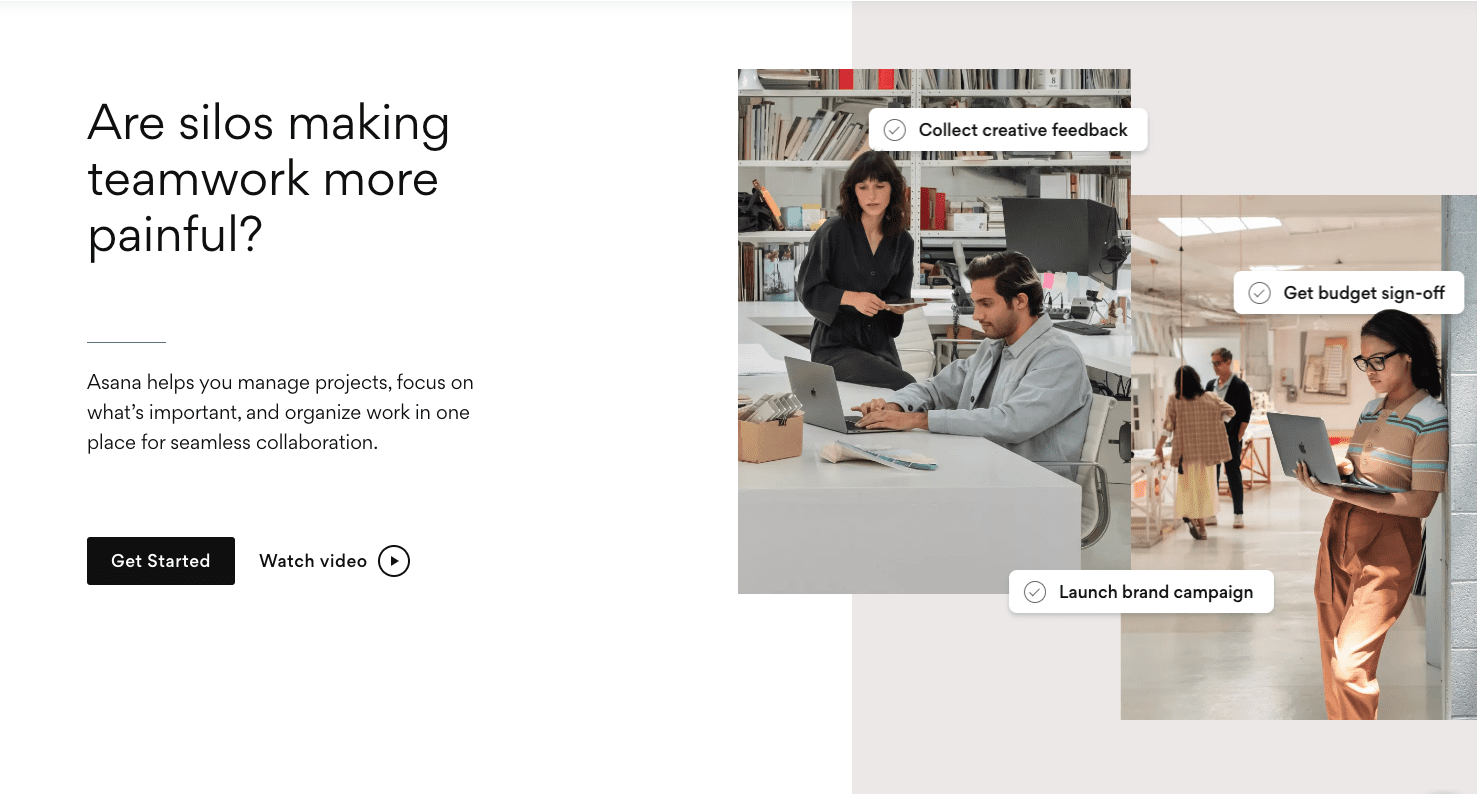
Asana prioritizes clarity over complexity, presenting work coordination through intuitive visual structures. Timeline perspectives illuminate sequential dependencies, portfolio dashboards aggregate initiative status for stakeholder consumption, and automation capabilities reduce administrative repetition.
The platform excels when teams require reliable execution machinery without extensive tailoring investment.
4. Monday.com—Best for Automated Workflows with Accessible Design
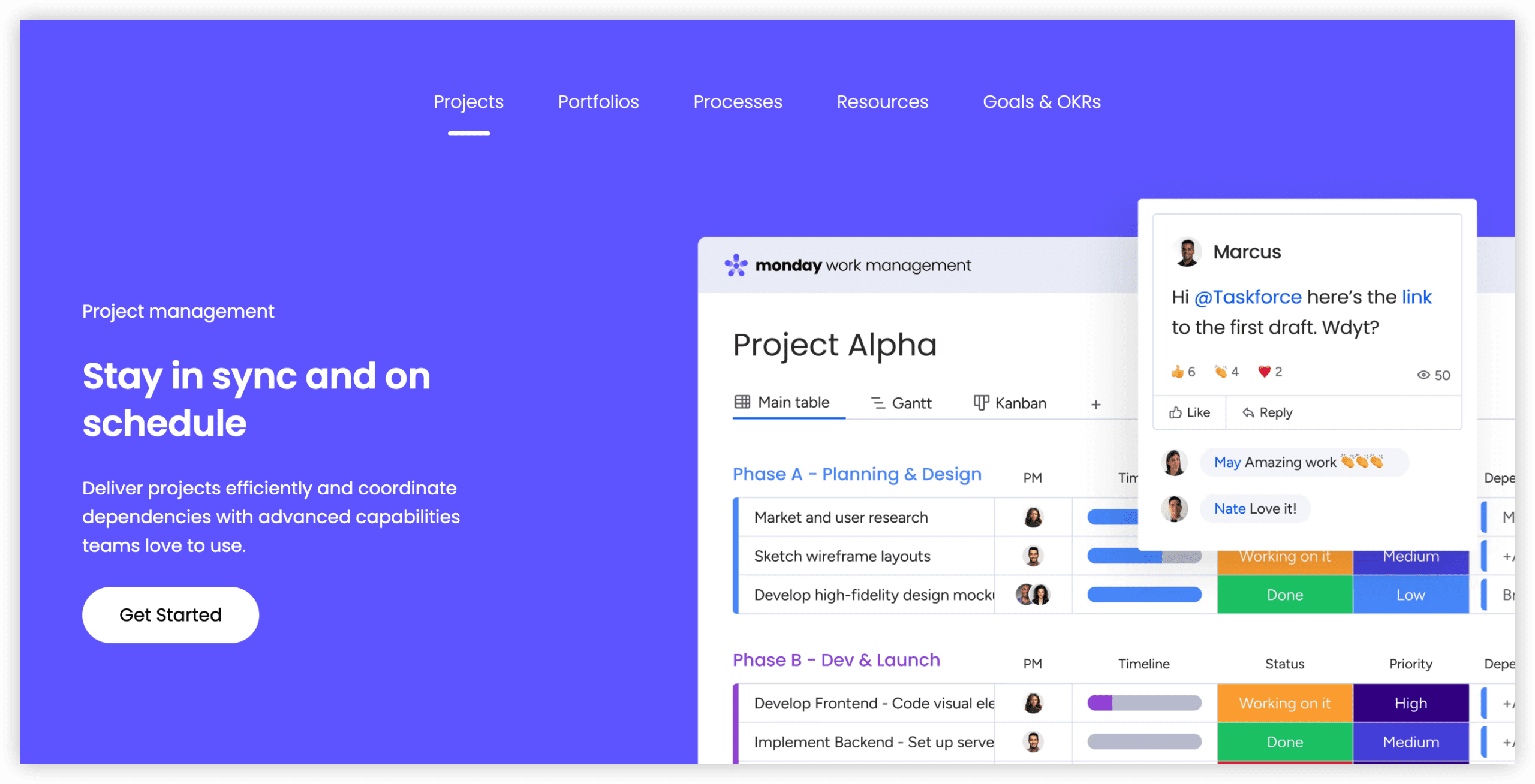
Monday.com democratizes automation construction through visual building blocks, enabling non-technical personnel to construct sophisticated procedural logic. Its interface philosophy emphasizes immediate comprehension, with color-coded status indicators and modular board architecture.
Marketing operations, human resource functions, and business development teams frequently gravitate toward its approachable paradigm.
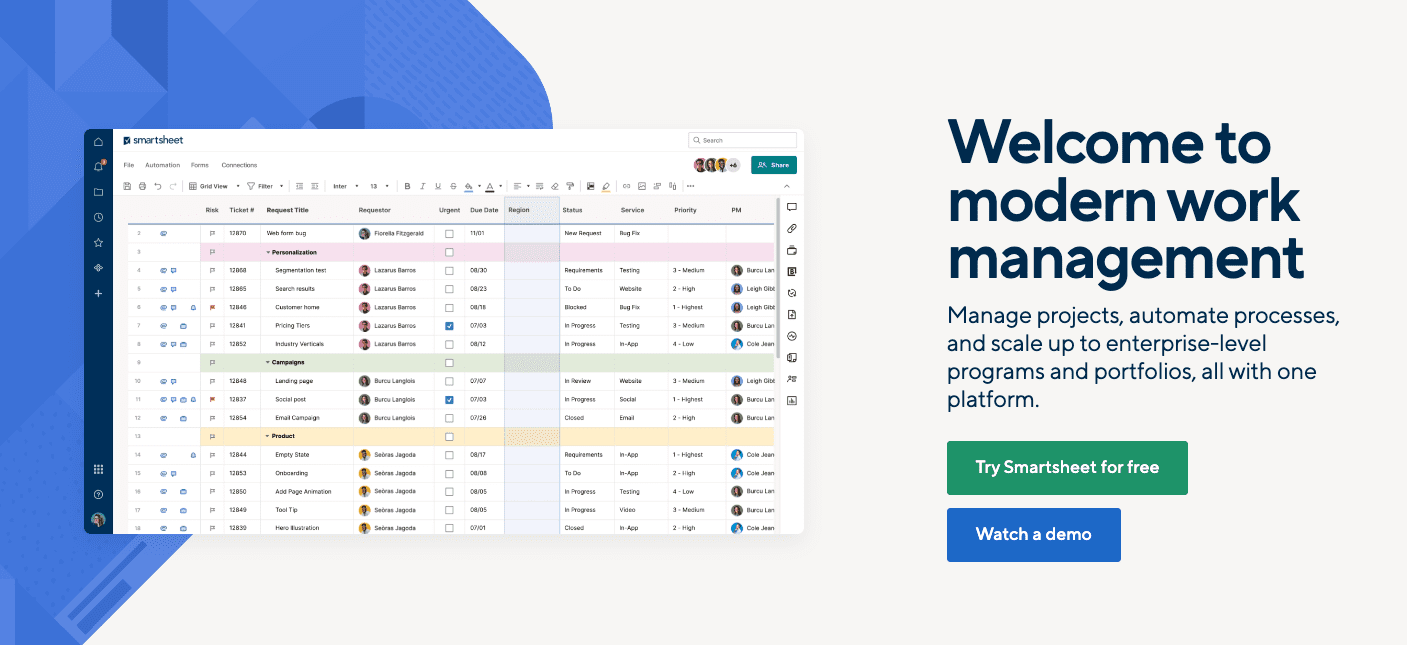
5. Smartsheet—Best for Spreadsheet-Native Project Orchestration
Smartsheet preserves familiar grid interaction patterns while introducing enterprise-grade project governance. Formula capabilities, automated update requests, and hierarchical rollups extend traditional spreadsheet utility into collaborative project contexts.
Organizations with deep spreadsheet culture can transition operational practices without abandoning established mental models.
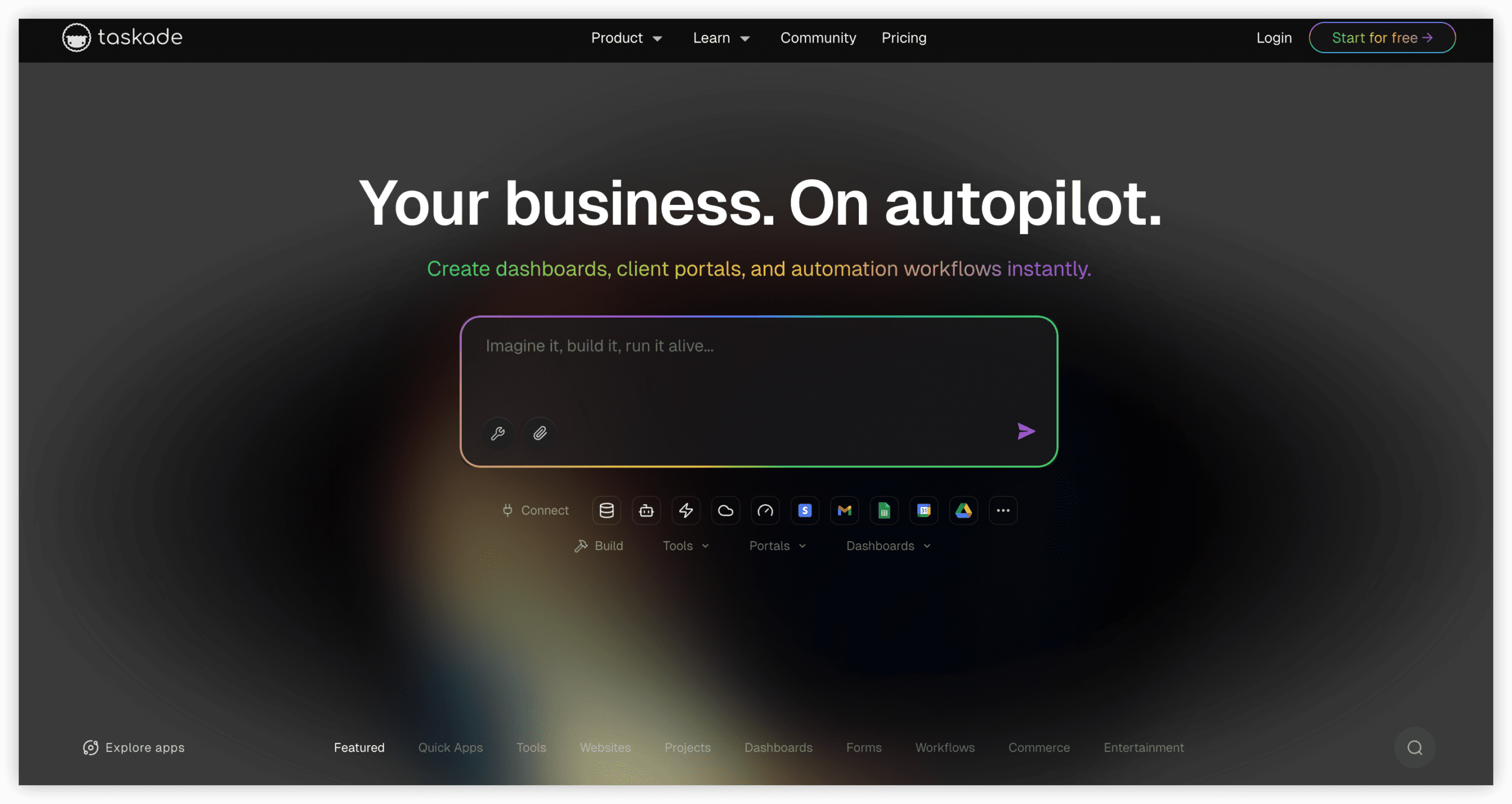
6. Taskade—Best for Unified Task, Note, and Video Collaboration
Taskade converges asynchronous documentation, synchronous interaction, and motion-based communication within fluid workspaces. Mind-mapping utilities, outline structures, and progress visualization adapt to evolving cognitive preferences throughout project durations.
Remote-first collectives particularly value its simultaneous editing and embedded video conferencing integration.
7. Zendesk—Best for Embedding Service Operations Within Projects
Zendesk extends beyond conventional ticketing by connecting customer interaction streams with internal delivery workflows. When resolution demands cross-functional coordination, its bridge between external requests and internal execution proves invaluable.
Service-oriented organizations benefit from unified visibility across customer commitment and fulfillment progress.
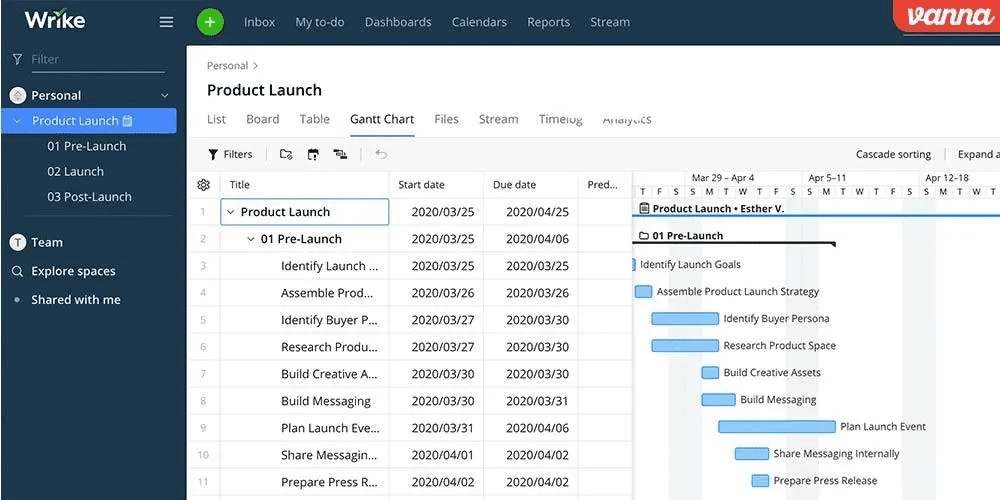
8. Wrike—Best for Navigating Multifaceted Initiative Portfolios
Wrike accommodates elaborate operational complexity through nested folder hierarchies, adaptive request intake mechanisms, and sophisticated resource load visualization. Enterprise configurations support departmental isolation with selective visibility for sensitive endeavors.
Professional services organizations and program management offices frequently select Wrike for its capacity to mirror intricate organizational structures.
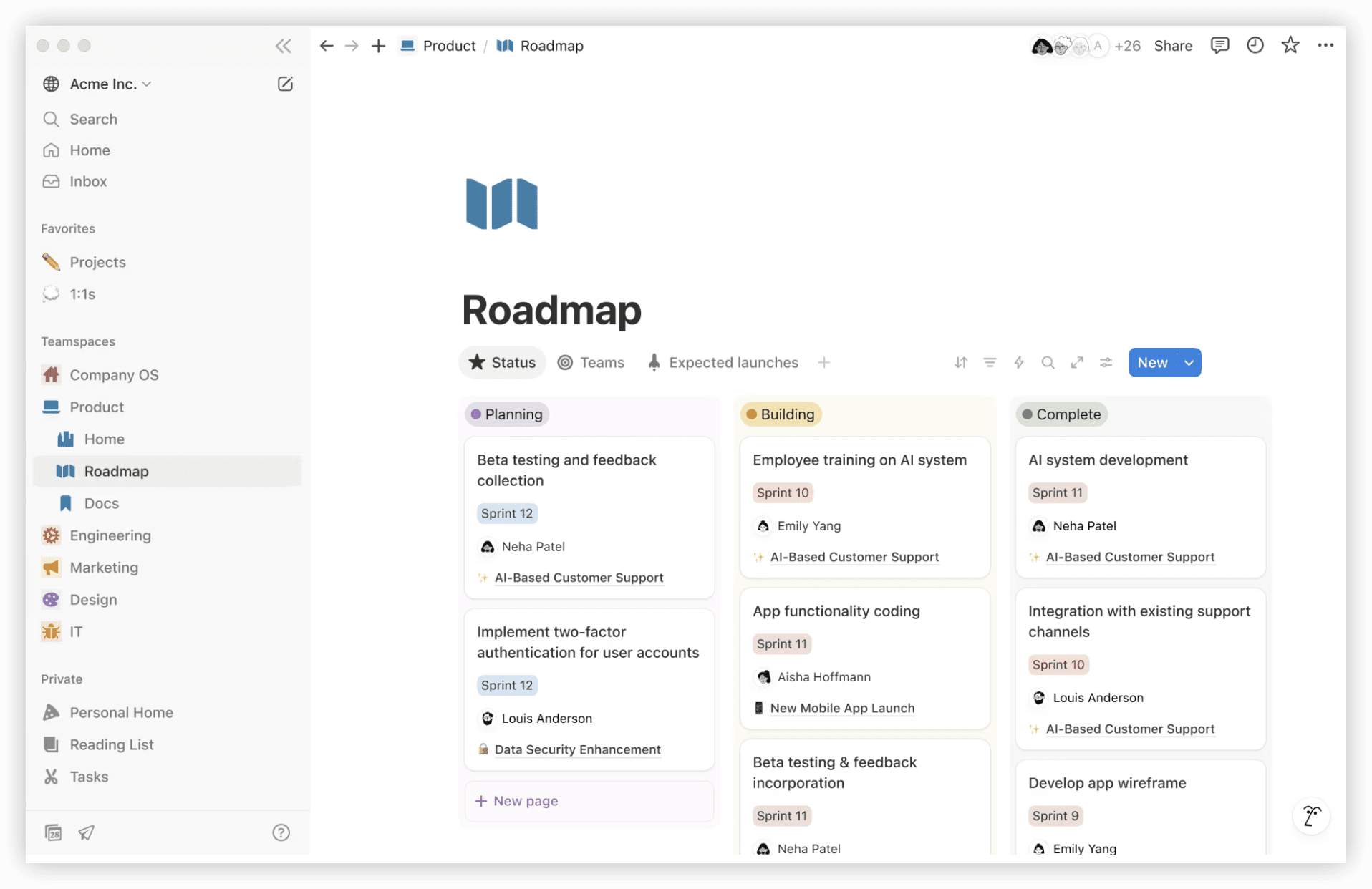
9. Notion—Best for Knowledge-Heavy Operational Flows
Notion dissolves boundaries between living documentation and active project tracking. Database constructions, nested page architectures, and template ecosystems enable teams to construct bespoke operational environments.
Its strength manifests where deliverables intertwine substantially with explanatory content, research accumulation, or decision rationale preservation.
10. ProofHub—Best for Consolidated Planning Environments
ProofHub delivers comprehensive functionality without per-user pricing complexity, rendering cost prediction straightforward for growing memberships. Discussion forums, proofing workflows, and time accounting complement core coordination capabilities.
Budget-conscious organizations seeking predictable expenditure appreciate its financial structure transparency.
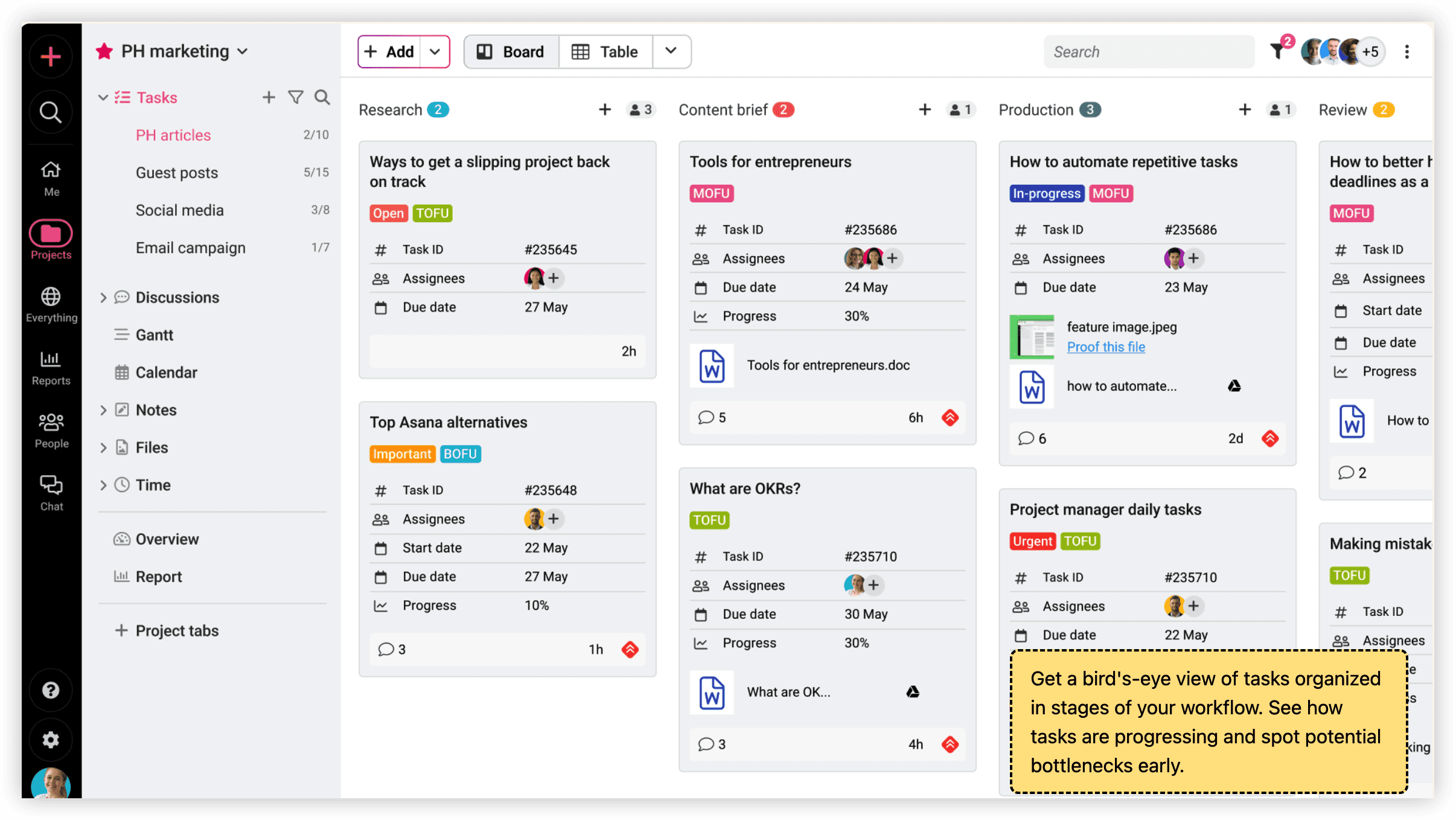
11. Assembla—Best for Source Code and Delivery Pipeline Integration
Assembla maintains particular relevance where version control history and project status demand tight correlation. Subversion, Git, and Perforce hosting alongside ticket tracking creates unified audit trails from requirement through deployment.
Regulated environments with stringent change documentation requirements find this consolidation advantageous.
12. Pivotal Tracker—Best for Iterative Software Delivery
Pivotal Tracker enforces disciplined Agile practice through story point estimation, velocity projection, and explicit iteration boundaries. Its opinionated workflow guides teams toward sustainable delivery cadences rather than accommodating arbitrary methodological variation.
Pure software development collectives committed to extreme programming principles align naturally with its philosophical foundations.
13. Bugzilla—Best for Build Quality Assurance
Bugzilla represents mature open-source defect tracking with minimal operational overhead. Custom classification schemes, advanced query construction, and email notification architectures support systematic quality management without commercial licensing expenditure.
Cost-constrained technical organizations with dedicated operational support capacity leverage its extensible codebase effectively.
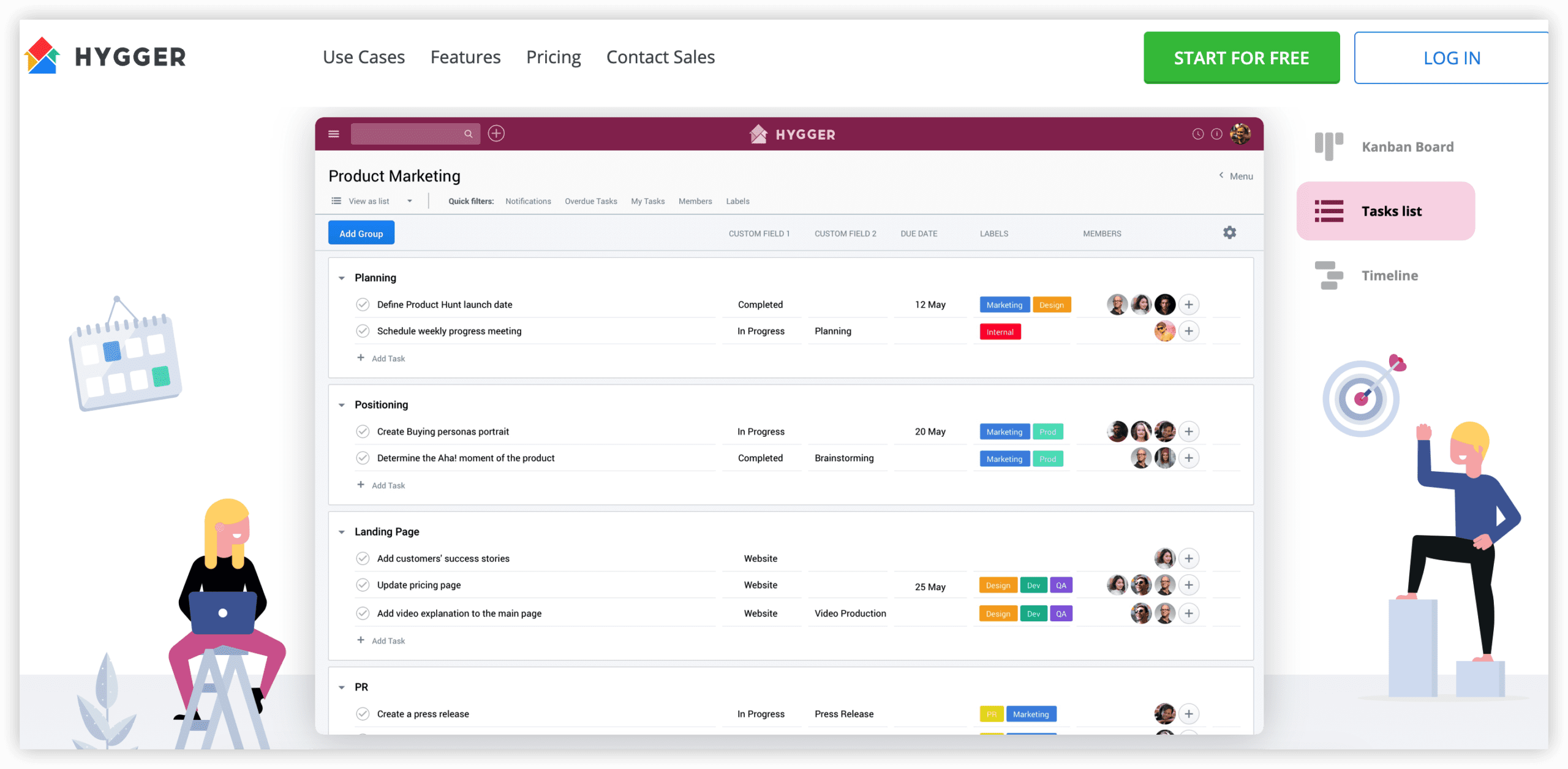
14. Hygger—Best for Prioritization Frameworks in Agile Contexts
Hygger foregrounds decision assistance through value-effort matrix visualization, weighted scoring methodologies, and objective prioritization canvases. These instruments counterbalance intuitive preference with structured evaluation.
Teams confronting resource constraint tensions benefit from explicit trade-off articulation mechanisms.
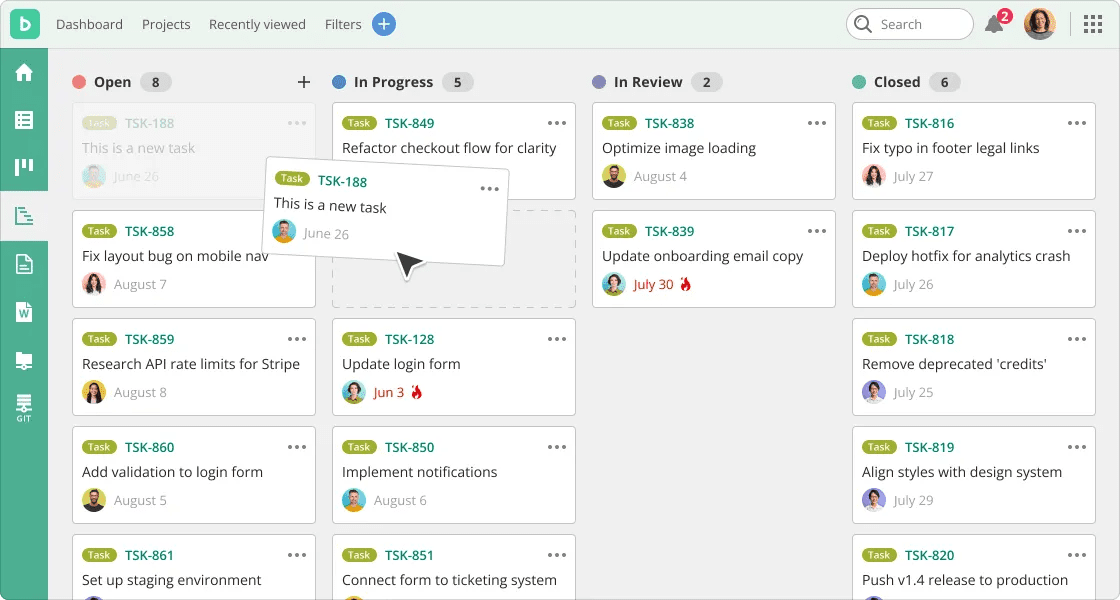
15. Backlog by Nulab—Best for Issue Lifecycle Management
Backlog integrates issue resolution, version control awareness, and milestone progression for compact technical teams. Wiki functionality and file attachment capabilities supplement core tracking without overwhelming supplementary complexity.
Small-to-medium development shops appreciate its balanced capability concentration.
Platform Selection Guidance
Determining optimal replacement for Jira hinges on organizational maturity, functional diversity, and integration density requirements:
Enterprise engineering organizations managing substantial personnel scale, complex approval chains, and multi-layered reporting obligations should prioritize ONES for its unified platform architecture and measurement infrastructure.
Cross-functional organizations seeking departmental flexibility without tooling proliferation may find ClickUp’s customization depth most compatible.
Simplicity-preferring teams with conventional coordination requirements will likely satisfy operational needs through Asana or Monday.com.
Quality-centric software practices with limited configuration resources might initiate exploration with Pivotal Tracker or Bugzilla before scaling complexity.
Frequently Asked Questions
Which platforms accommodate migration from Jira with minimal disruption?
Several evaluated platforms offer native import utilities or partner-assisted migration services. ONES and ClickUp provide structured transition pathways preserving historical ticket data, relationship mappings, and custom field configurations.
What distinguishes open-source from commercial alternatives in this landscape?
Open-source options such as Bugzilla eliminate licensing expenditure but require internal technical investment for deployment, maintenance, and extension. Commercial platforms redistribute these responsibilities as operational expenses, typically with service level commitments and professional support channels.
How should distributed teams evaluate collaboration capabilities?
Prioritize synchronous availability indicators, asynchronous notification intelligence, timezone-aware scheduling, and persistent conversation threading that transcends individual session boundaries. Taskade and ClickUp demonstrate particular strength in geographically distributed contexts.
Is Jira compatibility essential for substitute selection?
Direct interoperability matters primarily during transition periods or where vendor ecosystems remain partially committed. Long-term strategic selections should prioritize native capability fit over backward compatibility considerations.